
Behind the Scenes at Tom&Sawyer: Chef-Inspired, Nutritionist-Balanced Recipes in a Human-Grade Kitchen
· Updated
Written by Dr. Hannah Godfrey, Ph.D Animal Nutrition, Lead Nutrition Scientist & Technical Advisor at Tom&Sawyer
At Tom&Sawyer, every recipe begins long before a pot hits the stove. It starts with collaboration: chefs, animal nutritionists, and veterinary scientists working together to create meals that are not only delicious, but also deeply rooted in nutritional science. Through thoughtful sourcing, careful cooking, and an unwavering commitment to quality, we craft fresh, whole food meals that support dogs’ and cats’ digestive health, nutrient absorption, and overall well-being.
To help explain why our approach matters, we spoke with Dr. Kelly Swanson, a leading pet nutrition researcher at the University of Illinois who collaborated with Dr. Hannah Godfrey and our other consultants to research, formulate and conduct lab testing analysis for our Tom&Sawyer meals! His work has helped shed light on how processing, ingredient selection, and cooking methods impact pet health.
The Role of Processing in Fresh Dog and Cat Food Nutrition
One of the most significant, (but least visible), parts of pet food formulation happens in the kitchen: how ingredients are processed.
According to Dr. Swanson:
“Processing is one of the hardest things to account for because you need enough heat for food safety, but not so much that you damage the nutrients you’re trying to preserve.”
Fresh pet food, when processed appropriately, behaves differently from traditional kibble. Research shows that fresh diets generally have higher digestibility, meaning pets can absorb more nutrients from what they’re eating. Dogs with sensitive stomachs in particular benefit from this; our Classic Pork Stew is a good example of a gently-cooked recipe formulated with digestibility in mind.
Dr. Swanson explains:
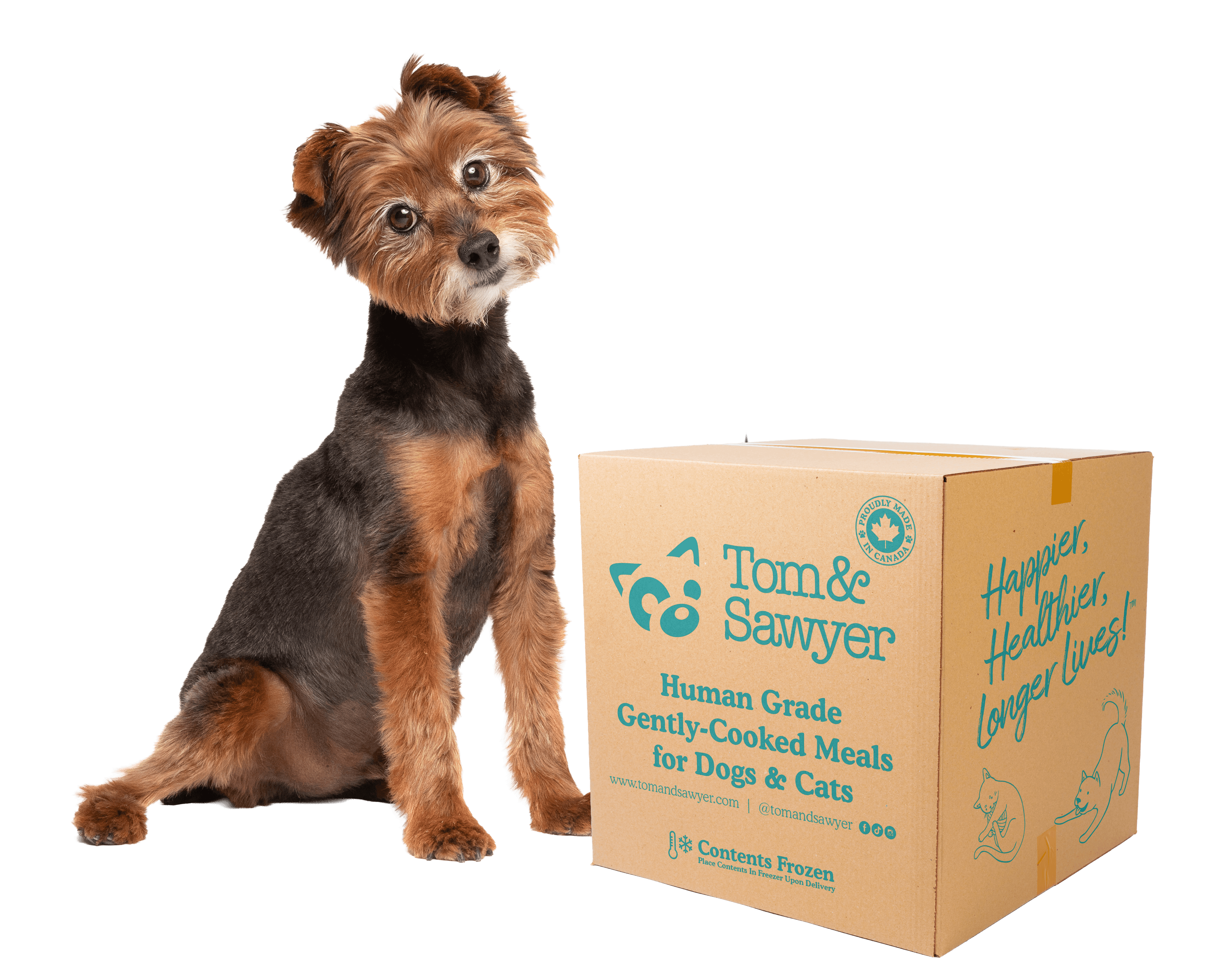
“What we consistently see with fresh pet food is higher digestibility and greater absorption of nutrients. That improved efficiency reduces stool quantity, often to about half of what you would see with kibble, without jeopardizing stool quality.”
This reduction in stool volume isn't just convenient for pet owners; it can be a sign that the body is using more of what it’s fed.
Why Stool Volume Tells a Bigger Story
The difference between fresh food and kibble often comes down to the ingredients themselves and the types of fibers they contain. Fibers in whole foods behave differently from isolated or synthetic fibers found in many commercial diets.
“The type of fiber, and how much bulk or water it holds, plays a huge role,” Dr. Swanson notes. “Fresh diets tend to reduce stool volume while still staying well within a healthy range.”
On the opposite end of the spectrum, some raw diets can swing too far, sometimes leading to constipation due to very low fiber or the wrong type of fiber*. Additionally, the physical form of ingredients matters. Larger particle sizes can slow digestion in healthy ways, whereas kibble, ground extremely fine before being extruded, tends to digest more rapidly.
Processing Isn’t the Enemy: Overprocessing Is.
Heat is essential for food safety, but too much heat can cause problems. High-temperature processing can damage delicate nutrients.
Dr. Swanson emphasizes:
“When you use very high temperatures, you can damage amino acids and functional ingredients. That reduces both digestibility and nutrient availability.”
But processing isn’t automatically bad. In fact, a measured amount of cooking can improve nutrient availability and destroy harmful pathogens. The key is finding the right place on the processing spectrum.
“Processing exists on a scale. The goal isn’t to eliminate it, it’s to apply just enough to enhance safety and digestibility without degrading the nutrients.”
Why Tom&Sawyer Cooks Every Dog and Cat Food Ingredient Individually
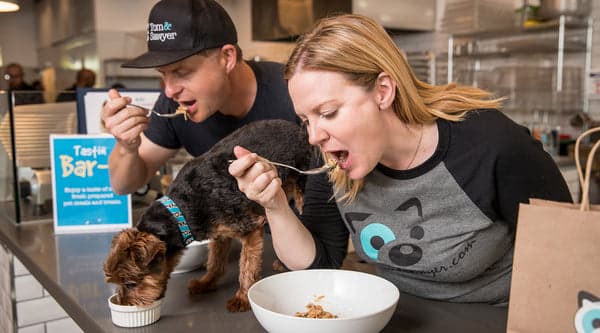
As we cook your pet’s meals in a government-inspected, human grade kitchen, we purposefully treat animal proteins, vegetables, grains, and functional ingredients as unique building blocks, each with its own ideal cooking conditions.
Dr. Swanson puts it simply:
“Formulating fresh food is completely different. Each ingredient needs to be treated individually to maintain nutrient content and food safety.”
Many pet food companies cook all ingredients together for convenience. We don’t.
At Tom & Sawyer:
Every ingredient is cooked separately when beneficial.
Each is cut to a particle size that supports digestibility.
We avoid overcooking to protect nutrient integrity.
Moisture content is preserved naturally, never artificially altered.
This precision matters because even small variations in heat or handling can change the nutritional profile of a meal.
“Every nutrient class has its own ideal temperature, not just for safety, but for optimal nutrient content. That level of specificity is where you start to see real differentiation between brands.”
What Individually Cooked Ingredients Mean for Your Dog's Nutrients
Not all ingredients respond to heat in the same way. Cooking everything together at a single temperature is the easiest approach, but it means some ingredients get overcooked while others are undercooked, and the nutritional result is inconsistent.
At Tom&Sawyer, each ingredient class is treated on its own terms:
Animal proteins are cooked to a temperature that preserves the most amino acids while eliminating pathogens
Vegetables are handled separately to protect heat-sensitive vitamins that break down quickly at high temperatures
Particle size is considered for each ingredient to support optimal digestion and nutrient release
Our Fisherman's Best Friend Supper recipe is a good example; the fish and vegetables are each handled separately to protect the omega fatty acids and heat-sensitive nutrients that support skin and coat health.
The result is a meal where every component arrives in your dog's bowl at its most nutritious state.

Where Tom & Sawyer Stands Apart
We take pride not only in our ingredients, but in how we treat them.
As Dr. Swanson highlights:
“What truly sets companies apart is how they handle their ingredients. Tom&Sawyer is unique in how they treat each component with precision and intention.”
Our chefs and nutritionists work side by side to ensure meals are not only balanced according to NRC and AAFCO recommendations, but also crafted with culinary skill which is something you can see, smell, and serve with confidence.
A Fresh Perspective on Feeding Our Pets Well
Feeding your pet fresh, gently-cooked food isn’t just about offering something tasty; it’s about improving nutrient absorption, supporting digestive health, and nourishing their body with ingredients handled the way nature intended.
By developing recipes in a human grade kitchen, cooking with intention, and respecting nutritional science, Tom&Sawyer creates meals that bring together the best of two worlds:
Delicious chef-crafted recipes
Scientifically backed nutrition
Behind every bowl is a commitment to doing things differently and doing them right.
How Tom&Sawyer® Brings This to Your Fur Baby's Bowl
Every meal we make starts with the same level of precision, whole food, human grade ingredients, individually handled and gently-cooked in our federally-licensed and inspected human food production facility at the exact temperatures necessary to protect what matters most.
What that looks like in practice:
Zero preservatives and minimal supplementation in every recipe
Each ingredient is cooked separately to its optimal temperature
Formulated by Dr. Hannah Godfrey, PhD, Animal Nutrition, and validated against AAFCO and NRC standards
Made in small batches and flash-frozen to lock in freshness
Ready to see the difference in your pet's energy, coat, and digestion? Explore our recipes or use the Meal Plan Quiz to get a customized meal plan recommendation for your four-legged family.
* It’s important to note that this does not mean that ALL kibble or raw foods or even fresh pet foods behave the same. We are providing examples of the extreme ends.
Quotes were provided, with thanks, by Dr. Kelly Swanson Ph.D., Animal Nutrition & Nutrigenomics Expert at the University of Illinois.