
Why Gently‑Cooked Food Changes the Game in Pet Food: Calories Matter!
By Kelly Gredner, RVT, VTS (Nutrition) · · Updated

By Dr. Hannah Godfrey & Kelly Gredner, VTS (Nutrition)
In pet nutrition, calories are often treated as interchangeable units of energy. But biology tells a very different story. How a calorie is delivered — the ingredient quality, processing method, and digestibility — fundamentally determines how much of that energy and nutrition your pet can actually use.
This is where gently‑cooked, human grade diets meaningfully diverge from conventional pet foods.
Why Pet Food Digestibility and Bioavailability Matter More Than Calorie Counts
Most commercial pet foods rely on the Modified Atwater system to estimate metabolizable energy (ME). This system was created specifically to account for the reduced digestibility of highly processed, feed‑grade diets.
The original Atwater factors for human food assumed digestibility values of approximately 90% for protein, 97% for fat, and 96% for carbohydrates — figures far more consistent with human grade minimally processed foods.
However, because traditional cat and dog foods use methods like extrusion and include lower quality ingredients that reduce nutrient availability, the original factor values were later discounted. The result was the creation of an updated calculation for calories in pet food called the Modified Atwater equation which is still endorsed by AAFCO today.
In practical terms, the system itself acknowledges a critical truth: not all calories are equally usable.
Peer‑reviewed research consistently shows that typical dry pet foods achieve digestibility values closer to 75–83% , while gently‑cooked, human grade diets approach the higher digestibility ranges originally assumed by Atwater, which is the human food calorie standard.
Read on for more information on these peer-reviewed studies, many of which are from the University of Illinois research lab that is led by Tom&Sawyer’s long-time animal nutrition consultant, the world-renowned PhD Nutritionist, Dr. Kelly Swanson.
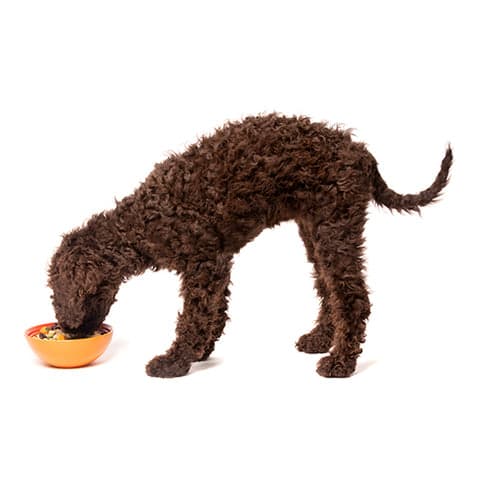
What the Science Says About Gently‑Cooked Pet Food Diets
One of the most influential bodies of research in this area comes from Dr. Kelly Swanson , Professor of Animal Sciences at the University of Illinois.
In controlled feeding trials evaluating human grade, gently‑cooked diets produced by JustFoodForDogs , Dr. Swanson and colleagues demonstrated:
Significantly higher apparent total tract digestibility of protein and fat
Improved stool quality and reduced fecal output
Greater efficiency of nutrient utilization compared to extruded kibble
Dr. Swanson, in his work for many years with Tom&Sawyer, helped develop our Tom&Sawyer and Tom&Sawyer VetChef brands of recipes. His knowledge of our recipe creation, ingredient sourcing and human food facility production, as well as his involvement in formulation refinement and review of third-party lab testing, has contributed significantly to the level of quality that is delivered in every recipe that is overseen by Dr. Hannah Godfrey.
“Across my research, including studies evaluating selection of ingredient sources, inclusion of human grade ingredients and gently-cooked pet food diets, the digestibility advantages observed are attributable to ingredient sourcing and processing standards. Having worked with the Tom&Sawyer team on formulation review and laboratory analysis, and having direct knowledge of their human grade ingredients and human food production practices, their products are consistent with the category of diets shown to support high nutrient digestibility.”
-Dr. Kelly S. Swanson, Professor of Animal Sciences and Nutritional Sciences, University of Illinois Urbana-Champaign
Beyond feeding trials, Dr. Swanson has also published foundational work on ingredient‑level digestibility using validated laboratory models.
Precision Digestibility Evidence Using Human Grade Dog Food Ingredients
In a 2020 peer‑reviewed study published in Translational Animal Science , Oba, Utterback, Parsons, and Swanson evaluated the true nutrient and amino acid digestibility of dog foods made with human grade ingredients .
The researchers reported:
Exceptionally high true amino acid digestibility for both essential and non‑essential amino acids
Digestibility values are closely aligned with those assumed by the original Atwater factors
Superior protein quality and biological value compared to conventional feed-grade ingredients
These findings reinforce that ingredient sourcing and processing level — not just macronutrient percentages — are primary drivers of nutritional value.

Why Higher Digestibility in Food Matters for Dogs and Cats
For healthy pets, greater digestibility means:
Better nutrient absorption per bite
Less metabolic waste
More efficient energy and calorie utilization
For pets with health challenges — including gastrointestinal disease, chronic inflammation, recovery from illness, or age‑related decline — the impact is even more profound.
Gently‑cooked cat and dog foods:
Reduce digestive workload
Preserve heat‑sensitive vitamins, amino acids, and fatty acids
Deliver nutrients in forms the body more readily recognizes and uses
Hig hly processed diets are engineered primarily for shelf stability . Gently‑cooked diets are engineered for biological compatibility and digestive efficiency .
Scientific Con sultation Supporting Gently-Cooked Dog & Cat Food Nutrition
Tom&Sawyer’s approach is not developed in isolation. For several years, the Tom&Sawyer nutrition team worked in direct consultation with Dr. Kelly Swanson, whose research forms much of the scientific foundation for understanding digestibility and nutrient utilization in human grade dog and cat foods.
Across multiple peer-reviewed publications, Dr. Swanson has emphasized that the digestibility advantages observed in human grade, gently-cooked dog food diets are driven by ingredient quality, formulation, and processing standards , rather than by any single brand.
How Tom&Sawyer Applies These Digestibility Principles in Their Pet Meals
At Tom&Sawyer, our approach is grounded in the same nutritional principles demonstrated in the scientific literature:
Human grade ingredients sourced from the human food supply chain
Gently‑cooked preparation to maximize digestibility and nutrient retention
Evidence‑based formulation aligned with NRC and AAFCO nutrient profiles
Species‑appropriate recipes for both dogs and cats

W e don’t rely on the Modified Atwater system as a workaround for poor digestibility — we design our cat and dog meals to more closely reflect the assumptions of the original Atwater model: highly digestible, biologically available nutrition.
The result is pet food that delivers more usable nutrition per calorie , supports digestive health, and aligns with what the science tells us animals actually thrive on.
Key Takeaways About Gently-Cooked Cat & Dog Food and Digestibility
Calories are not created equal.
When ingredient quality and processing methods improve, digestibility improves — and when digestibility improves, your pet gets more nutrition from every meal .
Gently‑cooked, human grade diets are not a trend. They are a return to nutritional fundamentals — and a powerful, science‑backed option for supporting long‑term health in both dogs and cats.
Disclaimer: Dr. Kelly Swanson is a Professor of Animal Sciences at the University of Illinois and has consulted with Tom&Sawyer in the past on formulation review and analytical evaluation, and is not currently affiliated with the company as of the publication date. We appreciate his contribution to this article with an approved quote prior to publication.
References
Nutrient Requirements of Dogs and Cats . National Academies Press. 2006. National Research Council (NRC).
AAFCO. Official Publication . Association of American Feed Control Officials.
Swanson KS et al. Apparent nutrient digestibility and stool quality of dogs fed human‑grade compared with extruded diets . Journal of Animal Science.
Oba PM, Utterback PL, Parsons CM, Swanson KS. True nutrient and amino acid digestibility of dog foods made with human-grade ingredients using the precision-fed cecectomized rooster assay . Translational Animal Science. 2020;4(1):442–451.
Deng P, Utterback PL, Parsons CM, Hancock L, Swanson KS. Chemical composition, true digestibility, and true metabolizable energy of novel pet food protein sources using the precision-fed cecectomized rooster assay . Journal of Animal Science. 2016;94(8):3335–3342.
Do S, Phungviwatnikul T, de Godoy MRC, Swanson KS. Nutrient digestibility and fecal characteristics, microbiota, and metabolites in dogs fed human-grade foods. Journal of Animal Science. 2021;99(2). https://doi.org/10.1093/jas/skab028