
Inside Tom&Sawyer: How We Create Human-Grade Dog Food in Canada
Written by Peter Zakarow, CoFounder of Tom&Sawyer, proud fur-dad to Sawyer
Tom&Sawyer’s whole food dog meals offer superior safety and freshness through locally sourced ingredients, whenever possible, and cooking in a CFIA, SQF and HACCP certified human food production facility, where following safety and quality standards set for human is what we promise for your pet, because if you would not (and could not) eat, it, why should they?

While federal regulations remain limited in Canada, Tom&Sawyer believes in exceeding all pet food standards through third-party human grade human certifications, extensive testing protocols, and commitment to freshness that various other products cannot match.
What makes our dog food made in Canada safer and fresher than alternatives? The answer lies in our dedication to whole food pet nutrition, whole food ingredients for dogs, and production in a human-grade facility in Canada.
To many other pet food companies will talk about "having human grade ingredients" but this means nothing if the food is not made in a government-inspected human food production facility. Those "human grade ingredients" are not actually fit for human consumption and you have to question why that is, we did!
Whole Food Pet Nutrition: Why Fresh, Whole Ingredients Matter
Whole food dog meals are built on a simple principle: dogs thrive when they eat fresh, minimally processed whole food ingredients. At Tom&Sawyer®, whole food pet nutrition means formulating meals using the same restaurant‑quality, human grade ingredients you would feel confident serving in your own kitchen. Prepared safely, gently cooked, and nutritionally balanced for pets.
Unlike shelf-stable foods that rely on extreme heat, extrusion, and long supply chains, whole food ingredients for dogs retain more of their natural vitamins, minerals, and amino acids. This results in nutrient-rich dog meals that support better digestion, stronger immunity, and improved overall well‑being.
Why Whole Food Ingredients Make a Difference
Fresh, recognizable ingredients, such as whole muscle meats, bright vegetables, and whole grains, provide nutritional benefits. Gently-cooked dog meals preserve:
- Heat-sensitive vitamins and enzymes that support digestion
- Natural moisture that aids hydration and kidney health
- Bioavailable proteins that promote muscle maintenance
- Antioxidants and phytonutrients found in whole fruits and vegetables
- Healthy fats are essential for skin and coat health
By cooking each ingredient separately at lower temperatures, Tom&Sawyer maintains ingredient integrity and protects these beneficial nutrients.
Complete and Balanced Dog Food Nutrition From Real Food
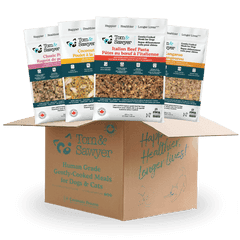
Every Tom&Sawyer recipe is formulated by PhD Animal Nutritionists to meet and exceed AAFCO nutrient profiles for complete and balanced dog food. This ensures pets receive the full spectrum of nutrients they need with whole food ingredients.
Whole food diets for dogs also support:
- Improved digestion due to naturally digestible ingredients
- Stable energy levels from balanced macronutrients
- Healthy stool quality from appropriate fibre sources
A more diverse nutrient profile from real food variety
Human Food-Grade Facility Standards
Tom&Sawyer chooses to produce our nutrient-rich dog meals in facilities meeting not just HACCP certification but SQF certification and federal SFCA certification for human food safety standards rather than lower pet food requirements (which in Canada, there are no required government inspections for any pet food facility!). This voluntary human grade level commitment means the same rigorous protocols used for food you eat also protect meals for your dog.
Our human grade facility partner holds several food safety standard certifications:
- HACCP
- SQF
- CFIA Safe Food for Canadians
Regular government inspections and annual audits are required. Sanitation standards exceed pet food requirements and audit logs of testing protocols and temperature charts keep a level of trust and transparency that you can feel confident about.
Extensive Batch Testing Protocols
We use Canadian manufacturers who use test and hold protocols for bacterial contamination and pathogen presence, and we regularly test for nutritional accuracy before distribution.
Comprehensive batch testing includes:
- Testing for pathogens like Salmonella and E. coli
- Verify nutritional content matches guaranteed analysis
- Screen for contaminants and heavy metals
- Ensure ingredient safety and quality consistency
- Third-party laboratory verification provides independent confirmation
Testing protocols cost significantly more than relying on supplier certifications or simply relying on the recipe formulation. Manufacturers and pet food brands who invest in comprehensive testing demonstrate that pet safety matters more than profit margins. This voluntary commitment creates the safest possible products.
Direct Relationships with Regional Suppliers
We believe in working with Canadian manufacturers who build lasting partnerships with local growers and suppliers. These direct relationships enable facility visits, practice verification, and ongoing quality conversations.
Regional supplier relationships provide advantages:
- Direct partnerships with Canadian farmers and producers
- Regular visits to inspect supplier facilities
- Verify humane raising and farming practices
- Trace ingredients to its source
- Ensure ethical and sustainable practices
When you know your suppliers personally, ingredient quality becomes a partnership rather than a transaction. This creates accountability that anonymous supply chains cannot replicate.
Voluntary Quality Standards Exceed Federal Requirements
Dog food made in Canada operates within limited to no federal oversight, but leading manufacturers voluntarily adopt standards far exceeding regulatory minimums. Top brands produce in human food grade facilities, conduct extensive batch testing, and pursue third-party certifications demonstrating commitment to quality over basic pet food regulations.
Closing the Gap: The Fresh Pet Food Alliance (FPFA)
Because Canada remains the “Wild West” of pet food—where anyone can legally sell food made in a garage with no safety inspections, and the fresh food space became a breeding ground for false marketing and selling expensive food to good-intentioned but misinformed pet parents, Kristin Matthews (CoFounder) and I founded the Fresh Pet Food Alliance (FPFA).
The FPFA is North America’s industry-led alliance dedicated to the integrity of refrigerated and frozen pet foods. While the US has established AAFCO guidelines, Canada lacks a comparable regulatory framework for pet food quality and safety. And the unique category of fresh and frozen pet food is very underserved in education and regulation. The FPFA exists to change that by providing a trust framework for pet parents.
Why the FPFA Matters for Transparency and Accountability
In an industry where marketing often outpaces reality, the FPFA brings much-needed clarity through:
- Standardizing "Human Grade": The FPFA is working to harmonize human grade definitions across North America. Their "Certified Human Grade" designation requires brands to meet the same stringent federal human food laws in Canada that AAFCO requires in the US.
- Third-Party Verification: Rather than taking a brand’s word for it, the FPFA introduces a tiered classification system. This helps consumers verify if a product was made in a licensed human-food facility or a traditional "feed-grade" plant.
- Accountability in Manufacturing: By establishing clear guidance on labeling, food safety, and traceability, the FPFA ensures that "Fresh" actually means fresh, minimally processed, and held to culinary-level safety standards.
- Consumer Education: The alliance serves as a hub of expertise, helping pet parents understand the difference between the low standards of "animal feed" and the high-integrity nutrition of whole food diets.
By supporting FPFA-approved brands, you are choosing a system of accountability that puts your pet's health ahead of industry shortcuts.
How Tom&Sawyer Ensures Fresh, Safe Canadian Production
At Tom&Sawyer, we are the leaders in Canada for gently-cooked dog food and cat food and have been the #1 Most Trusted Gently-Cooked Pet Food in Canada since 2015.
We only produce dog and cat food in a human food production facility in the Toronto area, which allows us to provide your pet with food quality and safety standards exceeding typical pet food requirements. Our gently-cooked meals are prepared in small batches following rigorous safety protocols used for restaurant food.
We source restaurant-quality ingredients from Canadian suppliers whenever possible, cooking each component separately to maximize nutrition while ensuring food safety. This gentle cooking maintains vitamins, enzymes, and amino acids that harsh processing destroys.

Our meals are formulated by PhD Animal Nutritionists to be complete and balanced, then frozen immediately to lock in freshness. We deliver directly to your door, maintaining the cold chain from our kitchen to your refrigerator.
All this so that your pets (and ours) can live happier, healthier, longer lives™.