
Cavalier King Charles Spaniel Dog Food: Keeping Them Lean as Heart Murmurs Appear Around Age 8
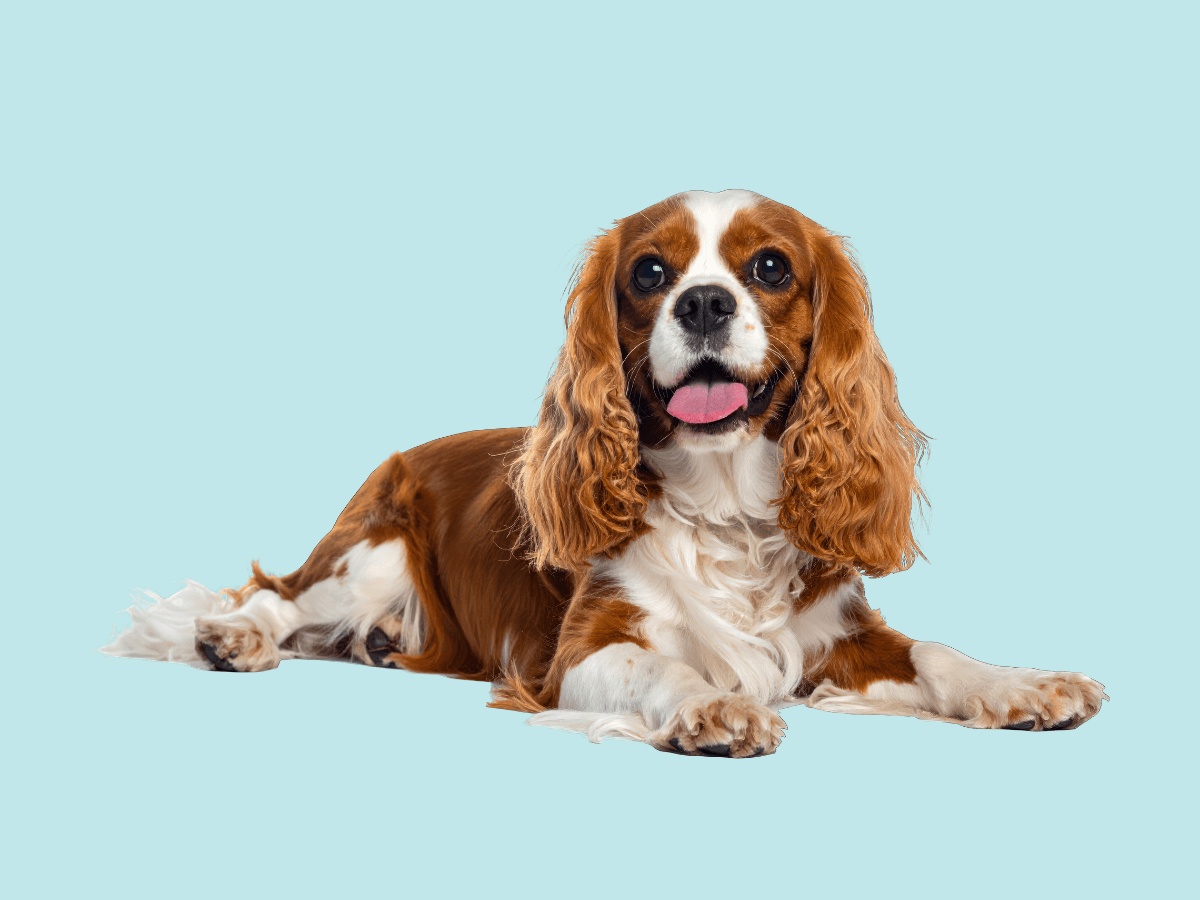
A good Cavalier King Charles Spaniel diet can keep your dog lean, measured and well fed, especially from middle age. A study of 8,860 Cavaliers found heart murmurs first appear at a median age of about 81. Food can't prevent that heart disease, but a steady, healthy weight is something you control every day. Our Cavalier King Charles Spaniel dog food guide covers the breed's full profile.
When do Cavaliers develop heart murmurs?
Cavaliers usually develop heart murmurs in middle age. A UK breed scheme that examined 8,860 Cavaliers between 1991 and 2010 found the median age a murmur was first detected was 7.8 years in males and 8.3 years in females1.
The murmur in Cavaliers is usually linked to degenerative mitral valve disease, a slow change in one of the heart's valves. Studies point to a genetic cause1, which is why a diet can't stop it from developing. What a diet can do is keep your dog at a healthy weight while your veterinarian monitors the heart.
Why does a lean weight matter in a Cavalier King Charles Spaniel diet?
A lean weight matters in a Cavalier King Charles Spaniel diet because the breed is prone to weight gain, and the years when weight creeps on are the same years murmurs tend to appear. Our breed profile lists weight gain, arthritis and joint pain, and a sensitive stomach as the Cavalier's common health risks.
Veterinary cardiologists pay close attention to weight too. The ACVIM consensus guidelines for this heart disease recommend recording body condition score and an accurate weight at every clinic visit, and looking into any meaningful gain or loss2. For dogs with more advanced disease, the same guidelines describe a palatable diet with adequate protein and calories to keep an optimal body condition2.
How much should you feed a Cavalier?
How much to feed a Cavalier depends on weight, age and activity, but a neutered adult of 13 to 18 lbs needs roughly 425 to 540 calories a day. Veterinarians estimate this by calculating the resting energy requirement (70 × body weight in kg to the power of 0.75) and multiplying by 1.6 for a neutered adult3.
That number is only a starting point3. A less active senior may need less, and your vet may set a lower target if your Cavalier is carrying extra weight. Here is the estimate for the breed's typical 13 to 18 lb range.
Adult weight (neutered) | Calories per day (1.6 × RER) | Fisherman's Best Friend Supper (504 kcal/pack) | Thai Coconut Chicken & Rice (473 kcal/pack) |
13 lb (5.9 kg) | ~425 kcal | ~0.84 pack | ~0.90 pack |
15 lb (6.8 kg) | ~470 kcal | ~0.94 pack | ~1.0 pack |
18 lb (8.2 kg) | ~540 kcal | ~1.07 packs | ~1.14 packs |
Rather than doing the maths, answer a few questions about your pup. We'll portion your Cavalier's Meal Plan to their weight, age, activity and body condition.
How do you spot Cavalier weight gain early?
You can spot Cavalier weight gain early by checking your dog's body shape every couple of weeks, not just the number on the scale. A long coat hides extra weight well, so use your hands as well as your eyes.
- Feel the ribs. You should feel them easily under a thin layer of fat, without pressing hard.
- Look for a waist from above. A healthy Cavalier narrows behind the ribs instead of looking straight-sided.
- Check the tummy from the side. The belly should tuck up toward the back legs rather than hang level.
- Weigh on the same scale each month. A small dog gaining half a pound is putting on a noticeable share of their body weight.
Treats are where most extra calories hide. Count them as part of the daily total, and swap some for a spoonful of your dog's regular meal.
What is the best food for a Cavalier King Charles Spaniel with a heart murmur?
The best food for a Cavalier King Charles Spaniel with a heart murmur is the diet your veterinarian or cardiologist recommends for your dog's stage of disease. Some dogs need a prescription diet, and that decision belongs with the vet who is following their heart.
For a Cavalier with no diet restrictions from the vet, a complete and balanced meal that makes portion control easy is a sound choice. Two of the recipes on our breed page are tagged Senior Support and Low Fat on our site, making them low fat dog food for Cavaliers (25 g fat per 1,000 kcal or less).
- Fisherman's Best Friend Supper was designed with senior dogs in mind. It pairs wild Alaskan pollock with butternut squash, brown and white rice and cranberries, at 504 kcal per pack.
- Thai Coconut Chicken & Rice Recipe is a low fat meal of chicken breast, white rice, carrots and spinach, and a favourite with picky eaters, at 473 kcal per pack.
Our breed page also features Turkey Gobbler Feast, a grain-free turkey recipe that suits younger, active Cavaliers. These meals support a healthy weight; they don't treat heart disease.
How can gently-cooked meals support a lean Cavalier?
Gently-cooked meals support a lean Cavalier by giving a complete, balanced diet in measured packs, so you always know the calories in the bowl. Every Tom&Sawyer meal is made with 100% human grade ingredients in a human grade inspected facility, and gently-cooked to a safe internal temperature without cooking out nutrients.
Animal nutritionists formulate and lab test each recipe to AAFCO nutrient profiles. A Full Plan makes our meals your Cavalier's complete diet, portioned to the gram for their calorie needs. A Partial Plan mixes our meals with their current food at a smaller daily portion. You can update the portion as your dog's weight changes or cancel anytime, and each order comes with our 14 day satisfaction guarantee.
Ready to build a Cavalier King Charles Spaniel diet that keeps them lean?
A Cavalier King Charles Spaniel diet that keeps them lean starts with the right daily calories and regular heart checks with your vet from middle age. Bring your vet the weight trend and the food you feed, and ask what body condition they want to see.
Build your pup's Meal Plan with our meal quiz. Tell us about your Cavalier, and we'll recommend meals and portion them to the gram for a lean, healthy weight.
Please consult your veterinarian before making changes to your pet's diet, especially if your pet has a medical condition. Tom&Sawyer does not provide veterinary diagnosis or treatment; our meals support health and don't replace veterinary care.
Resources
- Swift, S., Baldin, A., & Cripps, P. (2017). Degenerative Valvular Disease in the Cavalier King Charles Spaniel: Results of the UK Breed Scheme 1991–2010. Journal of Veterinary Internal Medicine, 31(1), 9–14. https://pubmed.ncbi.nlm.nih.gov/28054393/
- Keene, B. W., Atkins, C. E., Bonagura, J. D., Fox, P. R., Häggström, J., Fuentes, V. L., Oyama, M. A., Rush, J. E., Stepien, R., & Uechi, M. (2019). ACVIM consensus guidelines for the diagnosis and treatment of myxomatous mitral valve disease in dogs. Journal of Veterinary Internal Medicine, 33(3), 1127–1140. https://pmc.ncbi.nlm.nih.gov/articles/PMC6524084/
- Sanderson, S. L. (2024). Nutritional Requirements of Small Animals. Merck Veterinary Manual. https://www.merckvetmanual.com/management-and-nutrition/nutrition-small-animals/nutritional-requirements-of-small-animals