
Gently-Cooked Dog Food for Sensitive Stomachs: Choosing an Easy-to-Digest Meal
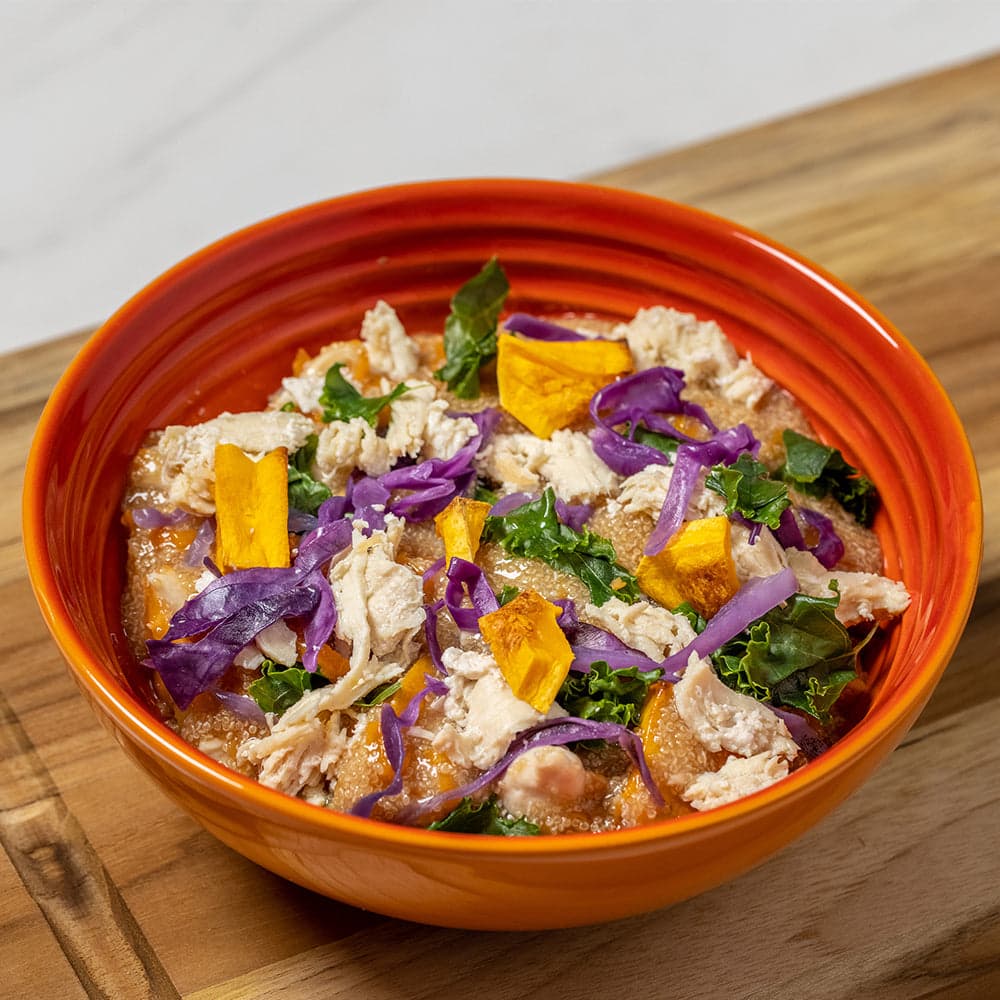
Soft stool after every bag change, a pup who gurgles at night, a bowl left half full: a sensitive stomach makes every meal feel like a gamble. Gently cooked dog food for sensitive stomach troubles works by making each ingredient easy to break down: real meat and gentle carbs, cooked just enough, with fat kept in check. Our meals for sensitive stomachs are built that way, and this guide shows you what to look for in any recipe.
How does gently-cooked dog food for a sensitive stomach work?
Gently-cooked dog food for a sensitive stomach works because it's made from whole, recognizable ingredients cooked to a temperature that makes them safe and digestible without cooking the nutrients out. At Tom&Sawyer, each ingredient is cooked individually to its optimal internal temperature: hot enough to kill bacteria and pathogens, not so hot that it strips away nutrients.
Processing is half the story. Ingredient quality, cooking temperature and cooking time all shape how much of a meal your dog actually absorbs. Our nutritionist explains how digestibility affects nutrient absorption, from sourcing to the cooking pot.
Every Tom&Sawyer recipe uses 100% human grade ingredients, prepared in an inspected human food facility in small batches. For a sensitive dog, that means fewer unknowns in the bowl. Want a recommendation for your dog right now? Take the meal quiz and tell us about their tummy.
What does highly digestible dog food mean?
Highly digestible dog food is food your dog breaks down and absorbs efficiently, so less passes through unused. Digestibility is measured as the share of a nutrient that's absorbed, and it's one of the clearest ways to compare recipes for a sensitive dog.
A peer-reviewed study from the University of Illinois tested six dog foods made with human grade ingredients. For the majority of essential amino acids, digestibilities were greater than 85%, with some greater than 90%, and the authors concluded the foods tested had very high amino acid digestibilities.1 The same study found that standard equations underestimated the energy content of those foods,1 which is one reason we portion by calories and check body condition.
What does that look like at home? Usually smaller, firmer stools and a dog who feels full on the right amount. We cover the yard-side view in what dog food digestibility really means, and the study itself in our post on the published study on human grade pet food.
What should you look for in dog food for a sensitive stomach?
Good dog food for a sensitive stomach combines four things: a protein your dog tolerates, controlled fat, gentle carbohydrates and fibre, and a short, consistent ingredient list. Check each one on the label.
A protein your dog tolerates
Some tummy trouble is a reaction to a protein. A critically appraised review found that the food allergens most frequently reported in dogs were beef, dairy products, chicken and wheat.2 If your vet suspects a reaction, a less common protein such as pork, wild Alaskan pollock or kangaroo is often worth discussing.
Controlled fat
Rich meals are a common trigger for upset stomachs. Our low fat recipes contain 25 g of fat per 1,000 kcal or less; our Fisherman's Best Friend Supper lists 19 g per 1,000 kcal. Look for fat stated per 1,000 kcal so you can compare recipes fairly.
Gentle carbohydrates and fibre
White rice, pumpkin, oats and sweet potato are easy on most stomachs. Fibre helps firm up stool and feeds healthy gut bacteria. Our guide to fibre in your pet's diet explains the different types.
A short, consistent ingredient list
Fewer ingredients make it easier to spot what agrees with your dog. Once you find a recipe that works, consistency matters as much as the recipe.
Which Tom&Sawyer meals suit a sensitive stomach?
Every recipe below is listed for sensitive stomachs in our product guide, and each adds a specific kind of support. This is cooked dog food for sensitive dogs, matched to the reason behind the sensitivity:
Recipe | Why it can suit a sensitive dog |
Low fat, chicken breast and white rice; suited to dogs prone to pancreatitis and vomiting | |
Low fat, wild Alaskan pollock as a novel protein, brown & white rice | |
Low fat, single novel protein, higher fibre for gut health support | |
Pork as a novel protein, grain-free and gluten-free | |
Low fat, extra lean ground beef and quinoa |
For off days, our Tummy Tamer* (chicken, white rice and pumpkin) is a simple, easy-to-digest blend that's gentle on the stomach. Ask your vet how long to feed it as it is not complete and balanced!
When is a sensitive stomach a vet problem, not a food problem?
A sensitive stomach becomes a vet problem when symptoms are severe, sudden or don't settle. Dog food for easier digestion supports a healthy gut, but it can't diagnose or treat illness.
Call your veterinarian if your dog has:
- vomiting or diarrhea that continues or keeps coming back
- blood in the stool or vomit
- weight loss, lethargy or loss of appetite
- a painful or bloated belly
Our guide to diarrhea in dogs covers common causes. Your vet may suggest a highly digestible, low fat or novel protein diet, and our nutrition team is happy to help you match a recipe to that plan.
How do you switch a sensitive dog to gently-cooked food?
Switch a sensitive dog to gently-cooked food slowly, over 10 days or more rather than the usual 7. The American Kennel Club notes that dogs with sensitive stomachs, food allergies or other gastrointestinal conditions may need a longer transition, and that abrupt changes can cause vomiting, diarrhea and decreased appetite.3
Start with a small share of the new food, hold each stage until stool is normal, and keep treats to a minimum. Our step-by-step guide on how to transition your dog to new food has the full schedule.
Ready to find an easy-to-digest meal with Tom&Sawyer?
Finding gently cooked dog food for a sensitive stomach is easier with a nutrition team behind you. Tom&Sawyer meals are human grade, gently-cooked, formulated by animal nutritionists and portioned to your dog's daily calories.
Answer a few questions about your pup, mention their tummy troubles, and we'll suggest meals and a Meal Plan delivered on your schedule. Welcome to the pack.
Please consult your veterinarian before making changes to your pet's diet, especially if your pet has a medical condition. Tom&Sawyer does not provide veterinary diagnosis or treatment.
* Currently available in Canada only
Resources
- Oba, P. M., Utterback, P. L., Parsons, C. M., & Swanson, K. S. (2020). True nutrient and amino acid digestibility of dog foods made with human-grade ingredients using the precision-fed cecectomized rooster assay. Translational Animal Science, 4(1), 442–451. https://doi.org/10.1093/tas/txz175
- Mueller, R. S., Olivry, T., & Prélaud, P. (2016). Critically appraised topic on adverse food reactions of companion animals (2): common food allergen sources in dogs and cats. BMC Veterinary Research, 12, 9. https://bmcvetres.biomedcentral.com/articles/10.1186/s12917-016-0633-8
- American Kennel Club. "How to Switch & Transition Dog Foods." AKC Staff. https://www.akc.org/expert-advice/nutrition/right-way-switch-dog-foods/