
Coconut Oil for Dogs and Cats: What Science Really Says About Pets and Fats

Written by Kelly Gredner RVT, VTS (Nutrition)
Coconut oil is commonly used as a go to for many ailments for pet parents searching for natural remedies or alternatives they can access within their own home. Coconut oil is also a popular, sought after ingredient by pet parents who might be looking to avoid other, more regularly used plant oils like canola, corn or soybean. It’s thought to be healthier and more beneficial than its more refined counterparts.
But does coconut oil for dogs and cats live up to those expectations? Coconut oil is considered safe for pets, but it is very low in linoleic acid, an essential omega 6 fatty acid required in the diet. Its medium chain triglycerides, or MCTs, may have other nutritional applications, but that does not make coconut oil a replacement for the essential fatty acids pets need from other sources.¹ ²
To understand why, let’s look at the differences between coconut milk and coconut oil, how essential fatty acids work, where coconut oil fits as a fat source, and why we choose other ingredients when formulating Tom&Sawyer® meals.
Coconut Milk vs Coconut Oil: What Is the Difference?
Coconut milk and coconut oil both come from the white flesh, or coconut meat, but they are nutritionally very different. Coconut oil is essentially pure fat, while coconut milk combines coconut meat with water and can contain a much lower concentration of fat depending on how it is prepared.
A coconut is broken down into three main components: the shell, water, and the flesh (referred to as coconut meat).
Coconut milk is made from grating the coconut meat and mixing with water. Coconut oil is the fat that has been extracted from the coconut meat.
Coconut oil is 100% fat, whereas coconut milk can range in fat content depending on its intended use (2% fat for beverages all the way up to 30% for cooking).
That distinction matters because using coconut milk as one ingredient within a complete recipe is nutritionally different from adding concentrated coconut oil to a pet's food.
Is Coconut Oil Safe for Dogs and Cats?
If you are wondering if coconut oil is safe for dogs, both coconut oil and coconut milk are considered safe for use in pets. However, something being safe does not necessarily mean it provides the specific nutrients needed in a complete and balanced diet.
Coconut milk potentially has some health benefits that we can theorize from human medicine like being anti-inflammatory, anti-fungal, and anti-bacterial through a component like lauric acid.
Coconut oil is often a substitute for other oil types such as canola or other vegetable oils and is considered safe for use for our pets.
Anecdotally, coconut oil and coconut milk might help improve skin and coat health due to the fatty acid content.
The same applies when considering coconut oil for cats. The more important nutritional question is not simply whether an ingredient can be eaten, but what nutrients it contributes to the complete diet.
What Are Essential Fatty Acids for Dogs and Cats?
Essential fatty acids for dogs and cats are fats required in the diet because dogs and cats are unable to make enough of them themselves. They perform multiple functions in the body, including supporting reproduction, growth, immunity, skin, and coat health.²
Omega fatty acids are considered triglycerides which means they have long carbon chains and take longer to break down. They are also the body’s main source of energy² and so triglycerides are the most common fat type in a dog or cat's diet.
Omega 6 fatty acids, like linoleic acid or arachidonic acid, are important for reproduction, growth, immunity, and skin/coat health. Plants are rich sources of omega 6 fatty acids!
Omega 3 fatty acids, like EPA and DHA, are also considered essential though only in certain life stages. For example, DHA is required during growth for eye, nerve and ear function. Or, DHA can be beneficial in certain medical conditions like osteoarthritis or renal disease for its anti-inflammatory effects.
Fats are a crucial part of a complete and balanced diet, but not all fats are created equal.
If you want to take a deeper look at how these nutrients fit into pet nutrition, read our guide to omega fatty acids for dogs and cats.
Is Coconut Oil a Good Source of Omega Fatty Acids?
Despite its popularity, coconut oil is very low in, or contains zero amounts of, linoleic acid, making it a poor choice when the goal is supplying this essential omega 6 fatty acid in pet food.¹
When adding plant oils to a diet, we are not only looking at their overall nutritional profile, but specifically looking at the differences in the amounts of linoleic acid. This is an omega 6 fatty acid required for many functions in the body, including being integral to skin and coat health.
The linoleic acid content varies widely between oils and, typically, the higher the concentration of linoleic acid in the oil, the better! This reduces the amount of oil that needs to be added to the recipe.
If the oil source is low in linoleic acid, then you will need to increase the volume of that oil to hit the appropriate nutritional markers.
This can be:
- Cost prohibitive
- Make the recipe too high in fat (limiting the pets it can be fed to)
- Affect the palatability (or flavor) of the diet
Both plant and animal oils contain linoleic acid, but the richest sources come from plants.
How Does Coconut Oil Compare With Other Oils?
This chart¹ shows the amounts of linoleic acid in each oil, plus butter for reference's sake.
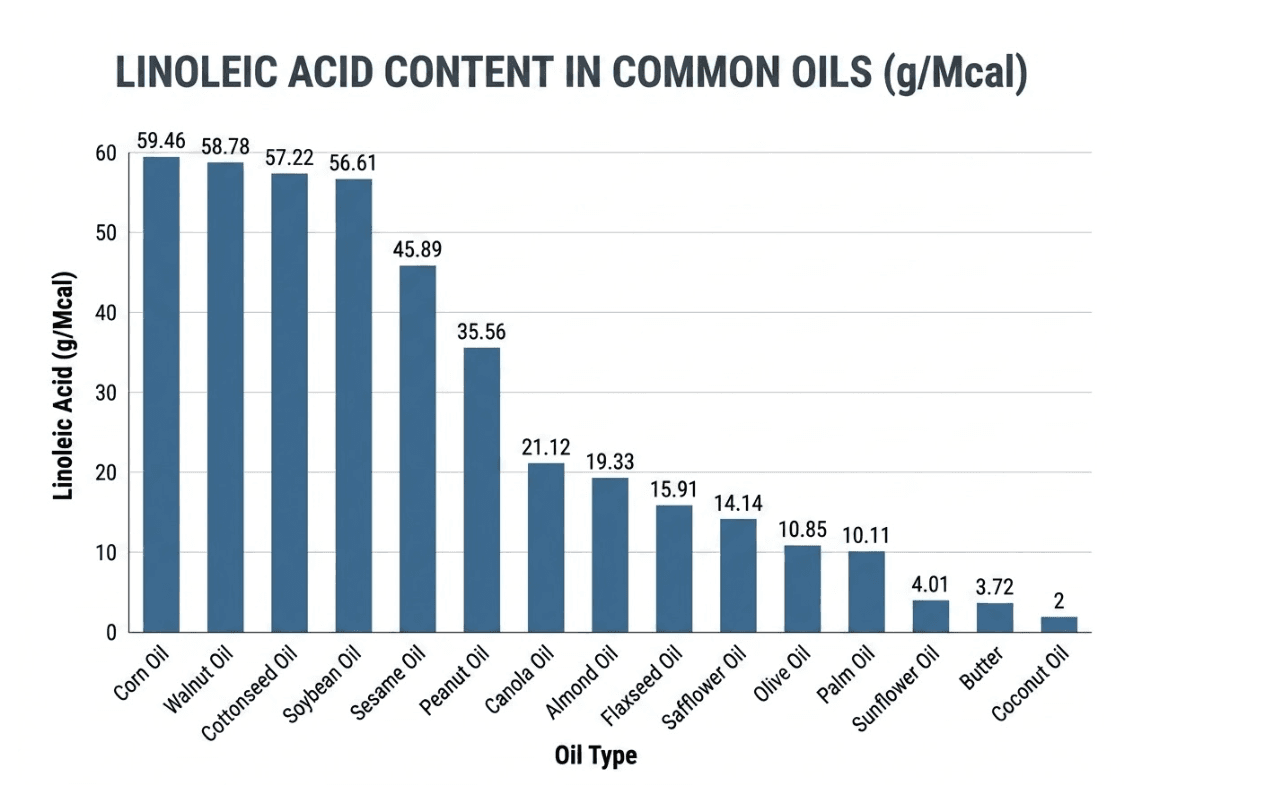
Even though some oils are very high in linoleic acid, they may also be:
- Cost prohibitive (e.g walnut oil)
- Have limited accessibility (e.g cottonseed oil)
- Have strong flavor (e.g sesame oil)
When selecting an oil source, it is important to think about all factors, nutritional and otherwise, and not just popularity or trends.
Coconut oil, unfortunately, is not a good option for supplying linoleic acid for pet food.
Why Tom&Sawyer Uses Other Fat Sources Instead of Coconut Oil
At Tom&Sawyer®, we select fats according to the nutritional needs of the complete recipe. That means considering essential fatty acids, overall fat content, palatability, accessibility, and how each ingredient works with the rest of the meal rather than choosing an ingredient because it is popular.
We also like to align ourselves with what pet parents are looking for, as long as it is nutritionally sound! We try to source non-GMO ingredients from reputable companies.
We combine whole food ingredients with a fish oil (anchovy) and sometimes a plant oil to provide full fatty acid nutritional support. We use sunflower oil, chia seeds, and you can even find sesame oil in our Beef&Broccoli* recipe to meet essential fatty acid, and flavor, needs!
As popular as coconut oil is, based on the very low concentration of linoleic acid and being an overall poor source of omega fatty acids, that won’t be found in our Gently-Cooked pet meals.
However, you might find coconut milk in some of our meals because it contains some nutrients that, while not essential, may provide other benefits for our pets!
You can also learn more about how Gently-Cooked food is formulated and what to look for in a complete meal.
What Are Medium Chain Triglycerides (MCTs) in Coconut Oil?
Coconut oil is not all bad. It contains medium chain triglycerides, or MCTs, which are fats that are absorbed differently and may have applications in gastrointestinal or neurological conditions, senior pets with cognitive impairment, and conditions involving impaired or altered fat digestion.²
Unfortunately, MCTs are not super tasty and increased levels of them can cause poor food intake. That’s where coconut milk comes in! Coconut milk contains the meaty part of the coconut, including some of the MCTs, but at a more tolerable amount than coconut oil and much more palatable.
Right now studies are showing potential cognitive improvements in senior dogs and a reduction in seizure-like activities in epileptics³ in dogs fed a diet enriched with MCTs.
MCTs might also be beneficial for skin and coat health in dogs and cats. However, more research is needed to discover their full potential.
This is an important distinction when considering MCT oil for dogs. The potential applications of MCTs do not change the fact that coconut oil remains a poor source of the essential omega fatty acid linoleic acid.
What About Coconut Oil for a Dog's Skin and Coat?
Anecdotally, coconut oil and coconut milk might help improve skin and coat health due to their fatty acid content. However, supporting skin and coat health through nutrition also means providing the essential fatty acids that dogs and cats require in their overall diet.
That is why we look at linoleic acid, omega 3 fatty acids, and the complete fatty acid profile rather than deciding whether an ingredient is useful based only on its popularity.
Adding an oil also adds dietary fat, so any supplement should be considered within the context of the pet's complete diet rather than as a standalone ingredient.
Should You Add Coconut Oil to Your Pet's Food?
Before adding coconut oil for pets, consider what nutritional purpose you want it to serve. Coconut oil may contain MCTs, but it is a poor source of linoleic acid and does not replace the essential omega fatty acids that need to be provided through a nutritionally balanced diet.
So, if you’re wondering why we don’t use coconut oil in our recipes, it’s because we prioritize functional, wholesome ingredients that elevate our meals through science backed nutrition.
But if you are interested in adding coconut milk into your dog's diet, then consider our paw-rent approved Thai Coconut Chicken & Rice Recipe!*
Prioritizing nutritionally balanced recipes is essential for the long-term well-being of our pets. While the appeal of natural remedies is understandable, professional guidance is the most reliable way to ensure a diet meets all of a pet’s complex requirements.
How Tom&Sawyer Uses Science to Build Balanced Pet Meals
All ingredients have their purpose and each Tom&Sawyer® meal has been carefully formulated by Dr Hannah, our Animal Nutritionist. As an RVT and VTS in Nutrition, I advocate for an evidence-based approach to nutrition where professional expertise ensures the healthiest possible outcome for your pets!
At Tom&Sawyer®, we choose ingredients for the nutritional role they play within a complete meal, not simply because they are trending. Our Human Grade, Gently-Cooked meals combine whole-food ingredients with carefully selected fat sources to provide balanced nutritional support. If you're trying to decide which recipes and nutrient profiles make sense for your pet, complete our custom Meal Plan questionnaire and tell us about them so we can help you find a meal suited to their individual nutritional needs.
*Currently available in Canada only.
References
- Delaney, D. S. (n.d.). FAQs | vetnutritionist.AI. Balance IT. https://balance.it/faqs
- Case, L. P., Daristotle, L., Raasch, M., & Hayek, M. (2011). Canine and feline nutrition (third edition) (3rd ed.). Mosby.
- Benjamin Andreas Berk, Rowena Mary Anne Packer, Tsz Hong Law, Annette Wessmann, Andrea Bathen-Nöthen, Tarja Susanna Jokinen, Anna Knebel, Andrea Tipold, Ludovic Pelligand, Holger Andreas Volk, Medium-chain triglycerides dietary supplement improves cognitive abilities in canine epilepsy, Epilepsy & Behavior, Volume 114, Part A, 2021, 107608, ISSN 1525-5050, https://doi.org/10.1016/j.yebeh.2020.107608.