
The Bland Diet for Dogs: A Gentle Approach to a Common Problem
By Kelly Gredner, RVT, VTS (Nutrition) ·
A sudden case of diarrhea is a common occurrence for dog parents. It can include accidents in the house or frequent trips to the grass, causing sleepless nights for everyone.
A bland diet for dogs is a simple, home-cooked meal of easily digested ingredients that veterinarians often recommend for a few days when a dog has an uncomplicated upset stomach. Below, we cover what goes into one, how much chicken and rice to feed, and where a homemade bland diet falls short. (For the bigger picture on loose stools, see our guide to diarrhea in dogs.)
What is a bland diet for dogs?
A bland diet for dogs is a short-term, home-cooked meal made from one lean protein and one simple carbohydrate. Historically, veterinarians have recommended what they call a “bland diet” for uncomplicated diarrhea cases, which is a home-cooked meal consisting of either chicken breast and white rice, or lean ground beef with white rice. For dogs on a plant-based diet, they may have also recommended plain, cooked eggs and white rice, or tofu and white rice.
The concept is: simple basic ingredients that are easily digested and accessible to a lot of families.
Pet parents are usually quick to jump at the chance to home-cook for their pup, as they feel like a part of their recovery, and pups that aren’t used to cooked foods like this are more than happy to oblige!
How long should a dog stay on a bland diet?
A bland diet for dogs with diarrhea is only meant to be fed for 1-3 days, then the pet is transitioned back onto their original diet. Our step-by-step guide on how to transition your dog to a new diet can help with that move back.
However pup-ular, a pet parent might run into some issues when trying to feed this to their dog. The biggest ones are calories, fiber, hydration, fat and time, and each is covered below.
How much chicken and rice should you feed a dog?
How much chicken and rice to feed a dog depends on the dog's daily calorie needs, and that number is often missing from a bland diet recommendation. A “bland diet” recommendation of cooked chicken and rice comes without a recipe and each clinic will have their own versions of what this looks like.
For example, telling a pet parent to feed 1 part chicken to 2 parts white rice doesn’t mean a lot to them. It leaves room for error. But more importantly, a calorie recommendation is often missing with this “bland diet”.
Calories in chicken and rice for dogs
One skinless, boneless, cooked chicken breast (or 172 g) has 284 calories1, and 1 cup of cooked white rice is 205 calories2.
For a medium sized dog (15 kg) they would need approximately 640 calories per day.
This would mean that for one day, this specific dog would need approximately:
- 1 chicken breast
- 1 ¾ cups of cooked white rice.
Now let’s look at a 5 kg dog. They need approximately 330 calories per day. This would mean they would need a daily meal of:
- ½ chicken breast
- ¾ cup white rice
Why bland diet portions are easy to get wrong
Unfortunately, this doesn't “look like” a lot of food, and this is a common complaint from pet parents which means that these dogs could easily be overfed, adding to the gastrointestinal distress they are already experiencing.
But it also means they can easily be underfed (and hungry!), which during a medical event, is undesirable. If you'd rather not do the math, answer a few questions about your pup in our meal quiz and we'll suggest meals portioned to their needs.
Why does a bland diet for dogs need fiber?
A bland diet needs fiber because fiber helps firm up loose stools, and the chicken breast and white rice combination provides very little of it. Some gastrointestinal upsets can benefit from the inclusion of fiber, and overall, the white rice/chicken breast combo is a poor source of fiber.
Fiber can help slow down the gut transit time, allowing more time for water to be absorbed, firming up the poop. Some fibers even will soak up the intestinal fluid, helping the stools to firm.
Fiber also helps to feed the beneficial bacteria in the gut which can help stabilize the gut environment. You can learn more about dietary fibre for your dog here.
What else helps a dog with diarrhea recover?
Beyond the bland diet itself, gut bacteria, hydration and dietary fat all play a part in how quickly a dog with diarrhea recovers.
Can prebiotics, probiotics or postbiotics help?
Prebiotics, probiotics and postbiotics might help when a dog's diarrhea is caused by a bacterial imbalance. During times of gut inflammation, feeding the positive or healthy gut bacteria can help reduce the opportunity of the bad, and pathogenic bacteria from overgrowth.
Keeping our friendly gut bacteria and intestinal cells thriving can help reduce the severity and get our pups' gut back to full strength!
In the event the diarrhea is caused by a bacterial imbalance or dysbiosis, the addition of either prebiotics, probiotics, or postbiotics, or a combination, might be helpful and shorten the duration of the acute diarrhea.
How do you keep a dog with diarrhea hydrated?
Fresh water and extra moisture in the diet both help keep a dog with diarrhea hydrated. Ongoing diarrhea can lead to fluid losses, and a “bland diet” isn’t necessarily a high moisture meal. Having free access to fresh water is crucial, but having extra moisture in the diet can also help!
And adding water to a “bland diet” isn’t always the most effective way to increase or improve hydration, but mostly, it’s not the most tasty way, either. Dehydration can lead to lethargy and weakness, overall making your pup feel terrible.
Should a dog with diarrhea eat a low fat diet?
A low fat diet might help a dog with diarrhea in the short term. Due to reduced function of the gut, fat absorption might be hindered and a moderate to high fat diet (even if normally fed without issue), might worsen the stools. More fat in the diet can also increase how quickly food is moving through the intestine which can exacerbate the issue. Therefore, a low fat diet might be helpful in the short term2! Our low fat meals all contain 25 g of fat per 1,000 kcal or less.
Is home-cooking a bland diet worth the time?
Home-cooking a bland diet works, but it is a real time commitment that many households struggle to keep up. Home-cooking requires dedication and is a serious time commitment for pet parents, especially those used to feeding their pups kibble. They might initially be on board, but after 24 to 48 hrs, their interest can wane as life takes over, especially in larger families with busy households. It can be a lot to ask for a pet parent to suddenly start cooking for their pet.
What is a ready-made alternative to a homemade bland diet?
A ready-made, gently-cooked meal gives your dog the same simple ingredients as a homemade bland diet, with the calories already worked out. Here are two Tom&Sawyer options for a dog's upset stomach.
Tummy Tamer: a pre-made bland diet
If you’re a busy pet parent and would like to purchase a “bland diet" over cooking one for your dog, then look no further than our Tummy Tamer*!
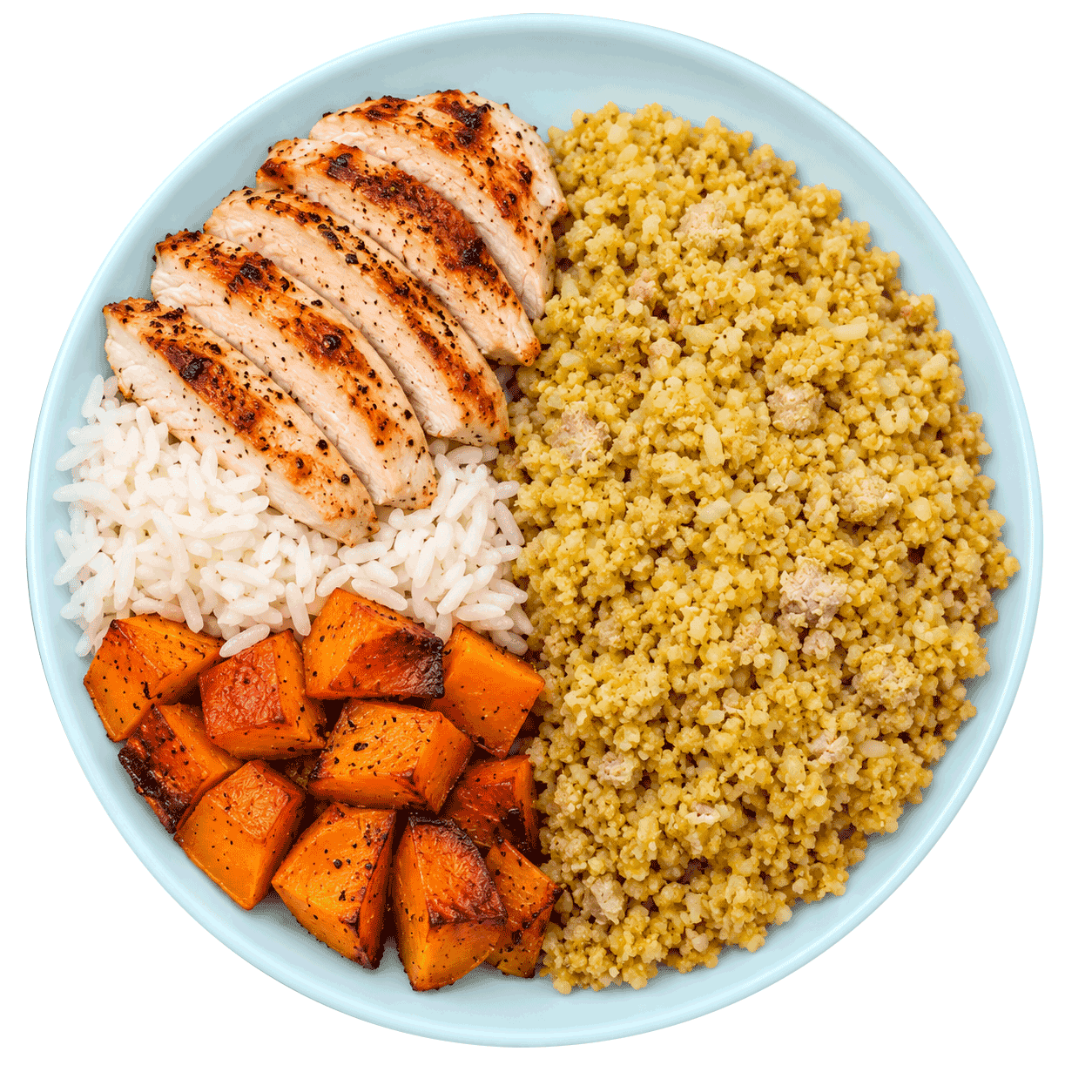
Consisting of only cooked chicken breast, white rice, and pumpkin, this reduced fat, pre-made “bland diet” can help soothe the inflamed gut and introduce gently-cooked ingredients in highly digestible and bioavailable forms.
It contains 477kcal per package, so there’s no guessing on how much to feed! Ask your veterinary team how many calories to feed per day to ensure your pup is meeting their daily calories. Which is especially important during this time!
Fiber is enhanced via the addition of pumpkin and the higher moisture content can help with minor fluid losses. You can read more about the recipe in our post on Tummy Tamer's chicken, rice and pumpkin recipe.
If your pup can tolerate it, we also offer bone broths in chicken* and beef* varieties which could be added to improve hydration and add micronutrients.
Please note: This is not a complete and balanced meal and is intended for intermittent feeding or used as a topper. If your pup has soft or loose stools for longer than 3 days, please discuss with your veterinarian.
Thai Coconut Chicken & Rice Recipe: a complete and balanced option
For those pet parents looking to “elevate” the traditional “chicken and rice” diet by providing a soothing, highly digestible, complete and balanced meal, consider trying our Thai Coconut Chicken & Rice Recipe!
It’s made with:
- Chicken (lean high quality protein, easy to digest)
- White rice (highly digestible carbohydrate source)
- Carrots (soluble fiber)
- Spinach (soluble and insoluble fiber)
- Coconut milk (source of fat through MCTs or medium chain triglycerides that are easily digested for energy, lactose free)
- Low fat (25g/1000kcal or 20% of fat calories)
It also contains:
- Chia seeds: A source of soluble and insoluble fibres
- Turmeric: Anti-inflammatory properties
- Fish oils: A high quality fat source with anti-inflammatory effects
And it is a great option for pups with a gastrointestinal event:
- Complete and balanced for long-term feeding
- Delicious!
- Contains fibers for feeding the gut
- Gently-cooked to preserve as many naturally occurring nutrients as possible
- Human grade for human food level safety
Please consult your veterinarian for guidance on the best path forward for your dog's specific needs and before making any dietary changes.
When should you call the vet about dog diarrhea?
Call your veterinarian right away when dog diarrhea is severe or comes with other symptoms. If your pup is experiencing severe diarrhea that accompanies vomiting, low energy, or a poor appetite, please consult your veterinarian immediately. In some cases, hospitalization is needed to replace fluid losses and medically treat the problem.
How do you get your dog's tummy back on track?
Getting your dog back on track means short-term relief first, then complete, balanced nutrition for the long run. While a traditional home-cooked bland diet of chicken and rice can offer short-term relief for a dog's upset stomach, it often lacks precise caloric balance, essential fiber, and long-term nutrition. Incorporating fiber, proper hydration, and for some, low fat options, is key to supporting recovery. Gently-cooked options like Tummy Tamer provide a convenient, short-term bland diet, while complete recipes such as Thai Coconut Chicken & Rice offer advanced, long-term nutrition. Always consult your veterinarian to determine the best dietary approach for your pup's specific needs.
When your pup is feeling like themselves again, take the meal quiz to build a Meal Plan of gently-cooked meals for the long run, and join the pack at Tom&Sawyer.
Happy feeding!
* Currently available in Canada only
Resources
- Groves, M. (2026, July 29). How many calories in chicken? breast, thigh, wing, and more. Healthline. https://www.healthline.com/nutrition/calories-in-chicken#breast
- Nutrition facts. Rice, white, long-grain, regular, cooked, 1 cup | University Hospitals. (n.d.). https://www.uhhospitals.org/health-information/health-and-wellness-library/article/nutritionfacts-v1/rice-white-long-grain-regular-cooked-1-cup
- Mott, J., & Morrison, J. A. (2019). Blackwell’s five-minute veterinary consult clinical companion: Small animal gastrointestinal diseases edited by Jocelyn Mott, DVM, DACVIM (SAIM), Jo Ann Morrison DVM, MS, Dacvim (SAIM). John Wiley & Sons, Inc.