
Can Dogs Eat Spinach? The Truth About This Nutrient-Rich Vegetable for Dogs
By Kelly Gredner, RVT, VTS (Nutrition) ·

Can dogs eat spinach? Yes, in most cases, plain cooked spinach is safe for dogs in small amounts, though it comes with one important caveat worth understanding before it becomes a regular addition to the bowl. According to the American Kennel Club, spinach is not toxic to dogs, but it does contain oxalic acid, a compound that can affect how the body processes calcium.¹
That's why the real question isn't just can dogs eat spinach, but how much spinach can I give my dog, and how often. Spinach shows up on a lot of "human foods dogs can eat" lists, but the details matter more than the yes-or-no answer, especially for dogs with existing health conditions. This guide breaks down what spinach actually offers, what the oxalate concern is really about, and how to feed it responsibly if you choose to.
Can Dogs Eat Spinach
The short answer is yes: dogs can eat spinach, and it is not considered a toxic food. Both the American Kennel Club and PetMD confirm that plain spinach, given in small amounts, is generally safe for healthy dogs.¹,²
Is Spinach Toxic to Dogs
Spinach is not classified as a toxic food for dogs. Unlike foods such as grapes, onions, or chocolate, spinach doesn't contain compounds that cause acute poisoning.¹ The concern with spinach is different: it's about a naturally occurring compound that can build up with heavy, repeated consumption, not immediate danger from a single serving.
This distinction matters for how you think about spinach day to day. A dog that steals a bite of spinach off the counter, or gets a small piece mixed into a meal, isn't facing the same risk as a dog eating large amounts regularly over weeks or months. Context and quantity are what turn spinach from a fine occasional ingredient into something worth limiting.
What Nutrients Does Spinach Offer Dogs
Spinach is a genuinely nutrient-dense vegetable. According to PetMD, it contains:²
- Vitamin A, which supports vision and immune function
- Vitamin C, an antioxidant
- Vitamin K, which plays a role in normal blood clotting
- Iron, involved in oxygen transport in the blood
- Fibre, which supports digestion
These nutrients are part of why spinach shows up as an ingredient in some complete and balanced dog meals, used in appropriate amounts alongside other ingredients rather than as a standalone snack. It's worth noting that a healthy dog eating a complete and balanced diet doesn't need spinach specifically to meet these needs; it's simply one of many ingredients that can contribute to a well-rounded recipe.
Why Oxalates in Spinach Matter
Oxalates matter because they can bind to calcium in the body and, in large amounts over time, may contribute to kidney stress or urinary stone formation.¹,³
How Oxalates Affect a Dog's Kidneys
Spinach naturally contains oxalic acid, a compound found in many leafy greens. Oxalic acid binds with calcium and magnesium in the body, and according to PetMD, dogs with healthy kidneys can process small amounts of these soluble oxalates without issue.² A dog would typically need to eat an extreme amount of spinach, far more than a normal serving, for oxalates to become a genuine concern for an otherwise healthy dog.
VCA Animal Hospitals notes that oxalates are one of several dietary factors that can contribute to calcium oxalate bladder stones in dogs, particularly with repeated, higher-level exposure over time.³ This is why the concern with spinach isn't really about a single meal, it's about consistent, larger quantities added to the diet over weeks or months.
Which Dogs Should Avoid Spinach
Dogs with existing kidney disease or a history of calcium oxalate bladder stones are generally advised to avoid spinach, since their bodies are less equipped to handle the extra oxalate load.¹,³ VCA Animal Hospitals notes that small breed male dogs are overrepresented among calcium oxalate stone cases, with Shih Tzus, Miniature Schnauzers, Bichon Frises, Lhasa Apsos, and Yorkshire Terriers diagnosed most often.³ Genetics, urine pH, and overall diet all play a role alongside any individual ingredient, so a predisposed breed isn't a guarantee of problems, but it is a reason for extra caution.
If your dog falls into either category, or has any ongoing health condition, it's worth checking with your veterinarian before adding spinach or any new vegetable to their diet.
For most other healthy dogs, can dogs eat spinach safely comes down to moderation, not elimination.
How Much Spinach Can I Give My Dog
How much spinach you can give your dog comes down to keeping portions small and infrequent, rather than making it a daily habit.
Can Dogs Eat Spinach Every Day
Most veterinary sources recommend against feeding spinach every day. Because oxalates can accumulate with repeated exposure, spinach is better treated as an occasional addition than a daily staple, especially for dogs without a documented need for its specific nutrients.¹,² A small amount mixed into a meal now and then paints a very different picture than a daily serving would.
If you're feeding a complete and balanced commercial diet, your dog is already getting the vitamins and minerals spinach offers through other, better-regulated sources. That makes daily spinach unnecessary from a nutrition standpoint, even before the oxalate question comes into play.
How to Prepare Spinach Safely for Dogs
When spinach is fed, plain and cooked is generally considered the safer choice over raw, since cooking can make it easier to digest. Skip the salt, butter, garlic, onion, or any seasoning, these are unnecessary at best and harmful at worst. Steer clear of canned spinach, which tends to be high in sodium, and spinach dip, which usually contains dairy, garlic, and other ingredients dogs shouldn't have.²
A small amount mixed into a regular meal, rather than served on its own, is a reasonable way to offer it if you'd like to, though it's never a requirement for a healthy diet.
Spinach, in Its Proper Place
At Tom&Sawyer®, spinach shows up in several of our gently-cooked recipes, including Italian Beef Pasta Dinner and 🍁 Chicken Cacciatore*, but always in careful proportion alongside quality protein and other ingredients, not as the main event. Every recipe is formulated to be complete and balanced, so the question of how much spinach is safe is already worked out for you, rather than left for you to measure by the spoonful at home.
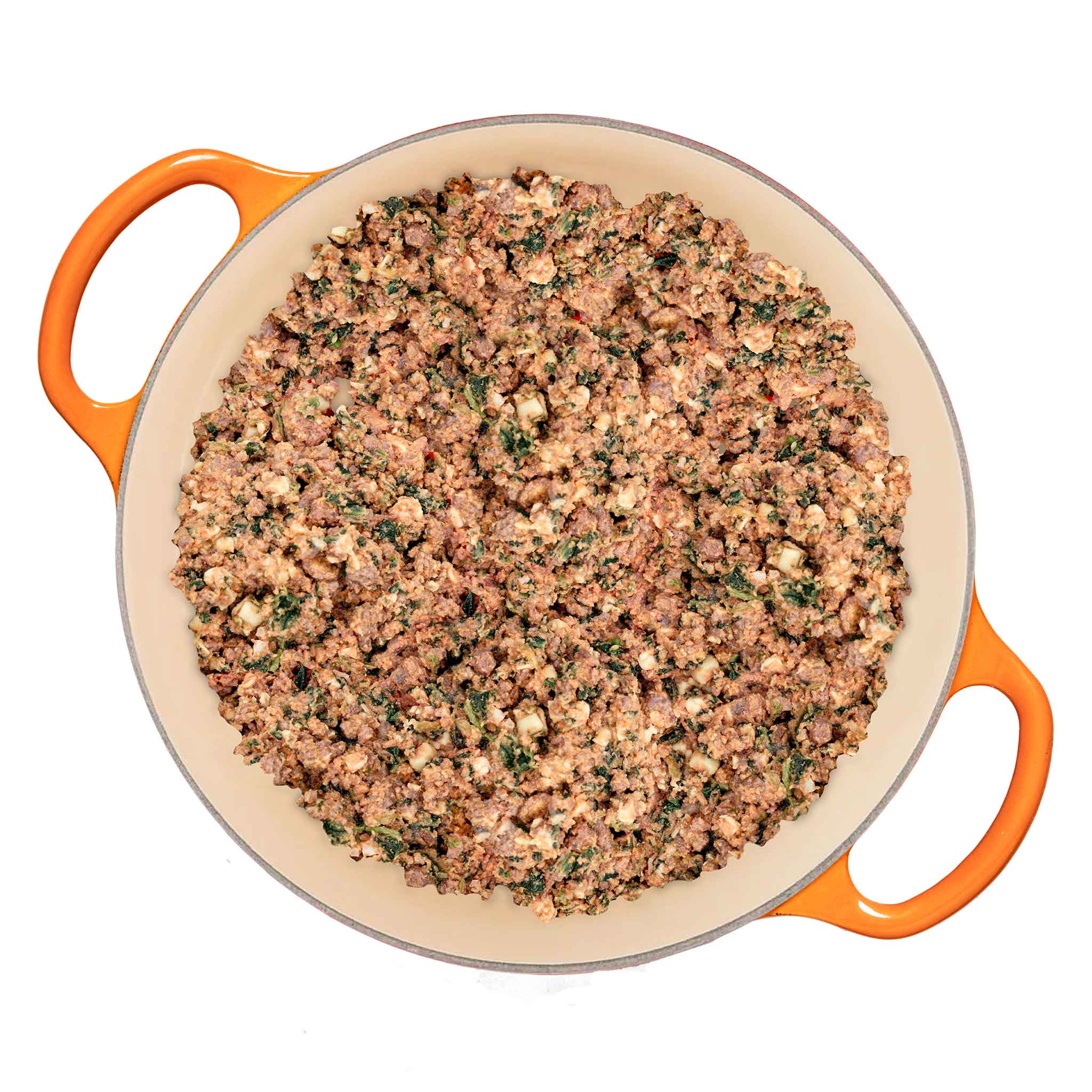
If you're curious which recipe fits your dog's needs, our meal plan questionnaire can help, or browse our full collection of meals to see what's inside every bowl. Because when it comes to whether dogs can eat spinach, the honest answer is yes, in the right amount, and that's exactly how we use it, in support of happier, healthier, longer lives™.
* currently available in Canada only
References
- American Kennel Club - Can Dogs Eat Spinach? https://www.akc.org/expert-advice/nutrition/can-dogs-eat-spinach/
- PetMD - Can Dogs Eat Spinach? https://www.petmd.com/dog/nutrition/can-dogs-eat-spinach
- VCA Animal Hospitals - Calcium Oxalate Bladder Stones in Dogs. https://vcahospitals.com/know-your-pet/calcium-oxalate-bladder-stones-in-dogs