
Human Grade Dog Food for Sensitive Dogs: How to Choose the Right Recipe

Choosing human-grade dog food for sensitive dogs starts with understanding what "sensitive" actually means for your pup. Digestive upset, itchy skin, recurring ear problems, and food reactions can have many causes, so the right recipe isn't simply the one with the shortest ingredient list or the words "sensitive stomach" on the package.¹ ²
For everyday feeding, look for a nutritionally complete recipe with transparent ingredients, an appropriate protein source, clear manufacturing standards, and a formulation suited to your dog's individual needs.
If your dog has persistent vomiting, diarrhea, itching, or other symptoms, though, food shouldn't replace veterinary investigation. A true adverse food reaction requires a much more controlled approach.
Here's how we think about choosing high-quality food for dogs that need a little more consideration at mealtime.
What Does Human Grade Dog Food Mean?
Human grade dog food refers to more than using ingredients described as human-quality. Human grade standards extend to how eligible ingredients are handled, stored, processed, and manufactured.
At Tom&Sawyer®, our human grade meals are prepared in a licensed and inspected human-food facility using human grade ingredients. We also gently cook each ingredient according to its optimal internal cooking temperature before combining the finished recipe.
For pet parents with sensitive dogs, that transparency can make understanding what's going into the bowl simpler.
But human grade dog food doesn't automatically mean a recipe will solve allergies, digestive disease, or every food sensitivity. The actual ingredients and nutritional formulation still matter.
What Are Food Sensitivities in Dogs?
Food sensitivities in dogs can refer broadly to adverse reactions to something they eat, but not every reaction is a true food allergy. Veterinary literature distinguishes immunologic food allergies from nonimmunologic food intolerances and other adverse food reactions.¹
Possible signs can include:
- Itchy skin
- Paw licking
- Recurring ear problems
- Vomiting
- Diarrhea
- Increased bowel movements
- Other gastrointestinal or skin symptoms
Unfortunately, these signs aren't exclusive to food reactions. Environmental allergies, parasites, infections, gastrointestinal disorders, and other conditions can create similar symptoms.
That means changing food repeatedly based on symptoms alone may make finding the actual cause harder.
If problems are persistent, start with your veterinarian.
Does a Sensitive Dog Need Limited Ingredient Dog Food?
A limited ingredient dog food can make the diet simpler, but fewer ingredients don't automatically make a food better or appropriate for diagnosing an allergy.
The overall nutritional balance still matters.
If you're choosing an everyday recipe because your dog seems to do better with a simpler ingredient profile, check that the food still provides complete and balanced nutrition.
For suspected food allergy, things become more controlled. Veterinary research continues to support an elimination diet followed by a dietary challenge as the diagnostic standard.¹ ²
During a proper elimination trial, the veterinarian selects a diet designed to avoid ingredients the dog has previously eaten or uses an appropriate hydrolyzed veterinary diet. Other foods, treats, flavoured medications, chews, and table scraps may interfere with the trial.
Commercial limited ingredient dog food isn't automatically interchangeable with a veterinary elimination diet. Research has identified undeclared animal proteins in some over-the-counter diets marketed as limited or single-protein foods, which could compromise a diagnostic trial.³
So, if you're investigating an actual allergy, follow your veterinarian's recommendation rather than trying to design the test yourself.
How Should You Choose Protein for a Sensitive Dog?
Protein choice should be based on your dog's dietary history and needs, not on the idea that one protein is universally hypoallergenic.
Dogs can react to proteins they've eaten before. That's why novel proteins are sometimes used as part of veterinary elimination strategies.
A protein is only truly "novel" in this context if it is new to that individual dog.
Kangaroo, for example, may be unfamiliar to some dogs but not to a dog that has regularly eaten kangaroo treats or food.
For Canadian pet parents exploring everyday meal options, our Kangaroo recipe* provides a less commonly used animal protein and is identified in our meal-support guidance as a novel protein option.
Fisherman's Best Friend Supper uses Alaskan pollock as its primary animal protein and is available in both the U.S. and Canada.
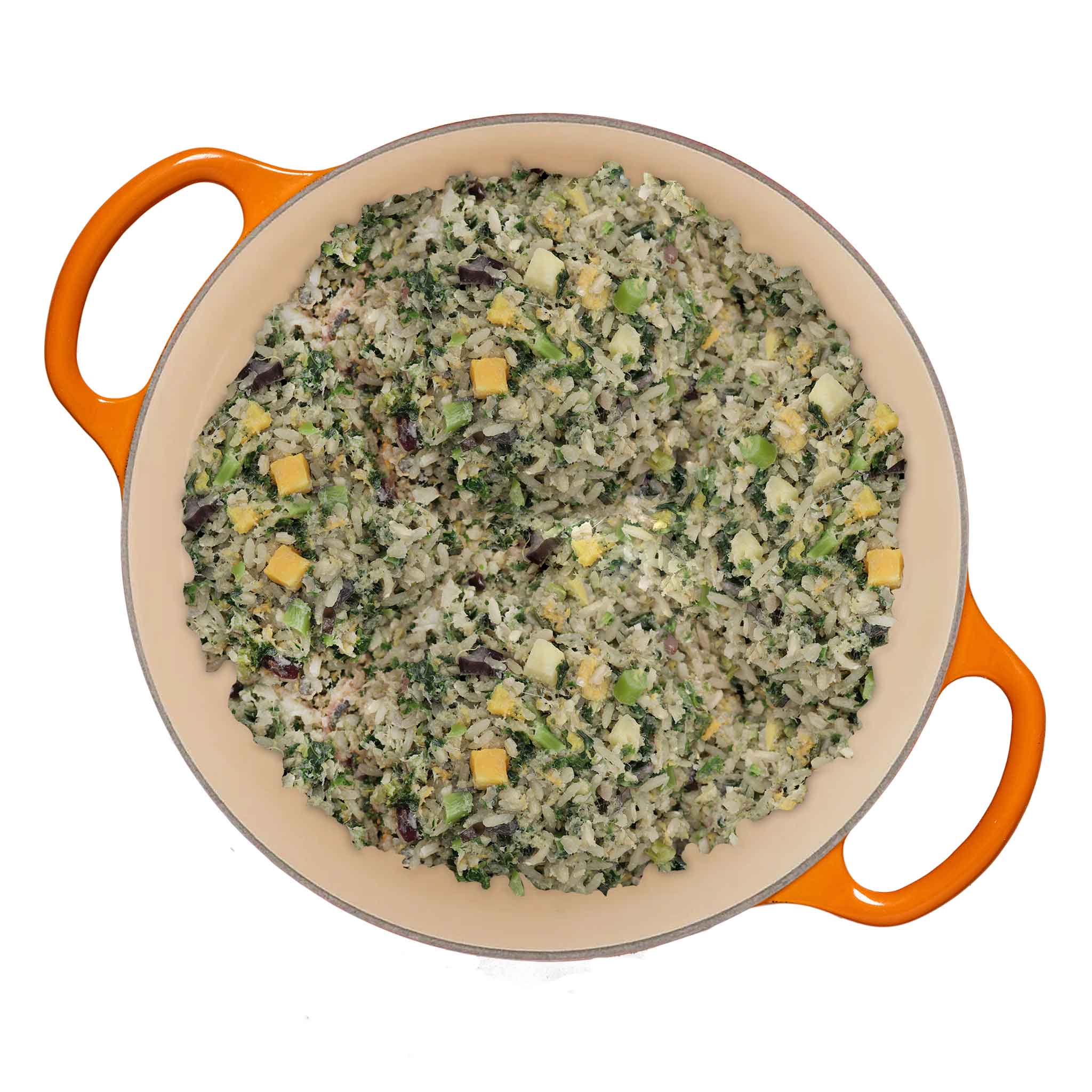
These recipes can provide useful variety when appropriate, but they aren't replacements for a veterinarian-prescribed elimination diet.
Should Sensitive Dogs Avoid Grains?
A sensitive dog doesn't automatically need a grain-free diet.
Grain-free and sensitive aren't synonyms, and removing grains without identifying the reason for your dog's symptoms may not address the actual problem.
Dogs can experience adverse reactions to various dietary proteins, and an individual dog's history matters more than assuming one broad ingredient category is responsible.¹
Rather than choosing based on a grain-free label alone, focus on the full formulation, ingredients your dog has previously eaten, nutritional adequacy, and veterinary recommendations when symptoms are involved.
Our guide to choosing a complete recipe for a sensitive dog explains the difference between grain-free and grain-inclusive feeding in more detail.
What Should You Look for in Dog Food for Food Sensitivities?
When choosing everyday dog food for food sensitivities, look beyond one marketing claim.
A useful checklist includes:
A Clear Ingredient List
You should be able to see which proteins, carbohydrates, fats, and other ingredients the recipe contains.
This becomes especially important when you're trying to avoid a known ingredient.
Complete and Balanced Nutrition
Complete nutrition matters even when you're simplifying ingredients.
A food intended to serve as your dog's primary diet should be nutritionally adequate for the appropriate life stage. The FDA notes that a complete and balanced pet food should meet an applicable AAFCO nutrient profile or feeding-trial requirements.⁴
A short ingredient list doesn't compensate for nutritional gaps.
An Appropriate Protein
Review your dog's previous foods before choosing a new protein, particularly if a veterinarian suspects an adverse food reaction.
The trendiest novel protein isn't necessarily the right one for your dog.
Appropriate Fat and Fibre
Sensitivity can mean different things.
A dog with a history of digestive upset may have very different nutritional needs from one with itchy skin or from a dog whose veterinarian has diagnosed pancreatitis or another medical condition.
This is where choosing based on the individual dog becomes much more useful than choosing by package claims.
Transparent Preparation
Ask where the food is made, how ingredients are sourced, and how the company approaches food safety.
At Tom&Sawyer®, we prepare our gently-cooked recipes with human grade ingredients in a human grade inspected facility. That means quality standards apply beyond the ingredient label itself.
Does Gently-Cooked Food Help Sensitive Dogs?
Gently-cooked food can be an appealing everyday option for sensitive dogs because it combines cooked ingredients, high moisture, and a fresh-food format, but it shouldn't be presented as a treatment for an undiagnosed condition.
Research involving some fresh and human grade diets has reported high nutrient digestibility.⁵ Digestibility, however, depends on the particular recipe and processing method rather than simply belonging to a fresh-food category.
That's why we look at the whole meal.
At Tom&Sawyer®, Gently-Cooking means preparing ingredients individually to their optimal internal cooking temperatures. Our complete recipes are then scientifically balanced to specific AAFCO nutritional profiles.
For small and extra-small dogs, fresh feeding can also be practical because daily portions are naturally smaller.
Larger dogs can enjoy the same foods, but using gently-cooked food as a topper or partial diet may be a practical way to incorporate fresh food into an existing routine.
How Do You Choose a Complete Dog Food for Sensitive Dogs?
A complete dog food for sensitive dogs needs to provide all required nutrients while still fitting the individual dog's dietary history and needs.
Before changing meals, ask yourself:
- What is my dog currently eating?
- Which proteins have they eaten before?
- What symptoms am I actually trying to address?
- Has a veterinarian evaluated recurring symptoms?
- Does the new recipe provide complete and balanced nutrition?
- Is it appropriate for my dog's life stage?
- Do I understand the protein, fat, and fibre profile?
- Am I choosing a complete diet, topper, or temporary food?
Avoid changing multiple things at once when you're trying to understand how your dog responds.
If you introduce a new everyday food, transition gradually unless your veterinarian has given you different instructions. Keeping feeding consistent makes it easier to notice meaningful changes in digestion, appetite, stool, skin, or other symptoms.
When Should You Talk to Your Veterinarian?
If your dog's "sensitive stomach" means chronic diarrhea, recurring vomiting, weight loss, significant itching, repeated ear infections, or another ongoing problem, involve your veterinarian before relying on a new commercial food.
For suspected adverse food reactions, serum, saliva, and hair tests aren't considered reliable substitutes for a properly controlled elimination diet and dietary challenge.²
Your veterinarian can also determine whether symptoms point toward something unrelated to food.
That distinction protects your dog from unnecessary diet restriction and helps you choose food based on what they actually need.
Find a Recipe That Fits Your Sensitive Dog
Sensitive dogs don't need more guesswork. They need a feeding plan built around their actual nutritional needs, dietary history, body condition, preferences, and any guidance provided by their veterinarian.
At Tom&Sawyer®, our human grade, gently-cooked recipes give pet parents a transparent way to bring complete, carefully prepared nutrition into the bowl, with different proteins and recipe profiles available for different dogs.
If you're unsure where to begin, complete our custom Meal Plan questionnaire and tell us about your pup, including their sensitivities and feeding needs. We'll help you narrow down an everyday meal approach instead of asking you to figure it all out from the ingredient panel alone.
*Kangaroo is currently available in Canada only.
Resources
- Mueller RS, Unterer S. Adverse food reactions: Pathogenesis, clinical signs, diagnosis and alternatives to elimination diets. The Veterinary Journal. 2018;236:89-95.
https://pubmed.ncbi.nlm.nih.gov/29871756/ - Udraite Vovk L, Mueller RS. Adverse Food Reactions in Dogs and Cats. Veterinary Clinics of North America: Small Animal Practice. 2026;56(3):579-589.
https://pubmed.ncbi.nlm.nih.gov/41391959/ - Ricci R, Granato A, Vascellari M, et al. Identification of undeclared sources of animal origin in canine dry foods used in dietary elimination trials.
https://pubmed.ncbi.nlm.nih.gov/30375199/ - U.S. Food and Drug Administration. "Complete and Balanced" Pet Food.
https://www.fda.gov/animal-veterinary/animal-health-literacy/complete-and-balanced-pet-food - Do S, Phungviwatnikul T, de Godoy MRC, Swanson KS. Nutrient digestibility and fecal characteristics, microbiota, and metabolites in dogs fed human-grade foods. Journal of Animal Science. 2021;99(2):skab028.
https://pubmed.ncbi.nlm.nih.gov/33511410/