
The Pet Parent’s Guide to Canine Acid Reflux & GERD
By Kelly Gredner, RVT, VTS (Nutrition) ·

Watching your four-legged family member experience any kind of discomfort can be heart-wrenching, especially when you are not quite sure what is wrong…and they can’t tell you!
Acid reflux in dogs, also called gastroesophageal reflux, occurs when acidic stomach contents move backwards into the esophagus. When reflux becomes chronic or severe, it can develop into Gastroesophageal Reflux Disease (GERD) and lead to painful inflammation of the esophagus, known as esophagitis.¹ ²
While acid reflux and GERD are surprisingly common in dogs, the good news is that with the right knowledge and care, these conditions can be manageable.
This guide is here to support you every step of the way with practical tips, insights, and nutritional guidance to help your pup feel happy and comfortable again.
What Is Acid Reflux in Dogs?
Gastroesophageal reflux, or acid reflux, can be a short or long term condition. The chronic or severe form is referred to as GERD, or Gastroesophageal Reflux Disease.
It’s a common term used in human medicine and we know it as heartburn. It’s that uncomfortable sensation in our chest caused by stomach acids creeping into our esophagus.
Since pets can't tell us about this specifically, we have to look for other behaviors to suggest this might be what they’re experiencing.
Short term or acute cases don’t require as much management as chronic cases because the long term effects on the esophagus can be detrimental. Long term exposure to stomach acids can cause a painful condition called esophagitis, or inflammation of the esophagus.²
What Happens When a Dog With Acid Reflux Eats?
To better understand how and why canine acid reflux occurs, it helps to look at the anatomy and physiology of the upper gastrointestinal system.
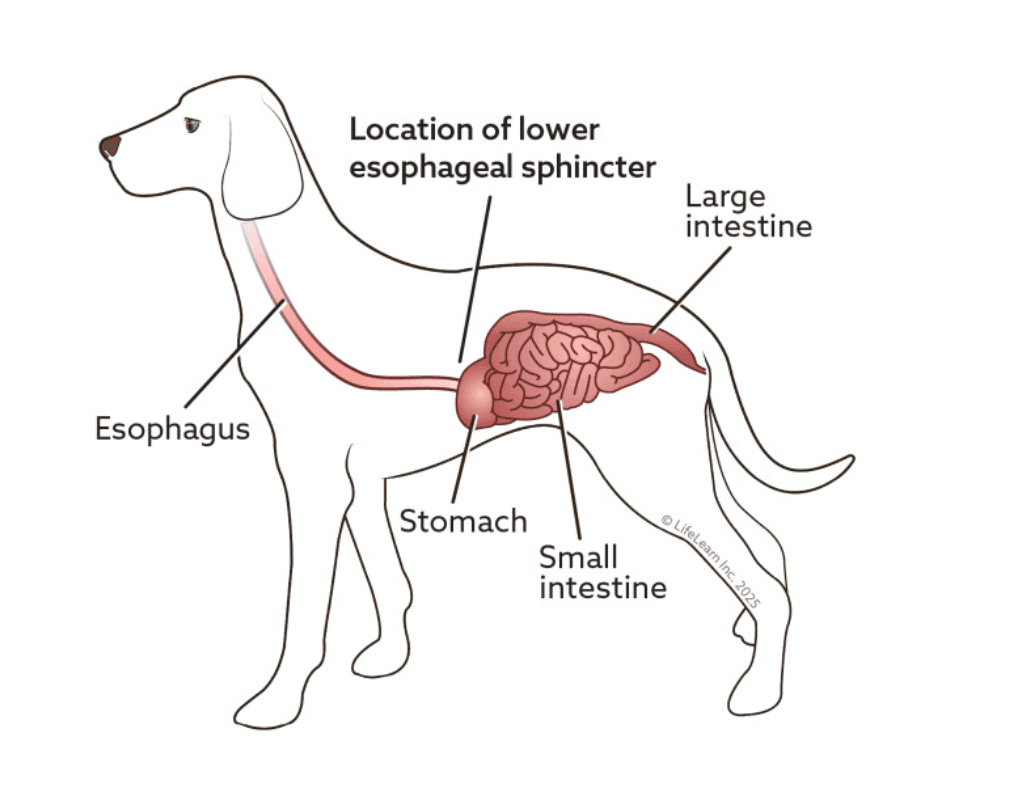
After your dog eats their meal, the food travels from the mouth, through the esophagus, and into the stomach. While sitting in the stomach, gas builds and accumulates, activating the stretch receptors. This then stimulates relaxation of the lower esophagus.
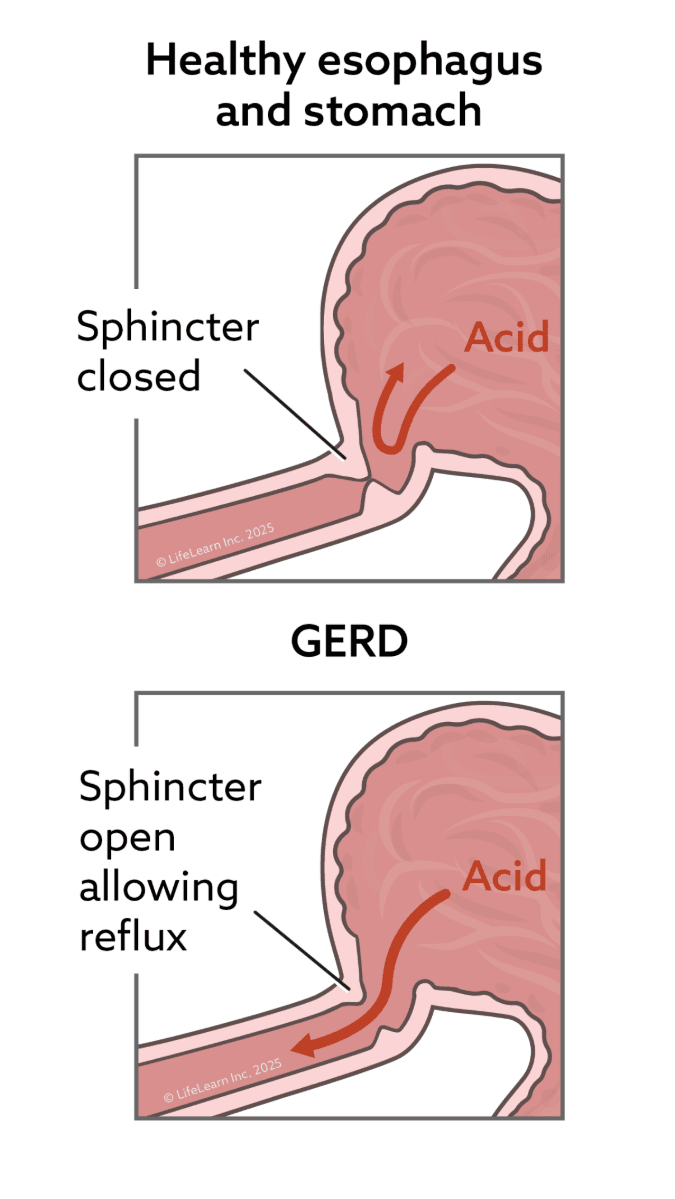
The lower esophageal area has a strong sphincter which acts like a gate to keep food, liquids, acids, etc. in the stomach. It also acts as a barrier between the highly acidic stomach and the fragile mucosal surface of the esophagus.
Stomach contents like hydrochloric acid and pepsin are extremely acidic and therefore harmful to the esophagus.²
Unfortunately, the esophagus doesn’t have protection against the strong acidity of the stomach contents, and during this period of relaxation, the esophagus can become vulnerable to reflux.¹
Additionally, after eating, there can be distension, or stretching, of the stomach which increases the pressure on the esophageal sphincter, leading to further relaxation. This creates more opportunities for the stomach contents to leak into the esophagus.¹
(source)
What Causes Acid Reflux and GERD in Dogs?
There are several factors that can predispose a dog to developing gastroesophageal reflux, including anatomical problems, gastrointestinal conditions, and the size or fat content of their meals.³
Potential causes of acid reflux in dogs include:
- Foreign objects in the esophagus
- High fat meals
- Large meals
- Weak lower esophageal sphincter
- Hiatal hernia
- Gastritis
- Pancreatitis
- Chronic Intestinal Enteropathy (CIE, digestive disorders in dogs and cats which used to be named IBD or irritable bowel disease)
A hiatal hernia occurs when the diaphragm, a large muscle that separates the chest and abdomen, weakens or stretches in such a way that part of the stomach slides and moves into the chest.
Because different conditions can produce similar gastrointestinal symptoms, determining what is contributing to the reflux is an important part of deciding how it should be managed.
Canine Acid Reflux Symptoms and Signs of GERD
Common canine acid reflux symptoms can include regurgitation, repeated swallowing or gagging, lip licking, drooling, reduced appetite, bad breath, coughing, restlessness, and changes in a dog's bark.¹ ² ³
Because dogs can’t verbalize their discomfort or explain how they feel, it’s important for pet parents to remain vigilant and aware of any changes in behavior or eating habits.
Some signs you might see are¹ ² ³:
- Difficulty/repeated swallowing/gagging
- Regurgitation
- Vomiting
- Reduced appetite
- Licking their lips
- Change in the nature of a bark
- Generalized discomfort
- Anxiety/pacing/restlessness
- Chronic nasal discharge and/or sneezing
- Chronic non-productive coughing
- Hypersalivation (drooling)
- Halitosis (bad breath)
- Weight loss (from poor food intake)
Some dogs may show subtle signs rather than obvious vomiting or regurgitation. Repeated lip licking, swallowing, pacing, or restlessness can therefore be worth discussing with your veterinarian, especially when the behaviour occurs around meals or repeatedly at night.
How Is Gastroesophageal Reflux Diagnosed in Dogs?
GERD is often a diagnosis of exclusion, meaning that other medical conditions have been ruled out first, leaving this one at the end of possibilities.
Your vet will:
- Take a thorough look at your dog’s medical history
- Take a diet history
- Do a full physical exam
And from there, they might recommend:
- Blood and urine testing
- Abdominal and/or chest x-rays
- Abdominal ultrasound
- Endoscopy of the upper GI and upper airways*
Endoscopy is the optimal way to rule out or diagnose GERD as they can visualize the affected areas looking for signs of inflammation or injury.
These tests can also help determine whether another gastrointestinal or esophageal condition is contributing to your dog's symptoms.
Canine Acid Reflux Treatment and Medication
Canine acid reflux treatment is typically individualized based on the severity of the reflux and whether there is an underlying cause. Your veterinarian may use a combination of dog acid reflux medication, dietary changes, and feeding adjustments to soothe symptoms while preventing or reducing damage to the esophagus.³
Treatments can include a combination of:
- Antacids like PepcidⓇ/famotidine to reduce stomach acidity
- Pro-motility drugs to improve esophageal tone like metoclopramide
- Gastro protectants like SulcrateⓇ
- Dietary changes
Medication choice and dosing should always come from your veterinarian. Even when reflux itself continues to occur, reducing stomach acidity or protecting the esophageal lining can help limit irritation and discomfort.
Canine Acid Reflux Diet: How Nutrition Can Help
A canine acid reflux diet can help by reducing some of the dietary factors that affect stomach emptying, stomach distension, and pressure on the lower esophageal sphincter.
We can look at nutrients that influence the pressure on the esophageal sphincter, for example:
- Moderate to high protein meals that could increase the pressure and impact the esophageal sphincter tone
- High fat meals which can reduce the pressure on the esophageal sphincter and could potentially produce reflux
The overall nutritional plan should consider not only the nutrients in the food, but also meal size, frequency, calorie needs, and how the individual dog responds.
Managing Fat for Dogs With Acid Reflux or GERD
High fat meals can affect the pressure on the stomach, resulting in a greater risk for reflux to occur in dogs.
Dietary fat delays the movement of food from the stomach into the intestine. This means that when your dog eats a higher fat diet, the food will be in the stomach longer compared to a lower fat meal.
Therefore, when food is left in the stomach, there is a longer period of time for reflux to occur, increasing the risk for these dogs.
However, high fat diets are usually more energy dense, providing higher calorie meals that can reduce the volume of the food needing to be fed, so this must also be considered.
Alternatively, low fat diets are usually recommended when dogs are experiencing acid reflux because they can increase the rate of stomach emptying, limiting the amount of time that food is left in the stomach.
Managing Protein for Dogs With Acid Reflux or GERD²
Protein levels in a diet for dogs with GERD should, at minimum, meet adult maintenance levels (20-30% on a dry matter basis).
Because protein stimulates an increase in pressure on the esophageal sphincter, this tightens the barrier between the esophagus and the stomach, potentially reducing the incidence or risk of reflux.
In consideration of this, optimal protein levels are >25% on a dry matter basis.
What to Feed a Dog With Acid Reflux
When deciding what to feed a dog with acid reflux, the nutrient profile matters, but how you feed them can be just as important. Smaller portions, more frequent meals, controlled fat intake, adequate protein, and a feeding routine that limits stomach distension may all form part of the nutritional strategy.¹ ²
Feed Smaller, More Frequent Meals
When we feed a large meal, this causes greater distension of the stomach and can lead to more relaxation of the sphincter, which can result in more opportunities for gastric contents to leak into the esophagus.
This means that we also need to consider the size of the meals.
Feeding smaller volumes of food, and also slowing down meal ingestion, which in turn slows down the time it takes for the stomach to distend, can help reduce the incidence of reflux.¹
Elevating the food bowls might help reduce the incidence of reflux, as well.¹
Rather than making major feeding changes on your own, discuss the frequency, amount, and nutrient profile of your dog's meals with your veterinarian, particularly if they are already taking medication or managing another gastrointestinal condition.
Whole Foods in Management for Dogs With Acid Reflux or GERD
The type of nutrients in the food will be important for managing acid reflux and GERD for our dogs. But another interesting element of their diet might also be important.
In humans, studies compared the impact of reflux between the ingestion of whole foods compared to pure fats. It showed that whole foods, with protein and fats combined, showed a reduction in reflux.¹
The response of an individual dog may differ, which is why the complete diet and the dog's clinical response should be considered rather than focusing on one ingredient alone.
Tom&Sawyer Meals to Discuss With Your Veterinarian for Acid Reflux
If your vet has recommended a low fat diet for acid reflux, Tom&Sawyer® has several gently-cooked recipes with different protein, fat, moisture, and ingredient profiles that may fit into your dog's nutrition plan.
For dogs that may also benefit from a novel protein, our kangaroo dog food recipe* provides 20g/1000kcal of fat, or 8% on a dry matter basis, along with 40.5% protein on a dry matter basis, 75% moisture, and high digestibility of approximately 80% or higher.
For pups that do well with beef-based recipes,try our beef dog food recipe* which combines beef, quinoa, ginger root, and goji berries. It contains 25g/1000kcal of fat, or 14% on a dry matter basis, with 45% protein on a dry matter basis, 75% moisture, and high digestibility of approximately 80% or higher.
For dogs that tolerate chicken and rice well, our chicken and rice dog food recipe* can be another option to discuss with your veterinarian. This recipe contains cooked chicken breast, rice, carrots, spinach, and coconut milk, with 25g/1000kcal of fat, or 11% on a dry matter basis. It also provides 36% protein on a dry matter basis, 78% moisture, and high digestibility of approximately 80% or higher.
For senior dogs or pups that may benefit from a novel fish protein, you can try the fish dog food recipe. It provides 19g/1000kcal of fat, or 10% on a dry matter basis, with 27.5% protein on a dry matter basis. It is also high in moisture at 78% and highly digestible at approximately 80% or higher.
Because dogs with GERD can respond differently to changes in fat, protein, meal volume, and ingredients, these recipes should be considered alongside your veterinarian's recommendations rather than as a one-size-fits-all solution.
Feeding a Dog With Acid Reflux: Key Takeaways
There is no “one diet fits all” when it comes to GERD in dogs. It might take some trial and error to find the right diet for your dog, especially since both nutrient composition and feeding routine can influence reflux.
Based on your veterinarian's recommendations, dietary management may include:
- Change the fat content: low to moderate fat diet (<=25% fat on a dry matter basis)
- Change the protein content: a higher protein diet (>=25% on a dry matter basis)
- Change the method: feed in smaller, more frequent meals (e.g. 3-4 meals per day over 2)
- Change the delivery: use elevated bowls when feeding
Your pup might just need a change in routine, and if that doesn’t help, then switching their diet or overall nutritional profile might be the answer.
How Tom&Sawyer Can Support Dogs With Acid Reflux and GERD
Navigating GERD or acid reflux in dogs can feel overwhelming at first, but with patience, careful observation, and proper management, your dog can comfortably thrive. Working closely with your veterinarian is key to discovering the best dietary choices and treatment strategies tailored to your pet's unique needs.
At Tom&Sawyer®, our human grade, gently-cooked meals come in a range of fat, protein, moisture, and ingredient profiles that you and your veterinarian can consider when building a feeding routine around your dog's digestive needs. If you're trying to determine which recipes and portions may fit your pup, complete our custom Meal Plan questionnaire and tell us about them so we can help you explore a more personalized feeding approach.
*Currently available in Canada only.
References
- Andrea J. Fascetti VMD, PhD,, Sean J. Delaney BS, DVM, MS,, Jennifer A. Larsen DVM, MS, PhD, Cecilia Villaverde BVSc, PhD. Applied Veterinary Clinical Nutrition. 2023. DOI:10.1002/9781119375241
- Hand M.S. et al. (eds) (2010). Small Animal Clinical Nutrition 5th ed. Mark Morris Institute
- Acid reflux in dogs: Understanding the causes and treatments. Kingsdale Animal Hospital. (2026, May 9). https://www.kingsdale.com/acid-reflux-in-dogs-understanding-the-causes-and-treatments
- Gerd Golly miss Molly!. CriticalCareDVM. (2026, July 23). https://criticalcaredvm.com/gerd-dogs-cats/