
Great Food for a Picky Papillon: Small Portions With Big Nutrition
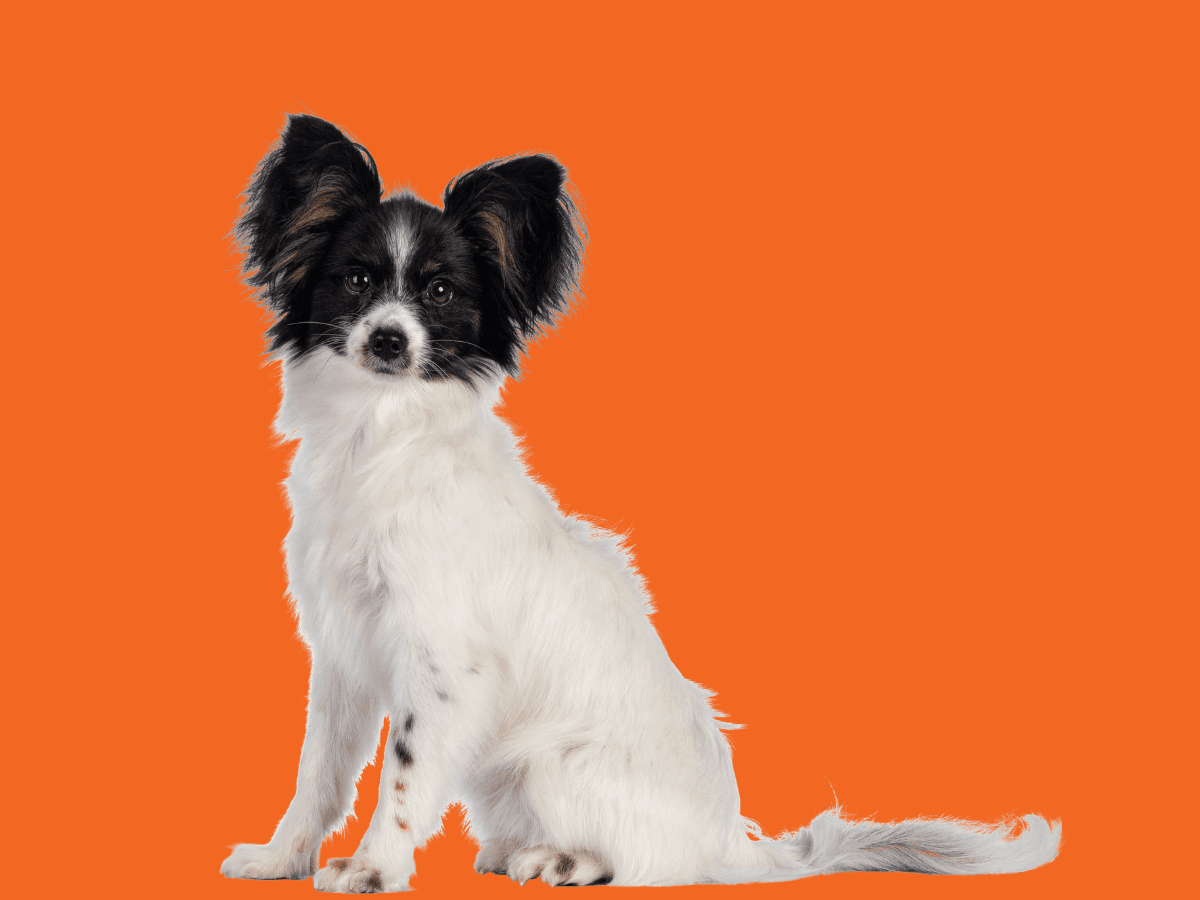
A Papillon picky eater needs a small, nutrient-dense meal they actually want, because there's little room in the day for anything else. A neutered 8 lb Papillon needs only about 295 calories a day. Check the teeth first, then pick a complete meal they enjoy and portion it carefully. Our Papillon dog food guide covers the breed's full profile.
How much should you feed a Papillon?
How much to feed a Papillon depends on weight, but a neutered adult of 5 to 10 lbs needs about 205 to 350 calories a day. Veterinarians estimate this from the resting energy requirement (70 × body weight in kg to the power of 0.75), multiplied by 1.6 for a neutered adult or 1.8 for an intact adult1.
The estimate is a starting point1. A meta-analysis of 29 studies found that energy needs vary with neuter status and lifestyle, and noted that toy breeds have been studied less than other dogs2. Watching your Papillon's shape over a few weeks tells you whether the portion is right.
Adult weight (neutered) | Calories per day | Classic Pork Stew (742 kcal/pack) | Fisherman's Best Friend Supper (504 kcal/pack) | Italian Beef Pasta Dinner (624 kcal/pack) |
5 lb (2.3 kg) | ~205 kcal | ~0.28 pack | ~0.41 pack | ~0.33 pack |
6 lb (2.7 kg) | ~235 kcal | ~0.32 pack | ~0.47 pack | ~0.38 pack |
8 lb (3.6 kg) | ~295 kcal | ~0.40 pack | ~0.58 pack | ~0.47 pack |
10 lb (4.5 kg) | ~350 kcal | ~0.47 pack | ~0.69 pack | ~0.56 pack |
For a tailored portion, answer a few questions about your pup, and we'll set your Papillon's Meal Plan by weight, age and activity.
Why do tiny portions make a Papillon diet so precise?
Tiny portions make a Papillon diet precise because a few grams of food or one treat is a large share of the day. For a 5 lb Papillon, a quarter of a pack of Classic Pork Stew covers most of the daily calories.
That small budget has two effects. Treats and extras crowd out the complete meal faster than they would for a bigger dog, and a fussy eater who skips half a meal falls short quickly. Our breed profile lists calorie-dense, small portions among the Papillon's dietary needs for this reason.
Can dental problems make a Papillon picky about food?
Dental problems can make a Papillon picky about food, and they are one of the first things a vet will look for. A UK study of 22,333 dogs found that 12.5% were diagnosed with periodontal disease in one year3.
The same study found that the odds went down as adult body weight went up, and the Toy Poodle had the highest odds of any breed3. A Papillon is a toy breed too, so slow eating, dropping food or chewing on one side are worth a dental exam.
How does Papillon dental health connect to food?
Papillon dental health connects to food mostly through comfort: a dog with a sore mouth eats less, and a dog with a healthy mouth can enjoy any texture. We don't claim that any of our meals clean teeth. Brushing and regular veterinary dental checks do that job.
What we can do is make the bowl easy and appealing to eat. Our gently-cooked meals have a soft, home-cooked texture, which suits a small mouth and a dog recovering from dental work, once your vet says they're ready for normal food.
How do you get a Papillon picky eater to finish meals?
You can get a Papillon picky eater to finish meals by making mealtime regular, short and rewarding, once your vet has ruled out a medical cause. Our breed page recommends dividing the day's food into two meals for most healthy adult Papillons.
- Weigh the daily portion once, then split it into a morning and an evening meal.
- Give the meal 15 to 20 minutes, then lift the bowl until the next mealtime.
- Offer fresh meals at room temperature, not straight from the fridge.
- Count treats as food, and use a spoonful of the regular meal as a reward instead.
- Watch for red flags, such as skipping more than a day of meals, weight loss, vomiting or diarrhea, and call your vet if you see them.
What is the best food for a Papillon?
The best food for a Papillon is a complete and balanced meal that packs good nutrition into a small portion and tastes good enough to finish. Our breed page features three recipes for Papillons.
- Classic Pork Stew is a stew of lean ground pork, root vegetables and leafy greens, at 742 kcal per pack. It's our most energy-dense dog meal, free of chicken, beef and grains, and a favourite with picky eaters.
- Fisherman's Best Friend Supper pairs wild Alaskan pollock with butternut squash, brown and white rice and cranberries. It's a low fat recipe (25 g fat per 1,000 kcal or less), a good fit for older Papillons.
- Italian Beef Pasta Dinner has been our #1 bestseller for over 10 years: lean ground beef and tomato over pasta, at 624 kcal per pack, for a Papillon who loves a hearty bowl.
How do gently-cooked meals give a Papillon big nutrition?
Gently-cooked meals give a Papillon big nutrition in a small portion by using whole, real ingredients in a complete and balanced recipe. Every Tom&Sawyer meal is made with 100% human grade ingredients in a human grade inspected facility, and gently-cooked to a safe internal temperature without cooking out nutrients.
No more than 3% of each recipe comes from added vitamins and minerals, and animal nutritionists lab test every meal to AAFCO nutrient profiles. A Full Plan makes our meals your Papillon's complete diet, portioned to the gram for their calorie needs. A Partial Plan mixes our meals with their current food. You can cancel anytime, and each order comes with our 14 day satisfaction guarantee.
Ready to feed your Papillon picky eater well?
A Papillon picky eater does best with a dental check, a measured portion and a meal they look forward to twice a day. Small dog, small bowl, but every bite counts.
Build your pup's Meal Plan with our meal quiz. Tell us about your Papillon, and we'll recommend meals and portion them to the gram.
Please consult your veterinarian before making changes to your pet's diet, especially if your pet has a medical condition.
Resources
- Sanderson, S. L. (2024). Nutritional Requirements of Small Animals. Merck Veterinary Manual. https://www.merckvetmanual.com/management-and-nutrition/nutrition-small-animals/nutritional-requirements-of-small-animals
- Bermingham, E. N., Thomas, D. G., Cave, N. J., Morris, P. J., Butterwick, R. F., & German, A. J. (2014). Energy requirements of adult dogs: a meta-analysis. PLoS ONE, 9(10), e109681. https://www.ncbi.nlm.nih.gov/pmc/articles/PMC4196927/
- O'Neill, D. G., Mitchell, C. E., Humphrey, J., Church, D. B., Brodbelt, D. C., & Pegram, C. (2021). Epidemiology of periodontal disease in dogs in the UK primary-care veterinary setting. Journal of Small Animal Practice, 62(12), 1051–1061. https://pmc.ncbi.nlm.nih.gov/articles/PMC9291557/