
Omega-3 and Omega-6 for Dogs and Cats: Sources and Safe Use
By Dr. Hannah Godfrey, PhD · · Updated
Do you wonder if you should be adding omega 3 or fish oil to your dog’s or cat’s diet?
Omega 3 and 6 for dogs and cats are essential fats: pets can't make enough of them, so they have to come from food, and the balance between the two matters as much as the amount. On a complete and balanced diet with the right ratio, like our meals for skin and coat, most pets don't need extra oil. Below we cover what each fatty acid does, the ratio to aim for, the best food sources, and when a fish oil supplement makes sense.
What are omega-3 and omega-6 fatty acids?
Omega-3 and omega-6 fatty acids are two families of essential fats that do different jobs in the body. The omega 6 and 3 fatty acids are polyunsaturated fats, meaning they contain multiple double bonds. The position of the first double bond is what differentiates the omega 6 fatty acids from the omega 3’s.
Omega-6 fatty acids
- Linoleic acid (LA): the main omega-6, needed by both dogs and cats
- Arachidonic acid (AA): an omega-6 that cats must get from food
Omega-3 fatty acids
- Alpha-linolenic acid (ALA): the plant-based omega-3
- Eicosapentaenoic acid (EPA) and docosahexaenoic acid (DHA): the marine omega-3s found in fish and algae
These are the most important ones, though they are not the only omega-6 and omega-3 fatty acids.
Why do dogs and cats need omega 3 and 6?
Dogs and cats need omega 3 and 6 in their food because their bodies can't make enough of these fats on their own. Both cats and dogs require linoleic acid and cats also require arachidonic acid as they are unable to make these fatty acids on their own - therefore, they must rely on getting these fats through their diet.4
Both species are also poor at converting ALA into EPA and DHA, so those omega-3s need to come from the diet too. They matter most for growing puppies and kittens. The National Research Council (NRC) and AAFCO publish the amounts of each fatty acid that dogs and cats need at each life stage.4
What does omega 6 do for dogs?
Omega 6 fatty acids for dogs keep the immune system, skin, coat and metabolism working. Omega 6 fatty acids are often referred to as pro-inflammatory fats. However, that is not to say that they are bad for our pets. Quite the contrary! They are critical for body processes, the immune system, skin and coat health, and metabolism.
Omega 3 fatty acids are considered anti-inflammatory and are beneficial for skin and coat health, brain function and cognition, metabolism, and body processes. That's why omega 6 for dogs works best alongside omega 3.
What is the right omega-6 to omega-3 ratio for dogs and cats?
The right ratio of omega-6 to omega-3 is between 2.6:1 and 26:1, according to the National Research Council, and AAFCO sets a maximum ratio of 30:1.4
Getting the balance right matters in both directions. Too many omega 6 fatty acids can lead to too much inflammation; too many omega-3 fatty acids in comparison to omega 6’s can lead to not enough inflammation.
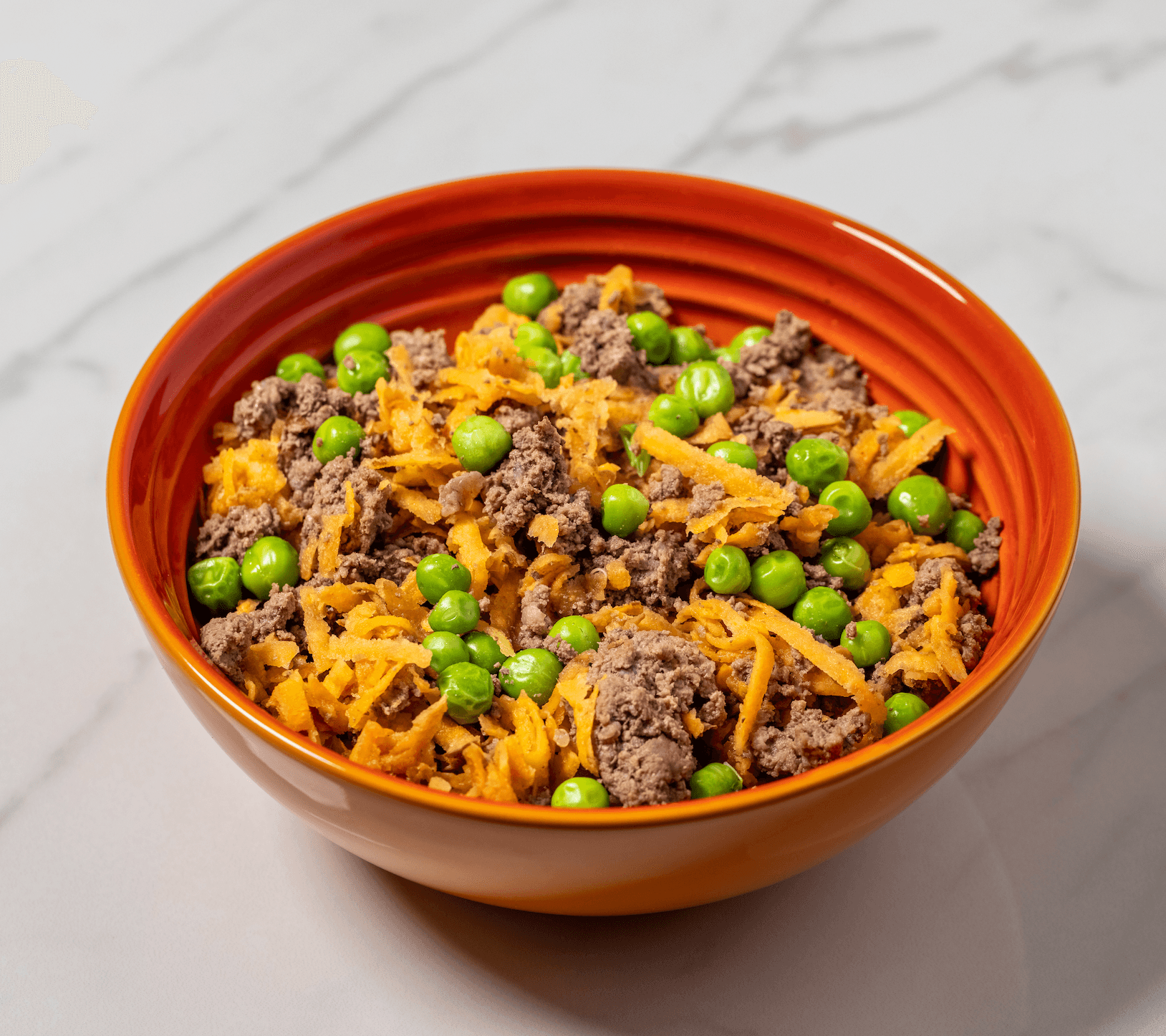
Our recipes that support skin and coat sit at the low, omega-3-rich end of that range, with an omega 6 : omega 3 ratio of 2.6–5.1 : 1. They include the Italian Beef Pasta Dinner, Thai Coconut Chicken & Rice Recipe and Berry Beefy Breakfast Bowl.
What are the benefits of omega 3 for dogs and cats?
A balanced omega-6 to omega-3 profile supports your pet's brain, skin and coat, gut, heart and energy levels.
Brain development and function
Omega-3s matter most for the brain during growth. Growing puppies require DHA for healthy development and proper function of the brain. Additional studies show that there may be a benefit of omega 3 fatty acids for cognition as well!
Skin and coat health
Omega-3s help keep the skin barrier healthy, because certain fatty acids control how permeable the skin is. Multiple studies have shown improved skin conditions in dogs given omega-3s, including dogs with allergies, dermatitis and other skin diseases.1,2 Itchy skin is also a common sign of food sensitivities, covered in our guide to the best whole dog food for yeast infections and itchy skin.
Digestive health
Balancing omega-3s against omega-6s may support healthy digestion. High levels of pro-inflammatory fatty acids can contribute to dysbiosis, an imbalance of the gut's bacteria.
Heart health
Omega-6 and omega-3 fatty acids may help prevent heart disease in dogs. Cardiac diseases are far too common for our pups. While there are many factors that contribute to heart disease, nutrition can often be a crucial component. Specifically, omega-6 and omega-3 fatty acids may be beneficial for the prevention of heart disease - just like we see in humans!5
Energy
Fats are energy dense, providing almost twice as much energy as protein or carbohydrates, so fatty acids are an easy-to-overlook source of fuel.3 The flip side: energy-dense foods are easy to overfeed, which can lead to weight gain.
What are the best food sources of omega 3 and 6 for dogs?
The best sources of omega-6 are plant oils, seeds and eggs, and the best sources of omega-3 are fish, fish oils and algae. The great news for our dogs is that omega-6 and omega-3 fatty acids can be quite easy to obtain through their diet.
Sources of omega-6 fatty acids
- Canola Oil
- Sunflower Oil
- Soybeans/Soybean Oil
- Hemp Seeds/Hemp Seed Oil
- Eggs
- Nuts and Seeds
Omega 3 oils for dogs and other omega-3 sources
- Fish Oils
- Algae
- Seaweed
- Fish (ie. whitefish, salmon)
Because dogs and cats convert plant ALA into EPA and DHA poorly, marine sources such as fish and fish oil are the most direct way to supply EPA and DHA.
Does your dog need a fish oil supplement?
Most dogs and cats on a complete and balanced diet with a healthy omega ratio don't need a fish oil supplement. At Tom&Sawyer, we focus on achieving optimal omega 6 to omega 3 ratios to support happier, healthier, longer lives! This means your pup is getting a diet rich in both omega 6 and omega 3 fatty acids. Which also means there is no need to supplement with additional oils!
If your veterinarian does recommend fish oil, for example for a skin or joint condition, follow their dose. Always speak to your veterinarian before giving your dog any supplement.6
What are the side effects of too much fish oil?
Too much fish oil can upset the stomach and, less often, cause more serious problems. The American Kennel Club lists these possible side effects of fish oil in dogs:6
- Diarrhea, vomiting and excessive gas
- Fishy-smelling breath or skin
- Increased bleeding risk, in rare cases
- Less commonly, weight gain, pancreatitis and delayed wound healing
Long-term fish oil use can also deplete vitamin E stores in some dogs.6 If you notice side effects, stop the supplement and contact your veterinarian.
How does Tom&Sawyer balance omega 3 and 6 in its meals?
Every Tom&Sawyer recipe is formulated for a healthy balance of omega-6 and omega-3, so there's nothing to add at home. Our gently-cooked dog and cat meals incorporate hemp seed oil, organic canola oil or sunflower oil with anchovy oil for a healthy balance of the omega fatty acids!
Not sure which recipe fits your pet? Answer a few questions about your pup in our meal quiz and we'll suggest meals for their needs, including our recipes for skin and coat. When you're ready, take the meal quiz to build a Meal Plan and join the pack at Tom&Sawyer.
Please consult your veterinarian before changing your pet's diet or adding supplements, especially if your pet has a medical condition.
References
- Bauer JE. Responses of dogs to dietary omega-3 fatty acids. Timely Topics in Nutrition. 2007.
- Kaur H. Role of omega-3 fatty acids in canine health: a review. International Journal of Current Microbiology and Applied Sciences. 2020.
- Case LP et al. Canine and Feline Nutrition: A Resource for Companion Animal Professionals 3rd Ed. 2010.
- National Research Council. (2006). Nutrient requirements of dogs and cats. Washington, DC. The National Academies Press.
- Freeman LM. Beneficial effects of omega-3 fatty acids in cardiovascular disease. Journal of Small Animal Practice. 2010.
- Arford, K. Fish Oil for Dogs: What to Know. American Kennel Club. https://www.akc.org/expert-advice/vca/fish-oil-for-dogs/