
What Miniature Schnauzer Meals Need When Routine, Portions, and Balance Matter
By Kelly Gredner, RVT, VTS (Nutrition) ·
Written by Kelly Gredner, RVT, VTS (Nutrition)
This guide provides our expert advice on creating the perfect Miniature Schnauzer feeding guide for your spirited companion. We'll explore their unique nutritional needs. From their first days as a puppy all the way through their senior years, having the right knowledge ensures you can support their long-term health and happiness. Proper nutrition is the cornerstone of a vibrant life for this beloved breed.
According to the American Miniature Schnauzer Club (AMSC), the earliest image of a Schnauzer dates to the late 1400s. That’s over 500 years of history. All of that legacy is packed into one spirited, bearded breed, and while their world has changed in countless ways, the fundamentals of good feeding still matter.
Don’t let their small stature mislead you.
Miniature Schnauzers have some serious dietary considerations. These are crucial for maintaining their energy, supporting healthy body condition, and managing breed-related risks. In fact, getting their meals right is one of the most important things you can do as an owner. This guide breaks it all down for you, covering routines, portions, and the ideal nutritional balance for your companion. But to really understand their diet, we first need to understand the dog behind the bowl.
Understanding the Breed: Profile of a Miniature Schnauzer
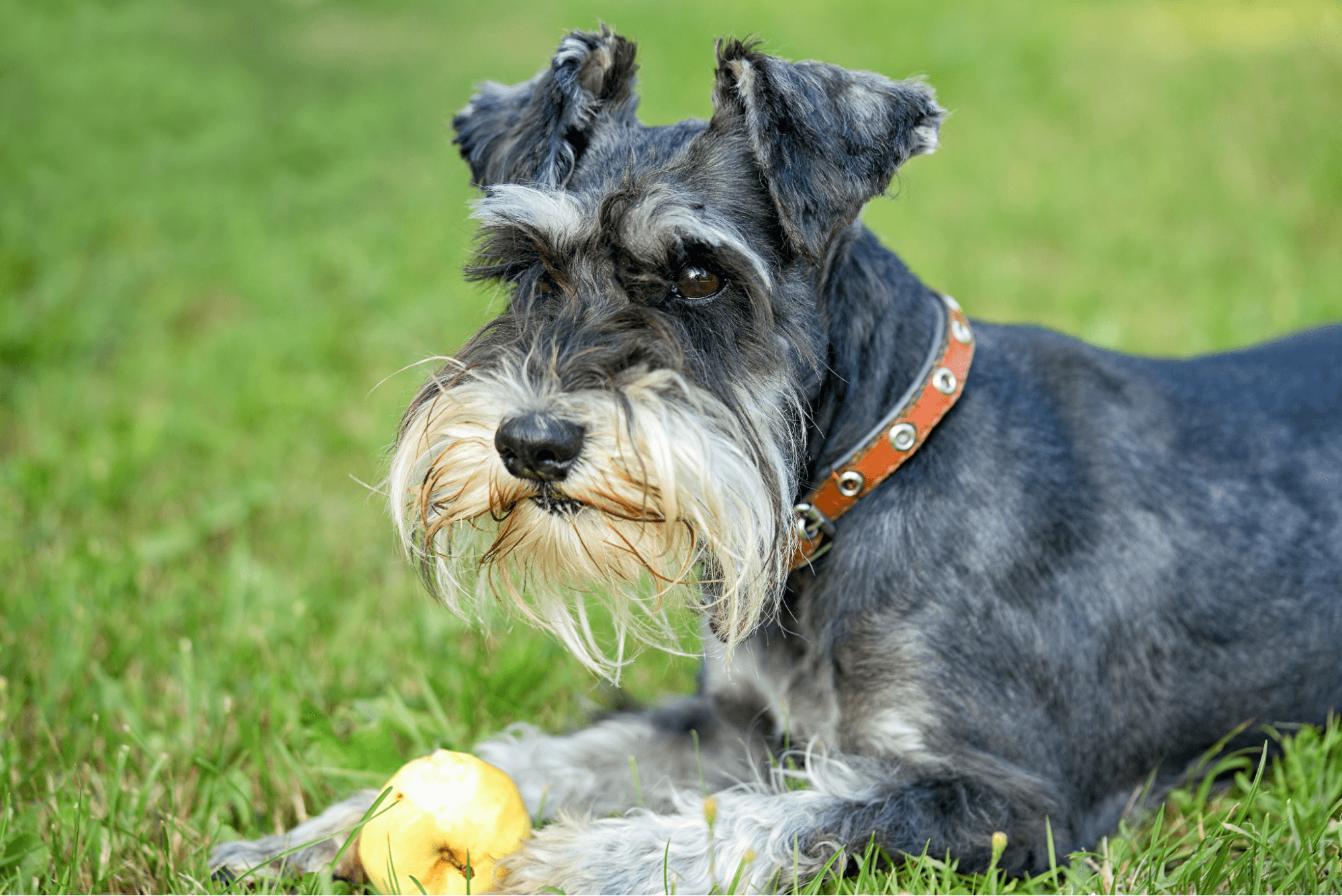
The right meal plan starts with understanding the specific dog. You see, while Schnauzers come in three sizes (Giant, Standard, and Miniature), our focus here is squarely on the smallest member of the family. The Miniature Schnauzer. A healthy one stands just 12 to 14 inches tall at the shoulder and weighs between 10 and 20 pounds. Their compact frame is the perfect visual guide for what a healthy body should look like.
But don't let their size mislead you.
That little body is powered by a surprisingly big engine. These are active, spirited dogs, and daily movement helps support their physical and mental health. This activity level has a major impact on their caloric requirements. All that running and playing demands thoughtful fuel.
What Should I Feed My Mini Schnauzer? Core Nutritional Needs
But all calories aren't created equal. Where that fuel comes from matters a great deal. A Miniature Schnauzer’s body needs a thoughtful balance of high-quality protein, appropriate fats, and digestible carbohydrates to power through their busy days. This isn't just about general energy, either. It’s about providing the building blocks they need to maintain their sturdy frame, healthy coat, and ideal body condition.
This is targeted nutrition.
At Tom&Sawyer, we understand this perfectly, which is why our gently-cooked meals are crafted with Miniature Schnauzers' needs in mind. This breed is known for concerns around hypertriglyceridemia and pancreatitis. Research has reported that Miniature Schnauzers with a history of pancreatitis are more likely to have hypertriglyceridemia than those without that history, and veterinary guidance commonly recommends lower-fat diets for dogs with pancreatitis. ¹
Because of that, our recipes focus on thoughtful fat control without sacrificing high-quality protein. Our culinary-inspired approach means each ingredient is cooked with care, then combined into complete and balanced meals made with 98% or more whole-food ingredients. With no artificial preservatives or mystery byproducts, Tom&Sawyer delivers purposeful nutrition that supports your Miniature Schnauzer’s daily routine.
Portion Control: How Much to Feed Your Mini Schnauzer Daily
For this breed, knowing how much food to provide is critical for their long-term health. Portion sizes aren’t just a friendly suggestion. Think of them as a practical daily tool for preventing unwanted weight gain and keeping your dog in healthy condition.
Your dog’s needs will change throughout its life.
With all their boundless energy, puppies require appropriate calories and key nutrients to support growth. We've found that feeding smaller, more frequent meals works best. Usually three or four times per day. For this stage, we recommend using a nutrient-dense formula specifically designed for development. Then, as they inch closer to that first birthday milestone, you can begin the gradual transition down to two meals a day.
For adult dogs, the right amount really boils down to their weight, body condition, calorie needs, and activity level. You should always consult the guide on your specific food packaging, but here is a general framework for a healthy adult Miniature Schnauzer.
Sample Adult Feeding Guide
Think of these as starting points, not strict rules. A less active Schnauzer in the 10-12 lb. range who prefers the couch may need less food than a highly active one that spends more time running and playing. A typical adult weighing 15-17 lbs may need a different daily portion depending on the calorie density of the food. If you have a larger companion in the 18-20+ lb. range, your best approach is still to start with calorie-based feeding guidance, then adjust based on body condition.
Of course, other factors come into play. If your dog has been spayed or neutered, their calorie needs may change. The same happens as they move into their senior years and activity levels shift. This means they may need a slight reduction in calories to maintain a healthy weight.
You might find your Schnauzer acts as if it's perpetually starved. They follow you around the kitchen, deploying those puppy-dog eyes with an almost professional skill.
Sound familiar?
It’s a common owner experience, but you can’t give in. Sticking to measured portions is one of your best defenses against weight-related strain and high-fat food mistakes, especially for a breed where pancreatitis risk deserves extra care.
But the amount of food is only one part of the puzzle. When you feed them is just as important.
The Importance of a Consistent Feeding Schedule
Dogs are creatures of habit. That is just a fundamental part of how they see the world. A predictable feeding routine provides a sense of security and helps you monitor appetite, digestion, and stool quality more clearly. When they know food is coming, the day feels more predictable.
For adult Miniature Schnauzers, we advocate for a simple twice-daily schedule. It just works. This is the routine our team has found to be most effective. Getting the feeding schedule right is a great start, but it's really only half the battle. A perfect routine means nothing if the wrong ingredients end up in your dog’s bowl.
Foods to Avoid: What Schnauzers Should Not Eat
Getting the feeding schedule right is a great start, but it's only half the battle. A perfect routine means nothing if the wrong ingredients end up in your dog’s bowl.
Knowing what a Miniature Schnauzer shouldn't eat is just as critical. Some foods are always off the table. This includes well-known toxins such as chocolate, grapes, raisins, onions, garlic, and macadamia nuts. A sneakier danger is xylitol, a sweetener that is acutely poisonous to dogs and lurks in a surprising number of products, including some peanut butters. ²
But for Miniature Schnauzers, the real danger is often found in high-fat foods.
This breed is associated with hypertriglyceridemia and pancreatitis concerns, which means fatty meals and rich table scraps deserve extra caution. ¹ For your Schnauzer’s safety, fatty table scraps, bacon, fried foods, and other rich meats are best kept off the menu. What might be a minor digestive issue for another dog could become a bigger concern for a Schnauzer with a history of fat sensitivity or pancreatic disease.
Diet may also play a role in managing urinary health, but it needs to be handled carefully. Miniature Schnauzers are among the small breeds more commonly affected by calcium oxalate stones, and dogs predisposed to urinary stones may need a plan based on the specific stone type, urine concentration, and veterinary guidance. ³ This is why we believe reading labels and working with your veterinarian are both essential.
All this talk about urinary health and pancreatitis can sound a little scary. We understand. But being the careful gatekeeper for your dog’s food is one of the most powerful ways you can show your love. That doesn't mean your Schnauzer can never have a tasty bonus. It just means choosing those rewards with purpose.
Healthy Treats and Loving Rewards
So what do Miniature Schnauzers love most?
A tasty bonus is always appreciated, of course. But the real reward, the thing they truly live for, is the positive connection they feel with you. Treats are simply a tool to help build that bond, not the bond itself.
For training and praise, we recommend using simple, healthy, low-fat options. Small pieces of baby carrots, a single green bean, or a few blueberries are all excellent choices that won't disrupt their sensitive systems. It doesn't need to be complicated.
Key Takeaways for Your Miniature Schnauzer's Meal Plan
It’s easy to get lost in the details, but feeding your Miniature Schnauzer well really boils down to a few consistent habits. Get these right, and you're setting your little companion up for a healthier daily routine.
These are the fundamentals that matter most.
Watch the fat content. Because Miniature Schnauzers can be prone to hypertriglyceridemia and pancreatitis, avoid high-fat table scraps and ask your veterinarian what fat level is appropriate for your individual dog.
Create a predictable routine. Two measured meals a day, served around the same time. That’s it.
Meal portions are not a "set it and forget it" thing. You’ll need to adjust how much you feed based on your dog’s specific age, current weight, body condition, and activity level.
Just say no to table scraps. High-fat human foods are a major risk, and it goes without saying that you must avoid anything known to be toxic for dogs.
Ask about urinary health. If your Schnauzer has a history of bladder stones or urinary issues, your veterinarian should guide the diet based on the specific stone type.
Putting these guidelines into practice is one of the best things you can do for your companion. It's about how you build a meal plan that genuinely supports their well-being, today and for years to come.
Start Your Schnauzer's Perfect Meal Routine Today with Tom&Sawyer
Take the guesswork out of your Miniature Schnauzer's mealtime routine with our portioned, gently-cooked meals. Our nutrition team calculates serving sizes based on your Schnauzer's age, weight, and activity level, helping you serve consistent, balanced nutrition every day. No more confusing measuring cups or calorie calculations. Just thaw, serve, and help your pup enjoy a predictable schedule they'll love.
Start your personalized meal plan today and establish the healthy routine your Schnauzer deserves.
Resources
Cridge H, et al. New insights into the etiology, risk factors, and pathogenesis of pancreatitis in dogs: Potential impacts on clinical practice. Journal of Veterinary Internal Medicine. 2022. https://pmc.ncbi.nlm.nih.gov/articles/PMC9151489/
Merck Veterinary Manual. Food Hazards. https://www.merckvetmanual.com/special-pet-topics/poisoning/food-hazards
Merck Veterinary Manual. Urolithiasis in Dogs. https://www.merckvetmanual.com/urinary-system/urolithiasis-in-small-animals/urolithiasis-in-dogs