
How Much to Feed a Miniature Pinscher: Dog Food Portions for a Min Pin That Won't Eat
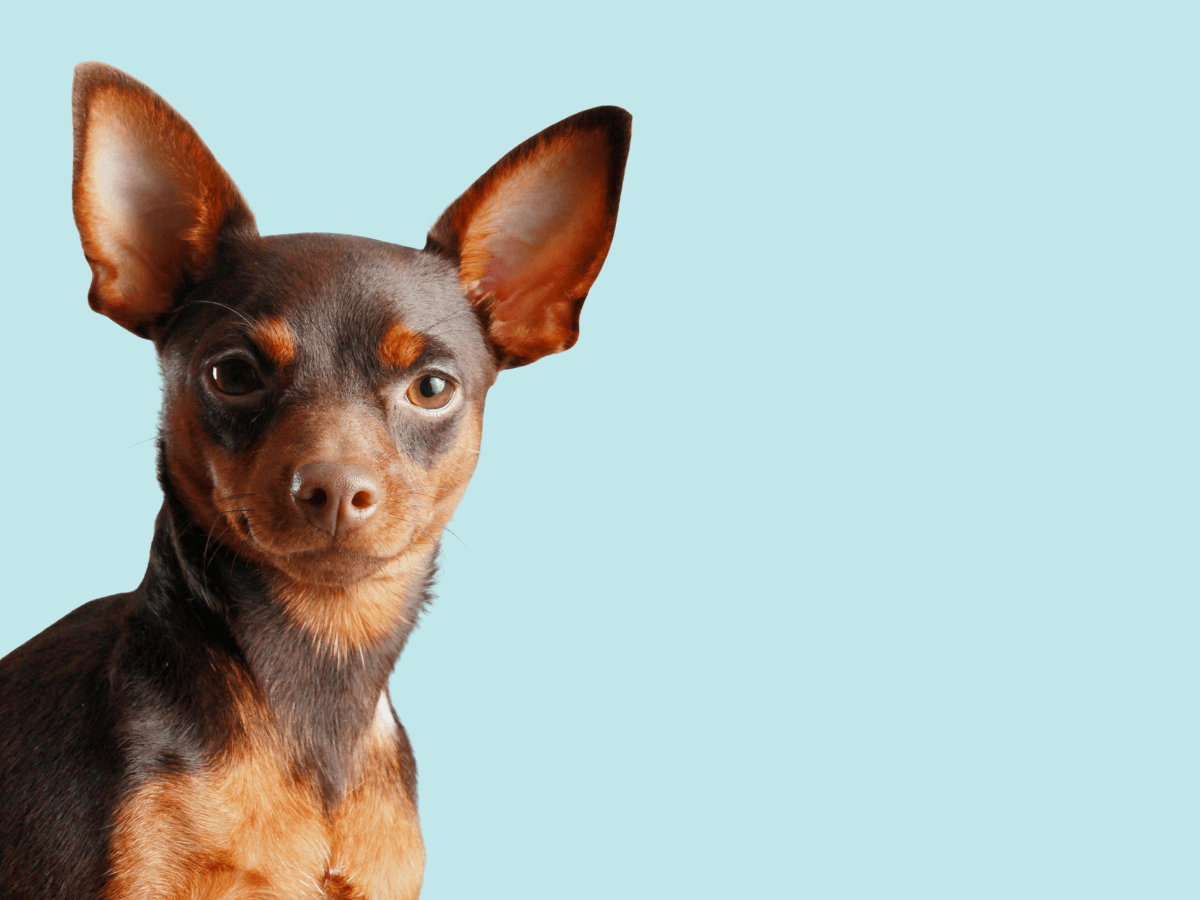
How much to feed a Miniature Pinscher comes down to weight and energy: a neutered 10 lb adult needs about 350 calories a day. For a busy, fussy Min Pin, the challenge is getting those calories eaten, so an energy-dense meal they enjoy matters as much as the portion. Our Miniature Pinscher dog food guide covers the breed's full profile.
How many calories does a Miniature Pinscher need?
A neutered adult Miniature Pinscher of 8 to 12 lbs needs about 295 to 400 calories a day. Veterinarians estimate this from the resting energy requirement (70 × body weight in kg to the power of 0.75), multiplied by 1.6 for a neutered adult or 1.8 for an intact adult1.
Those figures are a starting point1. A meta-analysis of 29 studies found that activity and neuter status change energy needs, and that body weight alone may not predict them well2. Our breed profile rates the Min Pin's energy as high and lists weight loss among its common health risks, so an active Min Pin may need more than the chart shows.
What does a Miniature Pinscher feeding chart look like?
A Miniature Pinscher feeding chart turns your dog's weight into daily calories and then into packs of fresh food. These starting estimates for neutered adults use three meals our breed page features for Min Pins.
Adult weight (neutered) | Calories per day | Classic Pork Stew (742 kcal/pack) | Fisherman's Best Friend Supper (504 kcal/pack) | Kangaroo (435 kcal/pack) |
8 lb (3.6 kg) | ~295 kcal | ~0.40 pack | ~0.58 pack | ~0.68 pack |
10 lb (4.5 kg) | ~350 kcal | ~0.47 pack | ~0.69 pack | ~0.80 pack |
12 lb (5.4 kg) | ~400 kcal | ~0.54 pack | ~0.79 pack | ~0.92 pack |
The same 350 calories can be under half a pack of Classic Pork Stew or most of a pack of Kangaroo. For a Min Pin that eats little at a time, the denser meal makes the daily goal easier to reach. To get a portion for your own dog, answer a few questions about your pup, and we'll set the Meal Plan to their weight, age and activity.
Why won't my Min Pin eat?
A Min Pin that won't eat may be holding out for something tastier, distracted by everything around them, or uncomfortable. Our breed profile lists picky eating and a sensitive stomach among the Min Pin's common health risks, so both preference and digestion are worth thinking about.
Mouth pain is a common hidden reason in small dogs. A UK study of 22,333 dogs found that the odds of periodontal disease went down as adult body weight went up3. For a toy breed like the Min Pin, a dental check belongs early in any picky-eating visit.
What should you do about a Min Pin losing weight?
A Min Pin losing weight needs a vet visit first, because weight loss in a small, active dog can come from illness as well as from too few calories. Weigh your dog on the same scale each month so you notice a change early.
Book a vet appointment if your Min Pin:
- Loses weight over a few weeks while eating the same amount, which suggests a medical cause.
- Eats less for more than a day or two, because small dogs have little reserve.
- Has vomiting, diarrhea or less energy, since those signs point beyond fussiness.
- Chews on one side or drops food, which can mean tooth or gum pain.
Once your vet has ruled out illness and set a goal weight, add calories gradually and reweigh every two weeks.
How do you feed a Min Pin picky eater?
You can feed a Min Pin picky eater by keeping meals short, predictable and worth finishing. Our breed page recommends two meals a day at consistent times for most adult Min Pins.
- Serve meals in a calm spot, away from the doorbell, the window and other pets, so a busy Min Pin can focus on the bowl.
- Give 15 to 20 minutes, then lift the bowl. Offer the next meal at the usual time instead of topping up.
- Choose an energy-dense recipe, so a smaller amount of food still covers the day's calories.
- Keep treats small and counted, because a few bites between meals can replace a whole dinner for a toy breed.
- Change recipes slowly, over about a week, to keep a sensitive stomach settled.
What is the best Min Pin diet for keeping weight on?
The best Min Pin diet for keeping weight on is a complete and balanced meal that is calorie-dense and tasty enough to finish. Two of the recipes our breed page features for Min Pins suit different needs.
- Classic Pork Stew is our most energy-dense dog meal at 742 kcal per pack, made with lean ground pork, root vegetables and leafy greens. It's free of chicken, beef and grains, and a favourite with picky eaters.
- Kangaroo is a short-ingredient recipe of kangaroo, sweet potato and peas, with no grains. It's a low fat option for a Min Pin with a sensitive stomach, at 435 kcal per pack.
Fisherman's Best Friend Supper, a low fat pollock recipe, is the third meal on our breed page, and a gentle choice for older Min Pins.
How do gently-cooked meals help a Min Pin eat well?
Gently-cooked meals help a Min Pin eat well by offering real ingredients with the texture of home cooking, in packs with a known calorie count. Every Tom&Sawyer meal is made with 100% human grade ingredients in a human grade inspected facility, and gently-cooked to a safe internal temperature without cooking out nutrients.
Animal nutritionists formulate and lab test each recipe to AAFCO nutrient profiles. A Full Plan is your Min Pin's complete diet, portioned to the gram for their calorie needs. A Partial Plan mixes our meals with their current food at a smaller daily portion. You can cancel anytime, and each order comes with our 14 day satisfaction guarantee.
Ready to work out how much to feed a Miniature Pinscher?
Working out how much to feed a Miniature Pinscher starts with the chart, then follows your dog's weight and energy from month to month. Weigh them, pick a meal they love, and adjust with your vet.
Build your pup's Meal Plan with our meal quiz. Tell us about your Min Pin, and we'll recommend meals and portion them to the gram for a healthy weight.
Please consult your veterinarian before making changes to your pet's diet, especially if your pet has a medical condition.
Resources
- Sanderson, S. L. (2024). Nutritional Requirements of Small Animals. Merck Veterinary Manual. https://www.merckvetmanual.com/management-and-nutrition/nutrition-small-animals/nutritional-requirements-of-small-animals
- Bermingham, E. N., Thomas, D. G., Cave, N. J., Morris, P. J., Butterwick, R. F., & German, A. J. (2014). Energy requirements of adult dogs: a meta-analysis. PLoS ONE, 9(10), e109681. https://www.ncbi.nlm.nih.gov/pmc/articles/PMC4196927/
- O'Neill, D. G., Mitchell, C. E., Humphrey, J., Church, D. B., Brodbelt, D. C., & Pegram, C. (2021). Epidemiology of periodontal disease in dogs in the UK primary-care veterinary setting. Journal of Small Animal Practice, 62(12), 1051–1061. https://pmc.ncbi.nlm.nih.gov/articles/PMC9291557/