
International Cat Day: What a Complete Cat Meal Needs Beyond Protein Alone
Written by Dr. Hannah Godfrey, PhD, Animal Nutrition
This International Cat Day (August 8), we're looking at cat nutrition beyond protein: what a truly complete cat meal needs to keep your feline fur-iend healthy from nose to tail.
When we think about feeding cats, the conversation often starts (and ends) with protein. And while it's true that cats are obligate carnivores with a higher protein requirement than many other species, a truly complete paw-some cat food is about much more than simply adding extra meat to the bowl.
Cats have evolved as highly specialized hunters, and their nutritional needs reflect that history. They require specific amino acids, fatty acids, vitamins, minerals, and adequate dietary moisture that work together to support everything from heart and eye health to healthy skin, reproduction, hydration, and metabolism. In fact, a diet can be rich in protein and still fall short if it doesn't provide the full spectrum of nutrients that cats cannot make themselves.
As an animal nutritionist, I often tell cat parents that feeding a cat isn't simply about meeting a protein target. It's about creating a complete nutritional package that supports every aspect of feline health while respecting the biology of a true carnivore.
Why Cats Need More Protein Than Other Species
One of the most important takeaways from feline nutrition research is that cats have a higher protein requirement than many other species. Unlike omnivores, cats continuously break down protein for energy and essential metabolic functions, even when dietary protein intake is low. And while protein amount is important, the amino acids that make up the protein are just as important! This means protein quality matters just as much as quantity.
Essential Amino Acids Cats Cannot Produce on Their Own
Cats need 11 amino acids from their diet because they cannot create them through other sources. Some of these amino acids include:
Arginine
Methionine
Lysine
Threonine
Histidine
Tryptophan
These amino acids support muscle maintenance, immune function, metabolism, and overall health.
Why Taurine Is So Important for Cats
Taurine is perhaps the most famous example of a nutrient cats must obtain from food. Unlike most mammals, such as dogs, cats have a limited ability to synthesize taurine themselves. As a result, it must be supplied through the diet, primarily from animal tissues. Taurine deficiency has been linked to:
Retinal degeneration and vision loss
Dilated cardiomyopathy/DCM (heart disease)
Reproductive problems
Poor kitten development
Because of its importance, well-formulated cat foods are carefully supplemented and monitored to ensure adequate taurine levels.
Why Cats Need Fat and Essential Fatty Acids
Many cat parents still worry about dietary fat, but cats need certain fats that are essential for their overall health and wellbeing.
Cats require specific fatty acids, including:
Linoleic acid
Arachidonic acid
EPA
DHA
Unlike dogs and humans, cats cannot efficiently convert plant-derived fatty acids into arachidonic acid, making animal-derived fat sources particularly important. These nutrients support:
Skin and coat health
Reproduction
Brain and nervous system function
Healthy inflammatory responses
Why Hydration Matters So Much for Cats
One of the most fascinating aspects of cat biology is their naturally low thirst drive.
Cats evolved from desert-dwelling ancestors and historically obtained much of their hydration from prey. Even today, some cats do not drink enough water voluntarily when fed dry foods. Cats have a relatively weak thirst response and often rely heavily on the moisture content of their food.
How Moisture-Rich Food Supports Urinary and Kidney Health
This is one reason moisture-rich food formats are so beneficial. Higher dietary moisture can help support:
Healthy hydration
Urinary tract health
Kidney function
Overall well-being
For many cats, nutrition and hydration should be considered together rather than as separate issues.
Why Cats Need Preformed Vitamins From Food
Another unique quirk of cat metabolism is their inability to efficiently form certain vitamins from precursors found in plants.
For example, cats require:
Preformed vitamin A
Dietary vitamin D
Niacin
Several B vitamins
This again reflects their evolutionary dependence on animal prey. A properly balanced fresh diet for our feline fur-iends must provide these nutrients at appropriate levels to support long-term health.
How Carbohydrates and Fiber Fit Into a Cat's Diet
One of the biggest misconceptions about cats is that because they are obligate carnivores, carbohydrates have no role in their diet. The reality is more nuanced.
Cats have evolved to thrive on diets rich in animal protein and fat, and they have a limited capacity to utilize large amounts of dietary carbohydrates compared with omnivorous species. They lack salivary amylase, have lower activities of certain carbohydrate-digesting enzymes, and naturally derive much of their energy from protein and fat.
However, this does not mean that carbohydrates are inherently harmful or nutritionally irrelevant.
Research shows that cooked, digestible carbohydrates can be effectively digested and utilized by cats. Carbohydrate-containing ingredients can provide a readily available source of energy and can even help spare protein for other important roles.
Why Dietary Fiber Still Matters for Cats
Perhaps even more important is the role of dietary fiber . Fiber is a type of carbohydrate, but it is indigestible. Different types of fiber can support digestive health in several ways:
Promoting healthy stool quality
Supporting beneficial gut microbes
Producing short-chain fatty acids through fermentation in the large intestine
Helping maintain normal intestinal function
Supporting satiety and healthy weight management in some cats
The key is balance. Cats do not have a nutritional requirement for large amounts of carbohydrate, but carefully selected carbohydrate and fiber sources can play an important role in creating a complete and well-prepared food. The goal is not to maximize carbohydrate intake; rather, it is to provide appropriate nutrients that support digestive health while allowing ample room for the high-quality animal proteins and fats that remain the foundation of feline nutrition.
Why Gently-Cooked Meals Preserve Key Nutrients
Fresh ingredients offer tremendous nutritional potential, but they must also be safe and balanced.
Gentle cooking helps:
Improve digestibility
Enhance food safety
Preserve palatability
Maintain moisture content
Protect many heat-sensitive nutrients better than more extensive processing methods
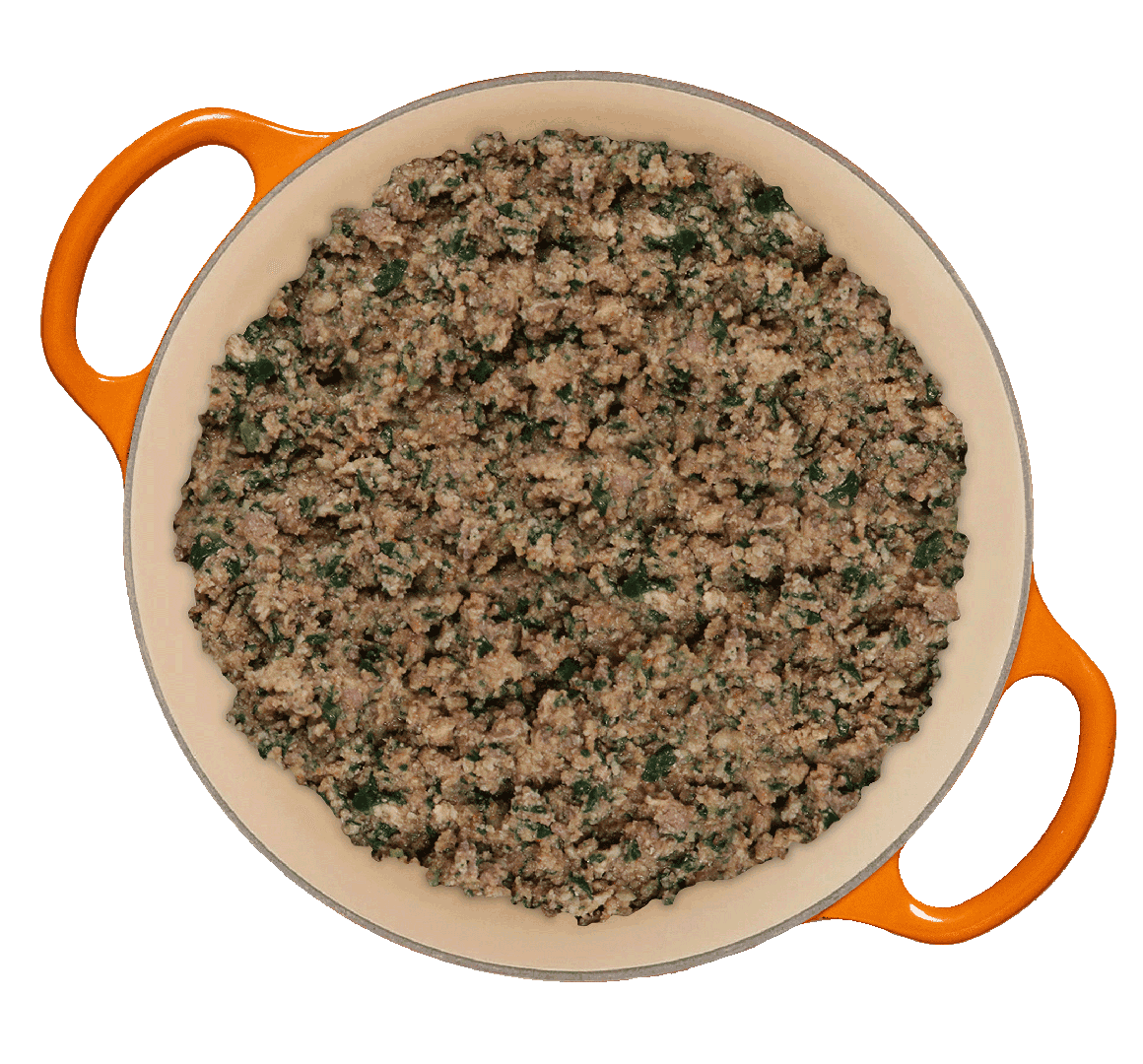
Most importantly, a complete and balanced cat food is designed around established nutrient recommendations, ensuring that essential nutrients such as taurine, vitamins, minerals, and fatty acids are supplied in the correct amounts.
The Nutrients Behind a Complete Cat Meal
Nutrient Category
Why It's Essential
Key Examples
Protein & Amino Acids
Cats break down protein continuously for energy, even on low intake
Arginine, methionine, lysine
Taurine
Cats can't self-synthesize it; deficiency is linked to heart and vision problems
Sourced from animal tissue
Essential Fatty Acids
Support skin, coat, brain, and healthy inflammatory response
Linoleic acid, arachidonic acid, EPA, DHA
Dietary Moisture
Cats have a naturally low thirst drive; moisture supports hydration and urinary health
Moisture-rich food formats
Preformed Vitamins
Cats can't convert plant precursors into usable form
Vitamin A, vitamin D, niacin, B vitamins
Dietary Fiber
Supports gut microbes, stool quality, and digestion
Fermentable, digestible fiber sources
The Purr-fect Balance in Every Bowl
Cats aren't small dogs. They are highly specialized carnivores with unique nutrient requirements that have been shaped by millions of years of evolution.
Navigating your feline fur-iend's unique nutritional needs doesn't have to be complicated. At Tom&Sawyer® , our gently-cooked cat meals are carefully prepared with human grade ingredients to deliver a complete nutritional package by providing:
High-quality animal protein
Essential amino acids like taurine
Beneficial animal-derived fats and fatty acids
Hydration through dietary moisture
Balanced vitamins and minerals
High digestibility and flavour your cat craves
Whether your kitty prefers the rustic poultry cuts in our 🍁 Chicken Cacciatore , the wild protein of our limited-ingredient 🍁 Wild West Kangaroo , or the delicious variety of our 🍁 Bento Box , we've taken care of the science. By providing the right balance of high-quality proteins, essential fatty acids, and vital nutrients like taurine, we are here to ensure your fur baby enjoys a happier, healthier, longer lives™
🍁 Currently available to Canadian Loyal Companions only.
References
Bauer, J. J. E. (2008). Essential fatty acid metabolism in dogs and cats. Revista Brasileira de Zootecnia, 37(spe), 20-27.
Bradshaw, J.W.S. (2006) The evolutionary basis for the feeding behaviour of domestic dogs (Canis familiaris) and cats (Felis catus). Journal of Nutrition. 136, 1927S-1931S.
Godfrey, H., Ellis, J., Verbrugghe A. (2024). A meta-analysis: dietary carbohydrates do not increase body fat or fasted insulin and glucose in cats. Journal of Animal Science.
National Research Council, Division on Earth, Life Studies, Committee on Animal Nutrition, Subcommittee on Dog, & Cat Nutrition. (2006). Nutrient requirements of dogs and cats. National Academies Press.
Plantinga, E.A., Bosch, G., Hendriks, W.H. (2011). Estimation of the dietary nutrient profile of free-roaming feral cats: possible implications for nutrition of domestic cats. British Journal of Nutrition. 106, S35-S48.
Sires, R., Yamka, R., Wakshlag, J. (2025) Feeding fresh food and providing water ad libitum is clinically proven to exceed calculated daily water requirements and impact urine relative supersaturation in dogs. Frontiers in Veterinary Science. 12.
Verbrugghe, A., Hesta, M. (2017) Cats and carbohydrates: the carnivore fantasy. Veterinary Science. 4, 55.