
How to Transition Your Dog or Cat To a New Diet
By Dr. Hannah Godfrey, PhD · · Updated
Are you thinking about changing your dog's or cat's food, and wondering how to change it with minimal digestion issues? In this guide to transitioning your pet's food, you'll learn all you need to know about switching your fur baby's food successfully.
How to Transition
For a smooth transition, slowly increase the amount of new food over the course of seven days.
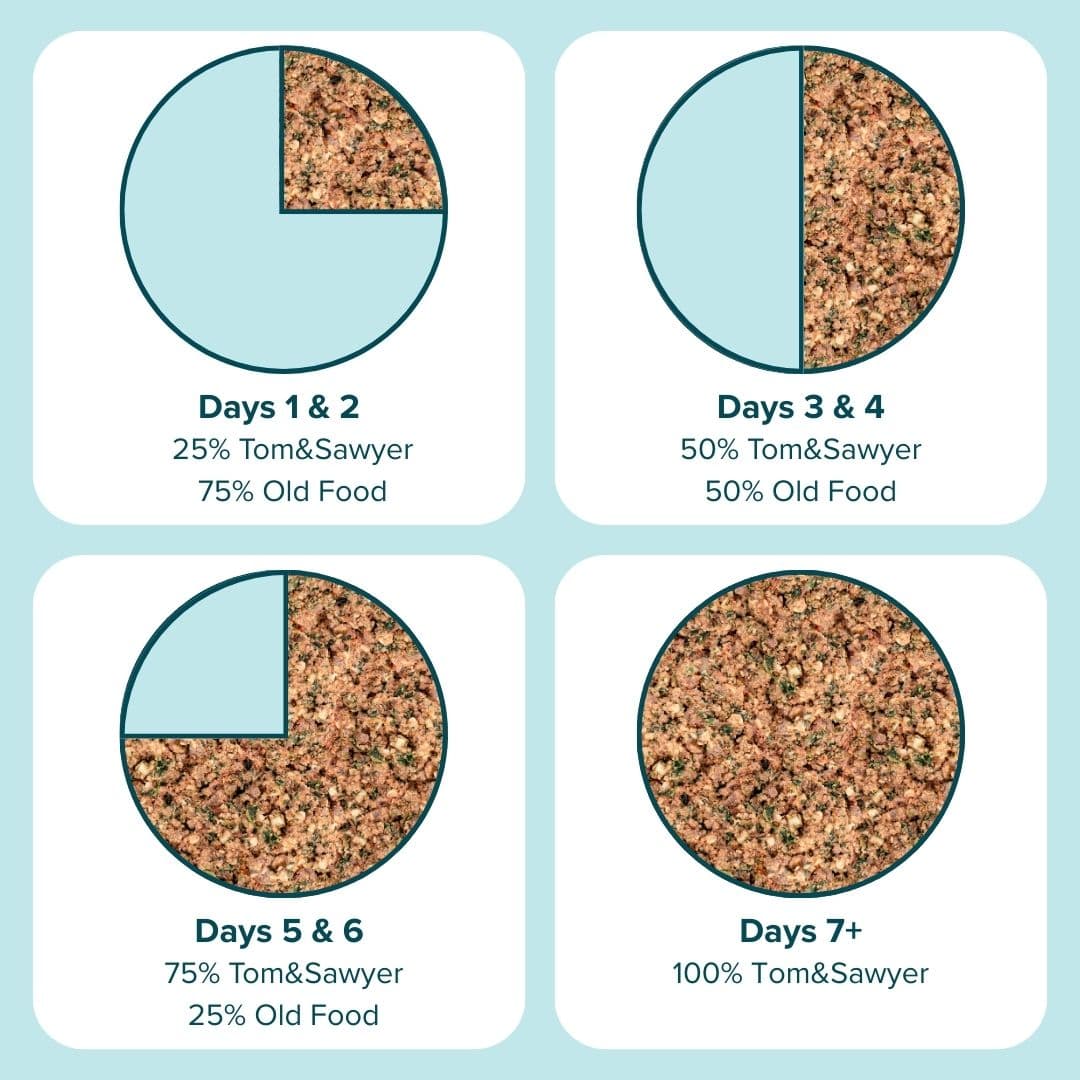
Days 1 & 2: Provide 75% of their old food and 25% Tom&Sawyer
Days 3 & 4: Provide 50% of their old food and 50% Tom&Sawyer
Days 5 & 6: Provide 25% of their old food and 75% Tom&Sawyer
Day 7+: If your pet has any trouble adjusting, stay at that transition stage for a few more days
To find the recommended portion amount for your pet, click here to open the Feeding Calculator.
Why Do You Need To Transition?
Introducing a new diet to your pet is an exciting change! But an abrupt change in diet can result in poor digestive health for your dog or cat. Our pets break down food using enzymes, hormones, and other physiological means.
The nutrients that are released fuel your pet with energy, but they also play a huge role in shaping the microbiome in the digestive tract. When we feed our pets the same diet day in and day out, their digestive systems, and the microbiome, become accustomed to it.
When you change your pet’s diet, you’re changing the composition and formulation. Without transitioning the diets, this can essentially shock your pet’s digestive system. This can affect enzyme production and secretion, hormones, and cause dysbiosis of the microbiome. Together, this can result in diarrhea, gas, upset stomach, vomiting, and your pet may refuse to eat the food altogether.
By slowly transitioning your pet to a new food, you allow their digestive system to acclimatize and slowly adjust. This can prevent shocking the system and help your pet's digestive system find a new routine!
Things to Consider
This transitioning regime is a great foundation to use for your pets when switching over to your favourite Tom&Sawyer diet, but of course, every pet is different. You may have to make some adjustments accordingly:
- Hydration is key - Provide fresh, clean water for your pet at all times of the day. Water is an important factor for digestion and overall digestive health.
- Your dog or cat may need more than seven days to adjust to their new diet. Be patient. You may need to alter this schedule as necessary, such as if your pet has a sensitive stomach or a gastrointestinal disease.
- Once your pet is eating 100% of their new diet, it may take another few weeks for them to adjust completely. If you notice ongoing stomach upset, reach out to your pet’s veterinarian for the best next steps.
- It may be RUFF, but limit the provision of treats or table scraps during the transition period to allow your pet time to adjust to their new food.
- And don't forget to keep us updated on how your doggo or kitty-cat is enjoying their new, chef-inspired gently-cooked meals (photos are encouraged)!
Article written by: Dr. Hannah Godfrey, PhD, Animal Nutritionist