
Can Cats and Dogs Eat the Same Food? Understanding Their Unique Nutritional Needs
By Kelly Gredner, RVT, VTS (Nutrition) ·
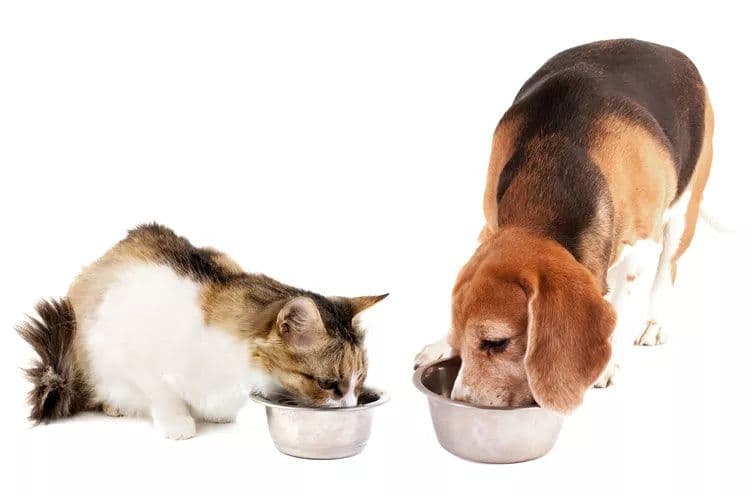
In 2026, many households contain multiple pets and it's common to see mixed species homes with a cat and a dog. It would be convenient to feed all of them the same food, but, even though dogs and cats are part of the order of Carnivora, they have very different nutritional needs.
So, can cats and dogs eat the same food? Cats and dogs shouldn't eat the same food or share the same bowl as an everyday diet, because a cat's needs for protein, fat, water and several vitamins are higher and stricter than a dog's. Below, we compare cat food vs dog food nutrient by nutrient, with the AAFCO minimums for each, and answer the questions mixed-species homes ask most: can dogs eat cat food, can cats eat dog food, and can cats and dogs share the same bowl? To see which meals fit each of your pets, take the meal quiz.
What is the difference between cat food and dog food?
The difference between cat food and dog food comes from the different nutritional needs of each species: cats are strict carnivores, while dogs are omnivores with more nutritional flexibility, so cats and dogs can't eat the same food without one of them missing out on protein, fat, water or key vitamins. A cat needs more dietary protein and fat than a dog and must get nutrients such as taurine, niacin and preformed vitamin A from its food.
Nutritional need | Cats | Dogs |
Ancestor | African wild cat (Felis silvestris libyca) | Wolf (Canis lupus) |
Diet type | Strict carnivore | Omnivore |
Minimum protein, adult maintenance (AAFCO, dry matter) | 26% | 18% |
Ideal protein range (dry matter) | 30–40%2 | 20–30%1 |
Minimum fat (AAFCO, dry matter) | 9% | 5.5% |
Carbohydrates | Not essential; digest cooked carbohydrates up to a certain amount | Not essential; better than cats at digesting and using them |
Saving amino acids for later | Limited: gluconeogenesis can't be turned off | Adapts to lower or higher protein diets |
Thirst drive | Low; most water comes from food | Drink when they need to |
Nutrients to watch | Taurine, arachidonic acid, preformed vitamin A, niacin, vitamin D | Methionine and cysteine |
Fat-related concern | Weight management; fat intolerance is rare | Fat-sensitive conditions such as pancreatitis |
What does being a carnivore mean for a cat's food?
Being a carnivore means cat food must be high in protein, contain nutrients found only in animal proteins and supply much of a cat's water, a set of needs dog food isn't built to meet. The cats' ancestor is the African wild cat Felis silvestris libyca, a small desert cat. Being from Africa, they are adapted to dry climates2. Cats have low thirst drives and can survive on less water than dogs as they can concentrate their urine to compensate, reabsorbing water as needed3.
Being a carnivore means they have strict nutritional requirements with limited flexibility.
How much protein do cats need?
Cats need at least 26% protein on a dry matter basis in adult maintenance cat foods, according to AAFCO, and do best when protein in cat foods is around 30–40% on a dry matter basis2. Cats have a high dietary protein intake requirement for bodily maintenance, which is one of the main reasons they are considered true carnivores. Protein supplies the body with nitrogen and amino acids which cats require at sufficient amounts.
In fact, certain amino acids are required by cats at higher amounts than other, non carnivorous species. Cats also have specific requirements for dietary forms of other nutrients found only in animal proteins, such as taurine, an amino sulfonic acid, usually grouped with the amino acids. (More on this nutrient in our article on taurine in dog and cat meals.)
What's especially important is that cats have a base requirement for a process called gluconeogenesis. Gluconeogenesis means that they use amino acids to form glucose in the body, rather than relying solely on dietary glucose.
Although cats can adjust the rate of gluconeogenesis in response to dietary protein intake, they are unable to completely turn it off, even when protein intake is low! This means they would start to take amino acids from their own muscles in times of dire need and would result in muscle wasting.
Because of this, they have limited ability to conserve amino acids for future use.
Protein Requirements for Cats: The current minimum recommendation for protein in adult maintenance cat foods is 26% on a dry matter basis according to AAFCO; however, cats do best when protein in cat foods is around 30-40% on a dry matter basis2.
Feeding a cat higher than this is also nutritionally sound based on their unique metabolism as a carnivorous animal.
Do cats need carbohydrates?
Carbohydrates in cat food are not an essential nutrient for cats, but cats are able to digest and utilize cooked carbohydrates (up to a certain amount) to supply their physiological glucose needs.
Cats can tolerate a carbohydrate free or very low carbohydrate diet because they can obtain glucose from amino acids (gluconeogenesis)! Cats have a preference for using protein (amino acids) to maintain their blood sugar levels, but they can use carbohydrates, as well. (For a deeper look, read Can Cats Eat Carbs? The Truth About Feline Nutrition.)
Important Note: In pet food, carbohydrates generally refer to the starches and fiber is often grouped separately. Simple sugars are rarely found in significant amounts, typically coming only from minor fruit inclusions. While fibers (which are technically a type of carbohydrate) are indigestible, they play a role in supporting the gut microbiome and overall health.
How much fat do cats need?
Cats need at least 9% fat on a dry matter basis in cat foods, according to AAFCO, plus specific fatty acids, and they tolerate high levels of fat in their diet. Fats provide an important source of energy for cats! There is a requirement for overall fat content, but also for specific fatty acids in cat foods.
The fatty acids of particular importance to cats include:
- Linoleic acid
- Alpha linolenic acid
- Arachidonic acid
- Eicosapentaenoic acid
- Docosahexaenoic acid
Cats require the essential fatty acid arachidonic acid from their diet as they can't efficiently convert linolenic acid to arachidonic acid from plant oils like other species.
They also adapted to high protein/high fat diets with limited carbohydrates (starches) through the consumption of prey like birds and mice. This has resulted in an ability to tolerate high levels of fat in their diet.
While they rarely require a low fat diet and fat intolerant conditions are rare in cats, managing fat content for obesity and weight management is an important consideration.
Dietary Fat Requirement for Cats: The minimum requirement according to AAFCO for total fat content in cat foods is 9% on a dry matter basis.
How do cats stay hydrated?
Cats stay hydrated mainly through the moisture in cat food, less from an open water source, because their low thirst drive makes them tolerant of minor dehydration.
It's a survival mechanism to avoid the local watering hole to steer clear of predators!
Cats often will drink after eating, but only if safe to do so. As such, water bowls should provide fresh clean water in locations that your cat will feel safe to drink from (that means away from litter boxes, in quiet, low traffic areas).
Having food with a high moisture content (a mouse has >70% water content) also helps tread the lines and keeps them well hydrated. (See how fresh food supports cat urinary health and hydration.)
Which nutrients must cats get from their diet?
Cat food must supply preformed vitamin A, niacin and enough vitamin D, because a cat's body can't make these nutrients from other compounds the way other species can, and dog food may fall short on them.
- Dietary sources of preformed vitamin A as they can't convert beta carotene
The importance of vitamin A: Beta carotene, the form found in leafy green vegetables or orange - red colored vegetables, can't be converted by cats, so they need vitamin A already formed in their food. Vitamin A, or specifically retinol deficiency, can result in severe vision/eye impairments, along with reproductive problems3.
- They can't convert the amino acid tryptophan to niacin
The importance of niacin: Also called vitamin B3, a deficiency in this could cause anorexia, fever, weight loss, respiratory disease. It could also be fatal3.
- Sufficient vitamin D due to reduced ability to synthesize it
The importance of vitamin D: Particularly important for growth and development, meeting the nutritional demand for vitamin D is crucial for bone health, and for maintaining calcium and thyroid levels3.
Nutrient | Why cats need it in their food | What it supports, or what a shortage can cause |
Preformed vitamin A (retinol) | Cats can't convert beta carotene | Deficiency can cause severe vision/eye impairments and reproductive problems3 |
Niacin (vitamin B3) | Cats can't convert tryptophan to niacin | Deficiency can cause anorexia, fever, weight loss and respiratory disease, and can be fatal3 |
Vitamin D | Cats have a reduced ability to synthesize it | Growth and development, bone health, calcium and thyroid levels3 |
Arachidonic acid | Cats can't efficiently make it from plant oils | An essential fatty acid for cats |
Taurine | Found only in animal proteins | Required by cats in dietary form |
Are dogs omnivores?
Dogs are omnivores, so dog food can vary more in protein, carbohydrate and fat than cat food, and that difference is why cats and dogs shouldn't eat the same food every day. The dog's ancestral relative is the wolf, Canis lupus, and with this comes different nutritional needs to cats, and also, more nutritional flexibility.
How much protein do dogs need?
Dogs need at least 18% protein on a dry matter basis in adult maintenance dog foods, according to AAFCO, and the ideal range for adult dogs is 20–30% on a dry matter basis1. Unlike the cat, dogs can easily adapt to changing protein levels in a diet. They can manage between reduced or higher protein diets, meaning they can generally conserve amino acids for future use. And so their daily needs are lower than that of carnivores.
When it comes to essential amino acids, dogs have the similar needs as the cat, however, we want to pay particular attention to methionine and cysteine. Inadequate amounts of either could potentially result in DCM (dilated cardiomyopathy, or heart disease).
Excess protein intake in dogs is also more of a concern than it is for cats as if they are fed more protein than they need (remember: lower requirements!) then it's stored as fat, possibly leading to obesity. The excess nitrogen is released in the urine2.
Excess calories, in any form, could result in weight gain for both dogs and cats.
Dietary Protein Requirements for Dogs: The minimum amount of dietary protein in adult maintenance dog foods, according to AAFCO, is currently set at 18% on a dry matter basis. The ideal range for adult dogs should focus on dietary protein content between 20-30% on a dry matter basis1**
Do dogs need carbohydrates?
Carbohydrates in dog food are not an essential nutrient for dogs, but dogs need glucose for physiological functions and are better than cats at digesting and utilizing carbohydrates to meet their glucose needs.
Just like cat foods, the carbohydrates in dog food are largely composed of complex carbohydrates like starches. One study showed that a diet with 35-40% starch on a dry matter basis was 99% digestible to dogs4!
There is no current evidence that supports that carbohydrates have a negative effect on digestion or overall health in dogs. Carbohydrate levels can vary with minimal negative effects on dogs.
How much fat do dogs need?
Dogs need at least 5.5% fat on a dry matter basis in dog foods, according to AAFCO, and some dogs are sensitive to elevated fat levels or abrupt changes in fat content. Fat plays multiple roles in the body like providing a tasty source of energy, enabling fat soluble vitamin absorption (vitamins D,E,A,K) and providing essential fatty acids like linoleic acid3.
Both dogs and cats can enjoy diets that vary in fat content. However, some dogs are sensitive to elevated fat levels or abrupt changes in fat content of their diet. This is why we see more fat intolerant conditions in dogs like pancreatitis. (Dogs with fat-sensitive conditions may do well on one of our low fat meals, with guidance from your veterinarian.)
Dietary Fat Requirements for Dogs: The minimum requirement according to AAFCO for total fat content in dog foods is 5.5% on a dry matter basis.
How much water do dogs need?
Dogs need fresh, easy access to water daily, and unlike cats, dogs usually know to drink when they need to.
Water intake can be important to encourage for dogs with urinary or renal conditions as well as for senior dogs. In these instances, providing a high moisture diet may be incorporated into their management plan.
Can dogs eat cat food?
Dogs eating cat food regularly risk getting too much protein and fat and too little methionine and cysteine, so cat food doesn't work as a dog's everyday meal unless a nutrition expert confirms the recipe is complete for dogs. There are some concerns when a dog eats from a cats' bowl including:
- Protein content
- Amino acid precursors
- Fat content
Pending the diet, it may be too high in protein and fat for the individual dog, leading to potential health complications such as pancreatitis flare ups, gastrointestinal upset, and when consumed in excess, obesity.
Dogs also require higher levels of methionine and cysteine, two amino acids that dogs use to convert to taurine. Some cat foods may then be too low in methionine and cysteine for dogs.
It would take a nutrition expert to look at the nutrient analysis and compare to AAFCO minimums to ensure it is nutritionally complete.
Can cats eat dog food?
Cats eating dog food miss out on what their bodies need, so feeding your cat dog food is not a good idea: dog foods will not meet a cat's unique biological needs for protein, essential nutrients, carbohydrates and moisture. Here is why:
- Too little protein content: Cats are strict carnivores that require high levels of dietary protein, usually more than what is included in dog food.
- Missing essential nutrients: Dog food may fall short on crucial nutrients cats need, such as taurine, niacin, and preformed vitamin A
- Higher dietary carbohydrate content: Although cats can utilize carbohydrates, too much in the diet can cause some digestive discomfort. Dog foods tend to be higher in carbohydrates than cat foods and may provide too many for the cat to handle.
- Moisture content: Cats thrive on higher moisture foods to keep them properly hydrated.
How does Tom&Sawyer formulate cat food and dog food differently?
Tom&Sawyer formulates cat food and dog food separately, because cats and dogs shouldn't eat the same food: each recipe is carefully formulated by animal nutrition experts to meet the specific species needs. Because dogs and cats have fundamentally different biological needs, our formulation approach tailors each meal specifically to the species:
- Cat Recipes: Formulated for strict carnivores by prioritizing higher protein and fat levels, lower carbohydrates, and essential nutrients such as taurine, niacin, and preformed vitamin A, alongside high moisture content to support hydration.
- Dog Recipes: Formulated for omnivores with balanced protein ranges, manageable complex carbohydrates, and adaptable macronutrient profiles to suit their broader digestive flexibility.
All meals are prepared in small batches within a federally inspected human grade facility using restaurant-quality, whole-food ingredients that are gently-cooked separately to preserve delicate nutrients, then flash-frozen to lock in freshness.
Can cats and dogs share the same bowl?
Cats and dogs shouldn't share the same bowl: in the same home, each pet should eat from its own bowl, with food made for its own species, because they are very different species and should be treated as such! Although it would be convenient to feed cats and dogs the same food, understanding their nutritional needs leads to feeding a thriving companion, helping them live longer, happier, healthier lives™.
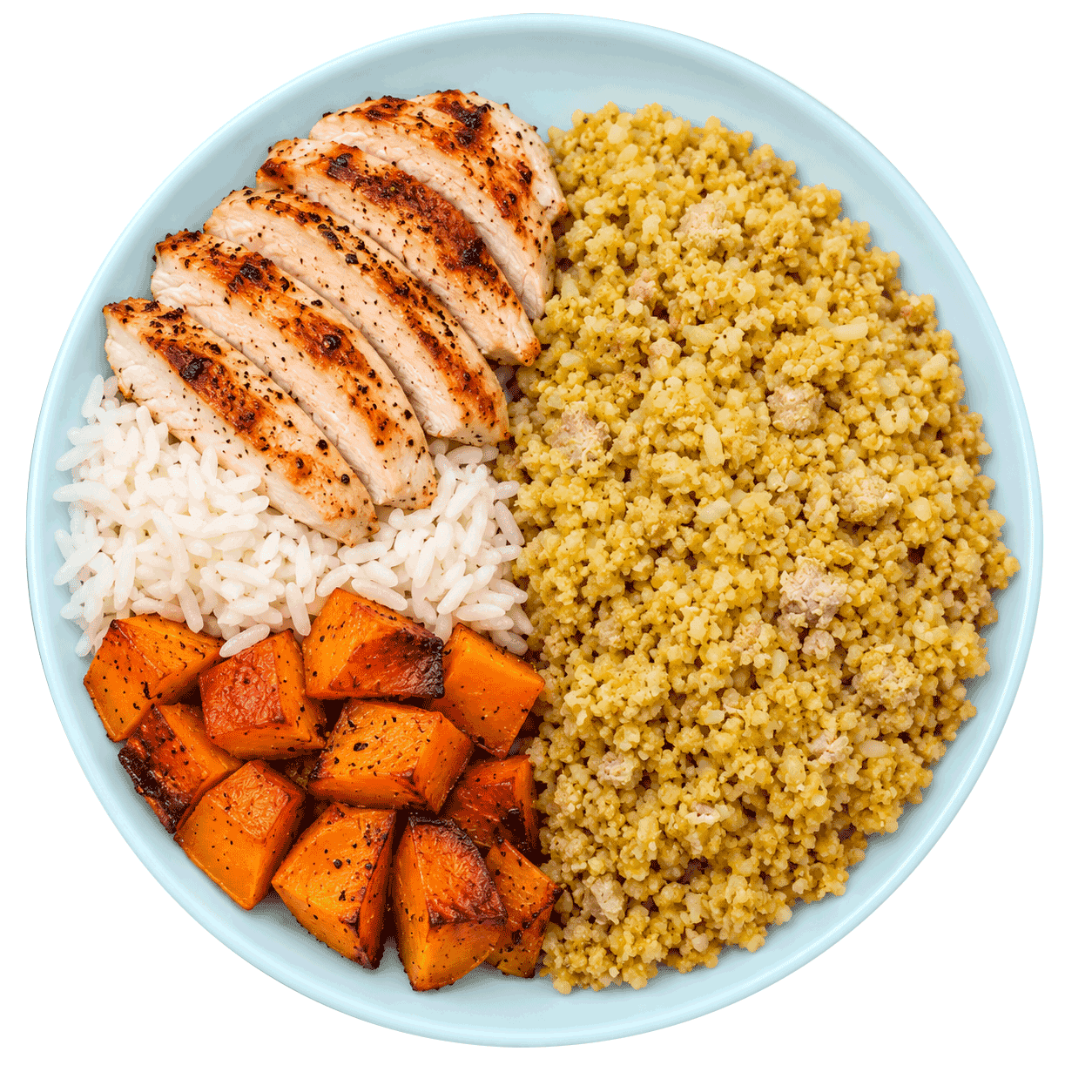
A cat recipe such as our Chicken Cacciatore* is built around a carnivore's needs, while our dog recipes give your pup the balanced protein and flexibility an omnivore does best on. Answer a few questions about each of your pets to build a Meal Plan for the whole household and join the Tom&Sawyer pack. Can cats and dogs eat the same food in your home? With a Meal Plan, they don't have to: each pet gets its own.
Please consult your veterinarian before making changes to your pet's diet, especially if your pet has a medical condition.
* Currently available in Canada only
Resources
- Hand M.S. et al. (eds) (2010). Small Animal Clinical Nutrition 5th ed. Mark Morris Institute
- Case, L. P., Daristotle, L., Raasch, M., & Hayek, M. (2011). Canine and feline nutrition (third edition) (3rd ed.). Mosby.
- Fascetti, A. J., & Delaney, S. J. (Eds.). (2012). Applied Veterinary Clinical Nutrition. Wiley-Blackwell.
- Wortinger, A. (2007). Nutrition for Veterinary Technicians and Nurses. Blackwell Publishing.
- Rankovic, MSc, PhD , Dr. A. (2025, August 13). Carbs & Dogs. Pet Nutrition at OVC. https://ovcpetnutrition.uoguelph.ca/2022/11/17/carbs-dogs/