
Thanksgiving and Your Pets: What’s Safe (and What’s Not) to Share
Author: Kelly Gredner, RVT (Specialization in Animal Nutrition), Veterinary Nutrition Consultant and Technical Specialist for Tom&Sawyer
Thanksgiving is here , and it’s a time when extra special foods, treats, and snacks are shared with loved ones to spread gratitude and celebrate with friends and family. Common foods such as roasted turkey, savoury stuffing, rich gravies, and fluffy mashed potatoes are served, along with pumpkin or apple pie and other delectable desserts.
Many of us have furry companions with whom we love to share these special occasions, and sometimes that even includes food. Although well-intended, there can be unexpected dangers in sharing the holiday feast with your fur-baby. So, let’s talk about it: Can I feed my pet table scraps?
Be aware of the recipe and/or ingredients before feeding your pet from the table:
Turkey : Roasted turkey meat is full of protein and contains the naturally occurring amino acid tryptophan, which has calming properties. Turkey itself can be an appropriate, tasty snack for healthy pets, but it’s often basted with oils and herbs and served with skin, making it very fatty. These rich fats can lead to digestive disturbances such as vomiting and diarrhea.
Turkey Bones : Cooked bird bones are quite fragile and tend to shatter when bitten, producing sharp edges. They can fracture teeth or become lodged in delicate places in your pet’s digestive system, including the intestines, esophagus, gums, and the roof of the mouth. Caution should be taken if pets are near or being fed turkey — especially from the table when no one is paying close attention.
Stuffing : Garlic and onions are common ingredients in this delicious side dish, but they are toxic to dogs and cats. If ingested, they can cause vomiting, a breakdown of red blood cells, weakness, and an increased heart rate. This can happen with raw or cooked garlic and onions, as well as powdered versions — even in small amounts. Other possible ingredients in stuffing include butter and salt, so it’s best to steer clear!
Gravy : Fresh, homemade gravy from the renderings of a cooked turkey is rich in fat. Some pets can be intolerant of rich or fatty foods, and consuming a meal high in fat can cause vomiting and diarrhea (as with turkey) and, in severe cases, pancreatitis — an inflammation of the pancreas that can lead to a trip to the emergency vet. Pancreatitis can show up as mild symptoms like tiredness, vomiting, and diarrhea, or as severe symptoms such as pain, retching, poor appetite, and dehydration requiring hospitalization. Gravy can also be salty, which can make senior pets (or those with certain medical conditions like heart or kidney disease) quite ill.
Dairy : Most pets are lactose intolerant, so indulging them in whipped cream, ice cream, or dairy-laden mashed potatoes can really upset their stomachs. Some pets can tolerate dairy, but it might not be worth the risk. Use your best judgment and consider past experiences — you know your pet best.
Pumpkin Pie : Cinnamon and nutmeg, common spices in pumpkin pie, can cause stomach upset, agitation, irritation of the throat, or a fast heart rate. However, if you want to involve your pet in the festive fun, try canned pumpkin purée (not labelled as pie filling) as a tasty, fibrous, high-moisture treat!
Pecan Pie : Pecans, like most nuts, are chock-full of fat. So, similar to gravy and turkey, eating a large amount of pecans can cause digestive issues like vomiting, diarrhea, and pancreatitis.
Xylitol : Xylitol is an alternative sweetener often used in baked goods, pudding, or chocolate (among other things like gum and toothpaste). If ingested by a dog or cat, xylitol can cause a dramatic drop in blood sugar levels (hypoglycemia), which presents as a “drunken” gait, weakness, and disorientation. Xylitol can also cause serious liver injury, which might lead to hospitalization.
Safe alternatives for a FUR-iendly Feast!
For a healthy dog or cat, consider offering foods from this list:
- Plain cooked turkey without skin or gravy
- Plain potatoes without butter, milk, or salt and pepper
- Plain cooked or raw carrots
- Plain cooked or raw bell peppers
- Store-bought pre-packaged treats
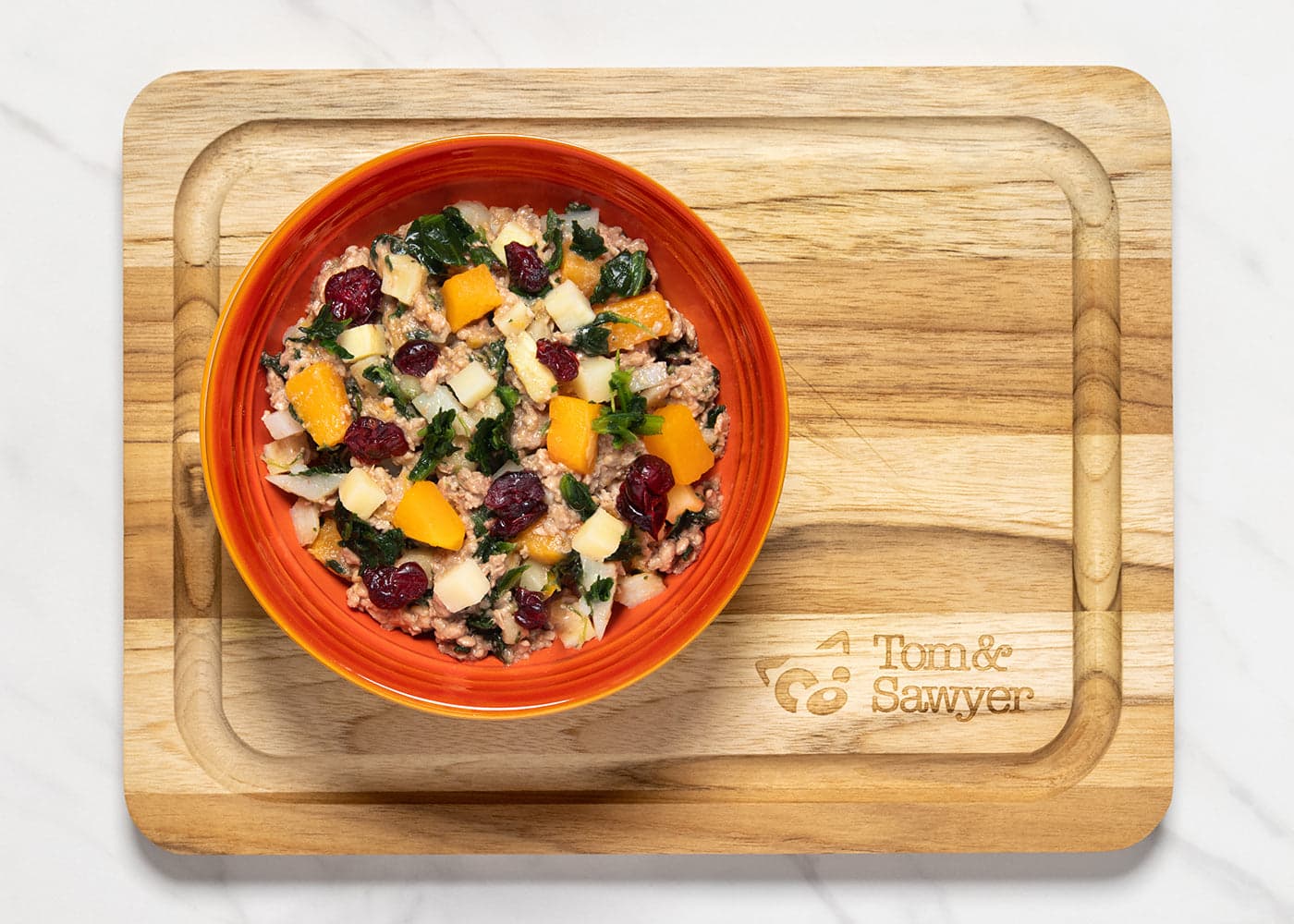
If you’d like to simulate a holiday feast for your dog, Tom&Sawyer’s Turkey Gobbler is a great option! It combines familiar favourites like turkey and giblets (liver, heart), cooked russet potatoes, butternut squash, and cranberries.
For our feline friends, you can satisfy their inner carnivore with the Tom&Sawyer Bento Box ! High in protein and fat (because they can handle it!) with ground turkey, Atlantic salmon, sweet potato, egg, and spinach. I can hear everyone’s stomach grumbling now!
Unexpected things can happen at family functions — like toddlers who are messy eaters or relatives who ignore your pet rules. In the instance your pup does end up with some mild GI upset, the Tom&Sawyer Tummy Tamer can be used for a few days to provide a highly digestible, simple, but delicious meal of chicken breast, white rice, and pumpkin.
If your dog or cat has a medical condition or dietary allergies/intolerances, you should always discuss appropriate snack options with your vet. Please also remember to give everything in moderation, as treats (or special holiday snacks) should only make up 5–10% of a pet’s daily calories.
If you’d like to try out the culinary-inspired meals from Tom&Sawyer, you can find a retailer near you [ here ].
It’s understandable to want to indulge yourself and your beloved pets on special occasions, but keeping them happy and healthy (and out of the vet clinic) should remain the first priority. Happy Paw-lidays!
Reference:
ASPCA, Animal Poison Control — https://www.aspca.org/pet-care/animal-poison-control