
5 Tips to Keep Your Cat & Dog's Teeth Clean
By Dr. Hannah Godfrey, PhD · · Updated
Plaque is a fact of life. It’s why we humans are taught to brush our teeth daily. But what about our four-legged friends?
In the past, the wild ancestors of cats and dogs maintained their dental health through their diet. The prey they ate supplied the needed nutrients to maintain dental health, while the act of chewing through muscle fibres cleaned their teeth physically. That said, dental health is still difficult to maintain for wild animals, and plays a critical role in survival.
Today’s pets do not hunt for their meals, and so dental health has become an even more significant concern - periodontal disease affects over 80% of pets over three years of age.
That’s a scary number! Dental disease is painful, can be expensive to treat, and older animals may not be able to withstand the surgeries necessary to fix it. That’s why dental care is so important.
So how do you spot dental problems? Dental disease begins with the build-up of plaque - a soft layer that forms on the tooth surface. This layer contains lots of harmful bacteria that can cause inflammation. This is the first step to periodontal disease.
Hardened plaque, also known as calculus or tartar, begins to build on the surface if the soft plaque is not regularly cleaned off the teeth. While soft plaque can be removed by brushing, tartar is hard, and can need veterinary attention to remove. Periodontal disease begins as plaque and tartar keep building up.
Signs of periodontal disease can include visible plaque and tartar build up on the surface of your pet’s teeth, inflamed gums, bad breath, excess drool, bleeding from the gums, and pain when chewing.
Here are 5 tips for maintaining healthy teeth in your cat or dog! Tip 1: Regular Dental Checks Regularly having your cat or dogs teeth checked by your veterinarian is key to healthy teeth. Your veterinarian can help catch signs of dental disease early, and work with you to help reduce or prev ent further damage.
You can also perform basic dental health checkups at home in-between vet visits.
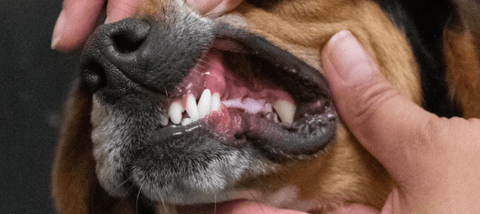
Get your catto or doggo comfortable in your lap or on the floor, and gently pull back their lips to see their teeth and gums. Don’t stick your fingers in their mouth - just push the lips up. Check the front and back teeth for bleeding, cracks, and less obvious signs of dental disease like red gums and brown or yellow discolouration of the enamel . A bad smell coming from your pet’s mouth can also be a sign of dental disease - particularly an infection.
Be proactive during vet check-ups and ask your veterinarian to check your pet’s teeth. Work with your vet to determine the best dental care routine for your pet!
Tip 2: Regular Teeth Brushing Just like us, our pets need regular tooth brushing.
You might ask - doesn’t chewing kibble clean my pet’s teeth? The answer is mostly no.
Products that have the VOHC Seal (see Tip 4) include certain ingredients that have been clinically proven to prevent plaque build-up. They may also have certain textures that prevent food crumbs from getting stuck between teeth. However, many other “dental” chews and kibbles do not have the VOHC seal, so their dental hygiene claims aren’t guaranteed to be clinically tested.

Brushing their teeth daily is the best thing you can do to maintain your pet’s dental health, though brushing even once a week has been shown to help reduce the risk for periodontal disease!
To get your pet used to brushing their teeth, you may need to go through an acclimation period. The first step is to introduce your pet to tooth brushing tools (More on appropriate tools in Tip 3). Once they have had a few chances to sniff the toothbrush and paste they will feel more comfortable.
Slowly build up to the actual act of tooth brushing. Your pet may need a few days of simply putting the brush into their mouth, and other pets may need some time to get used to the tooth paste. Take it easy and ask your veterinarian for additional tips for starting your pet on a regular dental routine.
Tip 3: Use Pet Friendly Tools Cat and dog teeth are different from ours, so using dental products specially designed for your pet’s teeth is a must. In fact, using human toothbrushes or toothpastes can hurt and even poison your pet.

You can find cat and dog toothbrushes at your vet, as well as local pet stores and online stores. Some look like smaller versions of our toothbrushes, and some are similar to finger brushes for babies. If your pet doesn’t like one kind of toothbrush, try different ones until they’re comfortable getting their teeth cleaned.
Pet friendly toothpastes can also be found at your vet’s or in your local pet store, and many are flavoured to make the tooth brushing experience more pleasant for your friend. It’s critical that you don’t use human toothpaste for your pet - many human tooth pastes are formulated using xylitol which is toxic for our pets.
Tip 4: Look for the VOHC Approval on Dental Products Not all dental care products are created equal. When looking for any dental products for your pet, always look for the VOHC Seal. This seal is granted by the Veterinary Oral Health Council to products that have been clinically tested and shown to prevent plaque or tartar build-up.
We always recommend checking with your veterinarian before starting your pet on a new product. Another important factor to consider is whether your pet already has periodontal disease. Many of these products will not treat periodontal disease and should be only be used for prevention. They may also cause additional pain for your pet if periodontal disease is not treated.
Tip 5: Ensure Proper Nutrition! Good nutrition forms the foundation for healthy gums and teeth.
Proteins, minerals, and certain vitamins are all important for the development and maintenance of your pet’s gums and teeth.
The effects of calcium and phosphorus are most well known. A good calcium to phosphorus ratio is important for tooth maintenance. Calcium deficiencies and excess phosphorus have been associated with increased risk for dental disease.

Fresh, whole foods that are formulated to be complete and balanced are important for overall health and nutrition.
Our meals at Tom&Sawyer are formulated specifically for your pet and also include optimal calcium to phosphorus ratios!
Other articles you might like: Why Homemade Dog Food Might Not be Enough: The Importance of Complete Nutrition How to Transition your Dog or Cat to a New Diet